
Australia Restarts Coal Port Operations After Climate Protest Halt

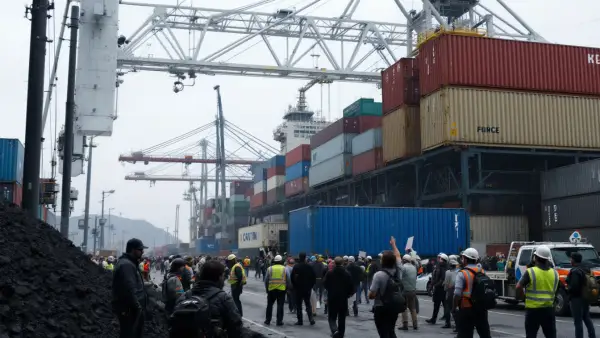
Australia's coal export hubs typically move millions of tons monthly, making any stoppage costly. Australia will resume operations at a major coal port on Monday after a climate protest disrupted activities, Reuters reports.
This pause reveals how physical infrastructure supply chains face unique leverage points—not just from equipment or automation, but from social and regulatory constraints. Understanding these constraints reshapes how operators guard resilience.
Protests spotlight the fragility of continuous throughput in high-stakes commodity export systems. Coal port shutdowns like this impose cascading costs beyond immediate output, affecting global supply chains and pricing.
“Operational systems without social resilience become single points of failure.”
Why The Constraint is Social, Not Just Technical
Conventional wisdom assumes port operations hinge on equipment capacity, logistics software, and labor availability. Yet climate protests demonstrate a hidden constraint: social license to operate.
This represents a system-level choke point where activist actions leverage the port’s centralization and discrete chokehold on export routes.
Similar to profit lock-in constraints in tech firms, this social constraint requires operators to rethink leverage away from just infrastructure upgrades toward broader stakeholder system design.
Comparing Responses to Disruption Mechanisms
Unlike miners focused solely on ramping extraction rates, port authorities now face the task of embedding resilience against social disruptions.
Alternatives to outright shutdown have emerged in ports globally, such as automated surveillance, better public communication, and alternating shipping schedules to diffuse protest risks.
In contrast, Australian ports had limited automation in social response systems, unlike European ports that partnered early on with civil groups.
This aligns with insights from process documentation best practices that highlight proactively mapping non-technical risks within operational blueprints.
Forward-Looking Moves for Socially Resilient Systems
The real constraint unlocked here is not coal volume throughput but social resilience embedded in operational systems.
Ports must integrate social signal monitoring, stakeholder engagement, and contingency planning as core layers to reduce vulnerability.
Stakeholders beyond port operators—investors, regulators, and commodity buyers—must rethink risk models to include social disruptions.
Australia’s approach can guide other resource-dependent nations to build infrastructure that withstands social challenge, turning disruption into durable leverage.
Related Tools & Resources
For port authorities grappling with social disruptions and the need for operational resilience, integrating advanced surveillance solutions like Surecam can provide the oversight necessary to manage potential protest activities. By leveraging security cameras and video monitoring, ports can enhance their operational strategies and maintain a more resilient approach to supply chain management. Learn more about Surecam →
Full Transparency: Some links in this article are affiliate partnerships. If you find value in the tools we recommend and decide to try them, we may earn a commission at no extra cost to you. We only recommend tools that align with the strategic thinking we share here. Think of it as supporting independent business analysis while discovering leverage in your own operations.
Frequently Asked Questions
What causes stoppages at coal export ports in Australia?
Stoppages at Australian coal export ports can be caused by climate protests, which leverage the ports' centralization and social constraints, disrupting operations and causing costly delays.
Why are social factors critical in coal port operational resilience?
Social factors like protests represent key choke points affecting port operations beyond technical issues, making social resilience essential to prevent disruptions in continuous commodity throughput.
How do protests at coal ports impact global supply chains?
Protests cause shutdowns that impose cascading costs beyond immediate output, affecting global supply chains and commodity pricing due to the ports' central role in exports.
What measures can ports take to reduce social disruption risks?
Ports can implement automated surveillance, improve public communication, and adjust shipping schedules to diffuse protest risks and embed social resilience in operational systems.
How do Australian ports compare to European ports in handling social disruptions?
Australian ports have had limited automation and social response systems, unlike European ports that partnered early with civil groups to better manage social disruptions.
What should resource-dependent nations learn from Australia’s coal port disruption?
They should integrate social signal monitoring, stakeholder engagement, and contingency planning into infrastructure to turn social challenges into durable leverage, enhancing operational resilience.
What is meant by "social license to operate" in the context of port operations?
It refers to the acceptance and approval by the community and stakeholders that allow port operations to function without disruption from social actions like protests.
Why is embedding social resilience in operational systems more important than just focusing on equipment upgrades?
Because protests exploit social constraints that equipment upgrades alone cannot address, embedding social resilience helps prevent disruptions by managing broader stakeholder risks.