How Sunday Robotics Cut Training Costs 100x to Teach Robots Home Tasks
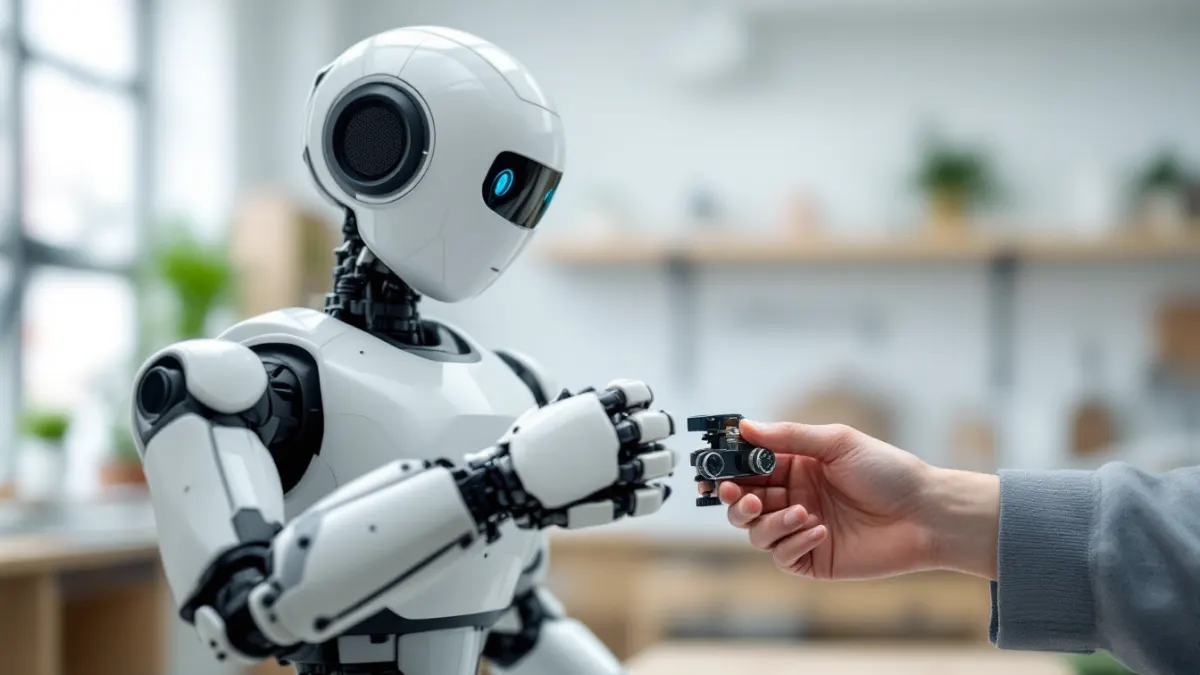
Training home robots to handle delicate chores often demands years of data and millions in capital. Sunday Robotics, a US-based startup, flipped this script by inventing a glove that mimics its robot’s hands, slashing training costs by two orders of magnitude.
Founded in April 2024 by robotics veterans Tony Zhao and Cheng Chi, Sunday Robotics revealed Memo, a robot that autonomously clears dishes and loads the dishwasher—a task notoriously complex for robots worldwide.
This breakthrough isn’t just about a robot doing chores; it’s about exposing a hidden bottleneck—data collection methods—and replacing expensive teleoperation with scalable, remote human mimicry.
“Two orders of magnitude higher capital efficiency compared to teleoperation ($200 vs $20,000),” Zhao said, highlighting the advantage.Why Robot Training Isn’t Just a Bigger Data Problem
Common wisdom says robot dexterity relies on vast datasets and expensive teleoperation labs. Most startups deploy humans controlling robots via joysticks to generate training data or rely heavily on synthetic simulations.
Sunday Robotics challenges this assumption by sidestepping teleoperation altogether. Instead, they designed a mechanical glove matching Memo’s Lego-like hands, allowing over 500 remote data collectors across the US to mimic robot motions naturally.This rejects the idea that training requires physical robot presence or expensive hardware setups—doubling down on process improvement rather than brute-force data acquisition.
This Glove Is an Infrastructure-Scale Leverage Point
Through this glove, data collectors generate forces, grasps, and motions precisely calibrated for Memo without risking costly robot damage. Zhao points out that Memo has completed 20+ live demos with zero broken wine glasses.
Unlike competitors still tethered to joystick teleoperation or synthetic simulation—both slow and imprecise—Sunday Robotics creates a scalable training backbone. This model removes the constraint of shipping robots across sites, enabling distributed data collection and rapid iteration.
By contrast, firms like Google DeepMind and Tesla emphasize simulation or teleoperation, which demand heavier infrastructure investments and raise latency in training cycles.
Remote data collection via gloves converts a capital-intensive robotics bottleneck into a networked human leverage point, akin to automation in business processes, but for physical AI training.
What Changed and Who Gains
The key constraint shift here is from physical hardware engagement to remote human input aligned precisely to robot morphology. This unlocks accelerated training with dramatically reduced marginal cost per data point.
Investors, hardware engineers, and AI practitioners must note Sunday Robotics’ approach, which reframes training as a system design problem rather than a brute-force data problem.
This approach sets a precedent for other robotics startups aiming to cross the dexterity threshold without incurring decade-long training or prohibitive expense.
Much like how strategic partnerships amplify growth without linear cost increases, distributed data collection via specialized gloves can become the new strategic alliance for robotics training.
“Constraint repositioning from hardware to scalable human input rewrites robotics training economics.”Related Tools & Resources
Sunday Robotics’ innovation highlights how process improvement and standard operating procedures can unlock massive efficiency gains even in complex environments like robotics training. For teams looking to systematize and scale intricate workflows, platforms like Copla offer the tools to document, manage, and optimize processes that drive sustainable leverage and growth. Learn more about Copla →
Full Transparency: Some links in this article are affiliate partnerships. If you find value in the tools we recommend and decide to try them, we may earn a commission at no extra cost to you. We only recommend tools that align with the strategic thinking we share here. Think of it as supporting independent business analysis while discovering leverage in your own operations.Frequently Asked Questions
How does Sunday Robotics reduce robot training costs by 100x?
Sunday Robotics uses a mechanical glove that mimics their robot Memo’s hands, enabling over 500 remote data collectors to generate training data naturally. This method cuts capital costs from approximately $20,000 to $200 compared to traditional teleoperation techniques.
Why is teleoperation expensive in robot training?
Teleoperation requires humans to control robots via joysticks in physical labs, demanding costly infrastructure and setups. Sunday Robotics replaces this with distributed human mimicry using gloves, drastically cutting expense and logistical complexity.
What challenges do robots face when performing home chores?
Robots face complex dexterity challenges like clearing dishes and loading dishwashers autonomously. This requires precise grip and motion data, which is expensive to gather with conventional data collection methods.
How does Sunday Robotics enable remote data collection?
The company designed a mechanical glove that mirrors the Lego-like hands of their robot Memo, letting remote users across the US perform exact motions. This model removes the need to ship robots physically for training and scales data collection efficiently.
What advantages does the glove system offer over simulation-based training?
Unlike simulation or joystick teleoperation, the glove system provides accurate, real-world force and motion data calibrated specifically for Memo’s morphology. This reduces latency in training cycles and prevents robot damage, increasing capital efficiency.
Which companies still rely heavily on simulation or teleoperation?
Firms like Google DeepMind and Tesla focus on synthetic simulations or teleoperation for robot training, which require heavier infrastructure investments and slower iteration cycles compared to Sunday Robotics’ glove approach.
How does shifting from hardware to human input affect robot training economics?
Repositioning the training constraint from physical hardware to scalable remote human input dramatically lowers marginal data costs and accelerates training, changing the economics by reducing capital needs by two orders of magnitude.
What other industries or processes benefit from similar leverage points?
Distributed data collection via specialized gloves parallels automation in business processes and strategic partnerships that amplify growth without linear cost increases, applying leverage principles to complex AI training workflows.