
How Amazon’s Zoox Reinvents Robotaxis for Urban Leverage

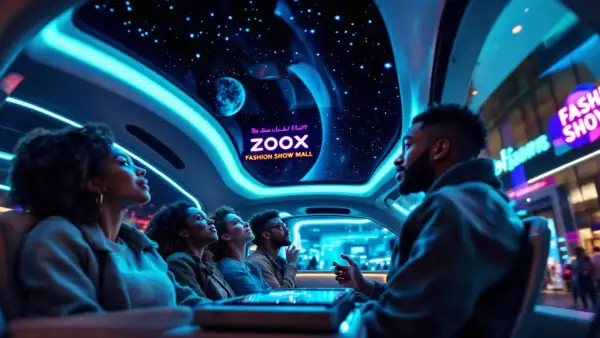
Las Vegas remains a global testbed for cutting-edge urban mobility, where traditional ridesharing faces chaos and infrastructure limits. Amazon’s Zoox deployed its purpose-built robotaxi this fall in a limited loop along the Strip, offering free rides between just seven fixed hubs. But this isn’t just an autonomous vehicle launch—it’s a rethink of the system design that creates new leverage over urban congestion and transportation economics. True leverage in urban transit comes from purpose-built fleets designed as moving platforms, not retrofitted cars.
Why the Retrofit Model Breaks Leverage for Autonomous Mobility
Most autonomous pilots retrofitted existing commercial cars like luxury Jaguars, an approach led by Waymo and others. This conventional wisdom assumes lower upfront engineering costs mean faster deployment. It’s wrong. The retrofit model compromises seating designs, passenger experience, and modular system upgrades.
Zoox’s purpose-built pod flips constraints by starting from zero: a 12-foot bidirectional electric vehicle without steering wheels or pedals. This design frees critical spatial arrangements—face-to-face seating with per-seat climate controls and personal displays—that transforms mere transport into a scalable ride experience platform, boosting user engagement without constant operator intervention.
How Zoox Uses Design Leverage to Build Experience and Data Advantage
The futuristic “living room on wheels” approach makes Zoox less a car and more a modular transport system. Unlike the Waymo experience with its emphasis on virtual roadside views and emergency human assist access, Zoox prioritizes passenger comfort and social engagement, turning ridesharing into a group experience. This makes customer acquisition cheaper and retention stronger through network effects.
Zoox’s limited initial deployment in Las Vegas capitalizes on fixed stations—like Fashion Show Mall and Resorts World—to gather high-value data along predictable routes. This constraint enables rapid iteration on system safety and passenger features while avoiding the complexity of full point-to-point service, validating a classic leverage mechanism: constraint repositioning, which prioritizes focused operational loops over expansive but fragile networks early on.
Why Seattle and Austin Should Watch Zoox’s Platform Battle for Urban Leverage
Amazon is banking on Zoox to extend far beyond Las Vegas, eyeing urban centers like Seattle, Austin, and Miami. These cities can replicate the fixed-hub rollout to build dense, reliable pods that reduce last-mile friction and shave infrastructure costs. Unlike legacy rideshares that scale vehicle count linearly with demand, Zoox’s design promises nonlinear growth by embedding passenger-customizable controls, making usage both sticky and data-rich.
This transformation is not only about safer autonomous driving but about creating a compounding advantage through platform design and controlled operational envelopes. As the company explores everything from public ridership to logistics shuttling, the key constraint shifts to regulatory approval and route density, opening new strategic plays for urban transportation.
“Leverage in autonomous transit comes from reshaping vehicle design and system constraints, not just software upgrades,” said an industry expert.
For operators and investors focusing on leverage in next-gen transportation, Zoox’s approach is an essential case of building platform advantages through integrated hardware, software, and user experience in constrained environments. Expect more from this quietly powerful experiment as it moves beyond Vegas’s Strip.
Explore related leverage insights on how robotics firms scale and why structural failures expose leverage traps in tech ecosystems.
Related Tools & Resources
As urban mobility continues to evolve with innovative solutions like Zoox's robotaxis, ensuring safety and security becomes increasingly vital. This is where tools like Surecam can play a crucial role, offering cutting-edge video surveillance systems to monitor operations and enhance safety for both passengers and vehicles. For businesses adopting advanced transportation technology, integrating reliable security measures is essential for building trust and ensuring smooth operation. Learn more about Surecam →
Full Transparency: Some links in this article are affiliate partnerships. If you find value in the tools we recommend and decide to try them, we may earn a commission at no extra cost to you. We only recommend tools that align with the strategic thinking we share here. Think of it as supporting independent business analysis while discovering leverage in your own operations.
Frequently Asked Questions
What makes Amazon's Zoox robotaxi different from traditional autonomous vehicles?
Zoox's robotaxi is purpose-built as a 12-foot bidirectional electric vehicle without steering wheels or pedals, unlike traditional retrofitted cars. This design enables face-to-face seating, personalized climate control, and a modular ride experience platform.
Where is Zoox currently deploying its robotaxi service?
Zoox has deployed its robotaxi in Las Vegas, operating a limited loop along the Strip between seven fixed hubs, including locations like Fashion Show Mall and Resorts World.
How does Zoox's design improve passenger experience compared to competitors like Waymo?
Zoox prioritizes passenger comfort and social engagement by offering a "living room on wheels" design with face-to-face seating and per-seat climate controls, creating a group ride experience, whereas Waymo focuses more on virtual roadside views and emergency human assist features.
What advantages does Zoox gain by using fixed hubs in its urban deployment?
Using seven fixed hubs allows Zoox to gather high-value data on predictable routes, enabling rapid iteration on safety and passenger features, and focusing on operational loops to build leverage and reliability before expanding coverage.
Which other cities might see Zoox robotaxi services after Las Vegas?
Following Las Vegas, Zoox plans to expand to urban centers like Seattle, Austin, and Miami, replicating the fixed-hub model to reduce last-mile friction and infrastructure costs.
What is the main critique of the retrofit model used by companies like Waymo?
The retrofit model compromises seating design, passenger experience, and modular upgrades by adapting existing commercial vehicles, which reduces the potential leverage and scalability compared to purpose-built robotaxi designs like Zoox.
How does Zoox’s platform approach create a data advantage?
Zoox’s modular transport system supports personalized controls and social engagement, increasing user retention and data collection efficiency through network effects on fixed routes, leading to a scalable ride experience.
Why is safety and security important for operators adopting technologies like Zoox's robotaxis?
Ensuring safety and security, supported by tools such as Surecam video surveillance, is essential for building passenger trust, monitoring operations, and supporting smooth functioning of advanced transportation technologies.