
How Autolane Is Building Air Traffic Control for Autonomous Vehicles

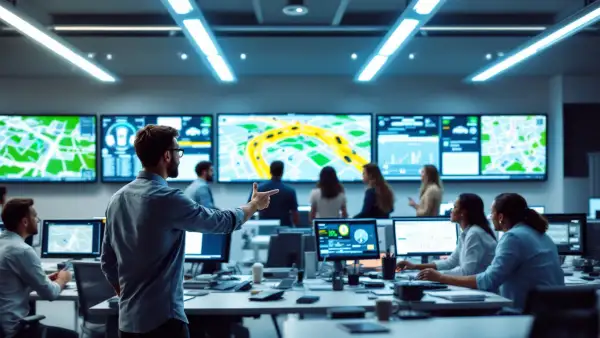
Managing autonomous vehicles requires far more than car tech—it demands centralized orchestration to unlock scalable safety. Autolane, a Palo Alto-based startup, raised $7.4 million to develop an “air traffic control” platform for self-driving cars. This investment targets a constraint beyond vehicle autonomy: coordinating complex, real-time road interactions citywide without constant human input. True autonomy depends on systemic coordination, not isolated cars.
Challenging the Autonomous Vehicle Narrative
Industry consensus fixates on perfecting individual vehicle AI as the core challenge for autonomy. This is incomplete—autonomous vehicle deployment stalls because roadside interactions create unpredictable complexity at scale. The real constraint is managing system-level traffic flow, a fact overlooked in many critiques. Unlike the solo focus on AI, Autolane targets constraint repositioning by controlling overall traffic as an interconnected system. This reframes leverage from algorithms inside cars to orchestration across networks. See why Tesla’s Safety Report reveals shifting leverage in autonomy.
How Autolane’s Control Tower Model Creates Leverage
Autolane’s platform acts like an air traffic controller for vehicles, coordinating millions of autonomous cars’ movements simultaneously through a centralized system. This contrasts with companies like Tesla or Waymo that primarily optimize onboard autonomy without full network orchestration. By managing trajectories and timing, Autolane reduces collision risk and enables smoother traffic flow without requiring cars to independently solve every possible scenario. This drops the operational burden from each vehicle’s compute and sensor stack to a shared infrastructure layer — providing immense leverage by replacing redundant decision-making with centralized precision.
The model resembles OpenAI scaling ChatGPT by leveraging cloud infrastructure rather than localized compute per user, a shift explained in our OpenAI scaling analysis. Similarly, Autolane’s system lowers the cost per vehicle interaction below pure onboard autonomy, creating a compound advantage across entire fleets and cities.
Why Centralized Traffic Control Is the Missing Leverage Lever
Other autonomous vehicle companies rely on decentralized computation, where each car individually maps and decides. This works in controlled environments but falters in high-density, unpredictable urban centers. By contrast, Autolane’s investment into infrastructure addresses a structural bottleneck—lack of traffic-wide coordination—that’s invisible in typical autonomy discourse.
This approach parallels system design in aviation, where individual pilot skill is vital but air traffic control creates a scalable safety net, reducing accidents exponentially. Here, the leverage emerges from a platform that continuously directs vehicles without human override, lowering risk while enabling more efficient city-wide movement.
For more context on operational leverage through infrastructure, see our analysis on process documentation.
What This Means for Autonomous Vehicle Strategy
The constraint shift from individual vehicle autonomy to centralized control opens new strategic avenues. Cities able to integrate such traffic control systems will drastically reduce autonomous vehicle deployment risk and accelerate adoption. Investors and operators should shift focus from just vehicle AI to the orchestration layer. This repositions competition around who controls the infrastructure-as-platform that scales safety and throughput.
Autolane’s $7.4 million raise signals early movement into this critical layer. Analogous to the early dominance of cloud platforms, replicating this advantage requires years of data, trust, and city partnerships—none easy to copy. The companies that win autonomy won’t just build cars—they’ll run the city’s traffic control.
Controlling autonomous vehicle systems is not about cars—it’s about cities.
Related Tools & Resources
As the landscape of autonomous vehicle management continues to evolve, innovative solutions like Blackbox AI can empower developers with AI tools necessary for creating advanced traffic control systems. By enhancing algorithmic capabilities, Blackbox AI allows for better performance in coordinating complex interactions between self-driving vehicles, reflecting the systemic approach discussed in this article. Learn more about Blackbox AI →
Full Transparency: Some links in this article are affiliate partnerships. If you find value in the tools we recommend and decide to try them, we may earn a commission at no extra cost to you. We only recommend tools that align with the strategic thinking we share here. Think of it as supporting independent business analysis while discovering leverage in your own operations.
Frequently Asked Questions
What is Autolane's approach to autonomous vehicle management?
Autolane develops a centralized "air traffic control" platform that orchestrates the movement of millions of self-driving cars simultaneously, focusing on system-wide traffic flow instead of only individual vehicle autonomy.
How much funding has Autolane raised for their platform?
Autolane raised $7.4 million to build their centralized traffic control system for autonomous vehicles.
Why is centralized traffic control important for autonomous vehicles?
Centralized traffic control helps coordinate complex, real-time interactions across entire cities, reducing collision risks and operational burdens on individual vehicles by managing trajectories and timing collectively.
How does Autolane's system differ from companies like Tesla or Waymo?
Unlike Tesla and Waymo, which focus on optimizing onboard autonomy per vehicle, Autolane uses a centralized network infrastructure to orchestrate autonomous vehicle movements citywide, creating more efficient and safer traffic flow.
What challenges exist with decentralized autonomous vehicle systems?
Decentralized systems, where each car independently maps and decides, struggle in high-density urban environments due to unpredictable complexity and lack of traffic-wide coordination, limiting scalability and safety.
What parallels does Autolane's model have with aviation?
Autolane's approach is similar to air traffic control in aviation, where individual pilot skill is supported by centralized coordination, exponentially improving safety and efficiency across crowded skies or roads.
What impact could Autolane's platform have on cities?
By enabling centralized traffic control for autonomous fleets, cities could drastically reduce deployment risks, accelerate adoption of self-driving vehicles, and manage urban transportation more efficiently at scale.
How does infrastructure-based coordination provide leverage for autonomy?
Infrastructure coordination reduces the need for each vehicle to independently solve every scenario, lowering costs and computational requirements per vehicle while improving safety and traffic throughput across an entire fleet.