
How Beijing’s Approval of L3 EVs Reshapes Autonomous Driving Leverage

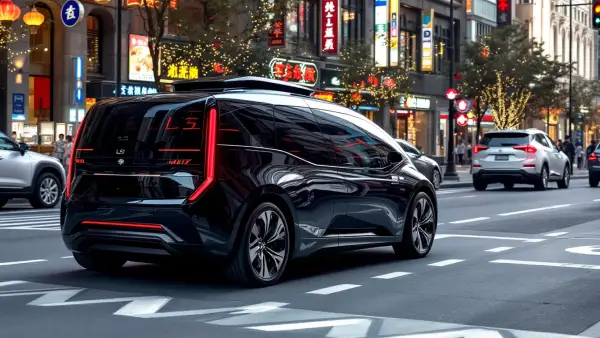
Autonomous driving development often stalls on safety and regulatory hurdles. Beijing just broke new ground by approving China’s first two Level 3 autonomous electric vehicles, manufactured by Changan Automobile and BAIC. This move isn’t just regulatory formality—it signals a strategic repositioning of constraints in the world’s largest EV market. Control over autonomous infrastructure creates long-term leverage in mobility ecosystems.
Conventional Wisdom Misses Constraint Repositioning
Many analysts see Beijing’s approval as a cautious step, limited to low-speed urban scenarios and hands-off driving. They treat this as incremental progress focused solely on safety benchmarking. That view overlooks the system-level shift: China is transforming the regulatory bottleneck that stalled autonomous vehicle leverage since L3 technology’s complexity hit a ceiling. This is a clear example of leveraging safety data to unlock systemic growth, not merely achieving isolated technological milestones.
How China’s L3 EV Approval Unlocks Systemic Levers
The Ministry of Industry and Information Technology (MIIT) has greenlit Changan and BAIC to launch fully electric L3 vehicles capable of hands-off driving on urban streets. Unlike Waymo and Tesla, whose L3 advancements rely heavily on highway scenarios or advanced driver monitoring, these Chinese EVs focus on dense urban conditions, a strategic market constraint rarely addressed.
This focus shifts the constraint from technology to regulation in China’s massive EV landscape. By approving hands-off functionality for urban driving, Beijing positions local automakers to own regulatory “plumbing” — the invisible system design that enables widespread, compounding adoption. Instead of relying on patchwork state-by-state authorization like in the U.S., China’s centralized model allows immediate system-wide scaling.
Contrast With Global Autonomous Efforts
Global competitors like Mercedes-Benz and Audi have achieved limited L3 functionality but face fragmented approvals that restrict deployment to specific highways or use cases. China’s leap isn’t about catching up to technical standards but about removing operational friction embedded in regulatory design.
This strategic constraint repositioning mirrors earlier plays by OpenAI in scaling ChatGPT—where substrate control mattered more than raw tech prowess. Vehicles that can legally drive hands-off across entire urban areas become leverage points for data, software updates, and fleet economics.
Who Gains and What’s Next?
OEMs and tech suppliers in China now have a new platform to integrate autonomous features without piecemeal restrictions. This reduces product complexity and customer confusion, unlocking faster adoption curves and ecosystem lock-in.
Other countries with centralized regulatory authority can replicate this approach, but fragmented markets like the U.S. remain bottlenecked on multi-jurisdiction approvals. China’s regulatory streamlining acts as an operational force multiplier, reshaping the autonomy landscape by reframing the biggest bottleneck.
“Winning in autonomous vehicles depends less on hardware and more on who controls urban autonomy’s regulatory infrastructure.”
This strategic pivot by Beijing is the kind of leverage shift operators need to understand if they want to compete in the next decade of mobility innovation.
See also: Why Tesla’s New Safety Report Actually Changes Autonomous Leverage, How OpenAI Actually Scaled ChatGPT To 1 Billion Users
Related Tools & Resources
As China reshapes the regulatory landscape for autonomous vehicles, integrating advanced technology becomes crucial. Tools like Blackbox AI can significantly enhance your development capabilities, offering AI-powered coding assistance that helps streamline the creation of innovative automotive technologies. Learn more about Blackbox AI →
Full Transparency: Some links in this article are affiliate partnerships. If you find value in the tools we recommend and decide to try them, we may earn a commission at no extra cost to you. We only recommend tools that align with the strategic thinking we share here. Think of it as supporting independent business analysis while discovering leverage in your own operations.
Frequently Asked Questions
What are Level 3 autonomous electric vehicles?
Level 3 autonomous electric vehicles can drive hands-off in certain conditions, typically handling all driving tasks within set scenarios like urban streets, but require human intervention if requested. Beijing recently approved China’s first two such vehicles from Changan Automobile and BAIC.
Why is Beijing’s approval of Level 3 EVs significant?
Beijing’s approval of two Level 3 EVs signifies a strategic regulatory shift that unlocks urban hands-off driving on a system-wide scale in China, overcoming previous bottlenecks and enabling faster autonomous vehicle adoption throughout the country’s massive EV market.
Which companies received approval for Level 3 autonomous EVs in China?
Changan Automobile and BAIC were approved by China’s Ministry of Industry and Information Technology (MIIT) to launch Level 3 fully electric vehicles capable of hands-off driving in urban environments, a first in the Chinese market.
How does China’s regulatory approach differ from other countries?
China’s centralized regulatory model allows immediate, system-wide scaling of autonomous urban driving, unlike fragmented approval processes in countries like the U.S. or Europe, where state or regional authorities limit deployment to specific highways or areas.
What are the benefits of approving Level 3 autonomy for urban driving?
Approving Level 3 hands-off driving in urban areas reduces product complexity and customer confusion, enables faster adoption, and creates leverage through control of regulatory infrastructure, fostering ecosystem lock-in and data advantages for OEMs and tech suppliers.
How does this approval impact the global autonomous vehicle landscape?
China’s regulatory shift lowers operational friction and creates leverage points for autonomous driving across urban areas, potentially increasing China’s leadership in AV deployment while highlighting challenges in fragmented markets like the U.S.
What industries or tools can benefit from China’s approval of L3 EVs?
Automotive OEMs, technology suppliers, and AI development tools like Blackbox AI benefit by gaining a platform for integrating autonomous features and streamlining innovations in mobility technologies under China’s supportive regulatory environment.
Can other countries replicate China’s approach to autonomous vehicle regulation?
Countries with centralized regulatory authority could replicate China’s streamlined approval to accelerate autonomous vehicle deployment. However, fragmented markets face challenges due to multi-jurisdictional approvals, limiting rapid scaling like China’s.