
How Beijing’s Election Timing Changes Hong Kong’s Crisis Response Leverage

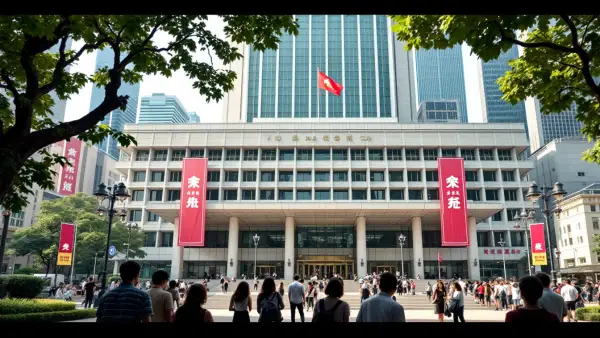
Handling multiple crises simultaneously typically inflates operational costs by 30-50%, straining local governments worldwide. Beijing is pushing Hong Kong to proceed with its Legislative Council election amid the deadly Tai Po fire aftermath, signaling a strategic calculation beyond public safety optics. This move isn’t about political symbolism—it’s about maintaining systemic stability leverage that keeps governance aligned with constitutional command without costly delays. Leveraging governance cadence ensures control extends without weakening operational momentum.
Liu Guangyuan, deputy director of Beijing’s liaison office in Hong Kong, affirmed confidence in local authorities’ ability to manage both crises while pressing forward with the election scheduled for Sunday. He praised the decision as honoring the constitutional order and the “most responsible attitude.”
This duality reveals how Beijing designs governance systems that structurally embed political events into crisis response frameworks, reducing friction and slippage in authority. It exposes a critical leverage mechanism where electoral timeline adherence constrains disruptive overreach and avoids cascading governance failures.
Where politics and public safety intersect, maintaining systems rhythm compounds control advantages.
Conventional Thought Misreads Crisis Management Timing
Analysts often frame proceeding with elections during emergencies as reckless or driven by political posturing. They mistake flexibility for strength, assuming crisis pause better balances safety and legitimacy.
It’s the opposite. Beijing’s insistence on timing reveals constraint repositioning rather than calendar orthodoxy. It ensures governance mechanisms remain synchronized, preventing the scope creep and competing agendas that delay recovery and elevate costs. This approach echoes principles from our analysis of debt system fragility in Senegal, where timing constraints stabilize fiscal flows.
Embedding Political Events as Leverage Nodes
Maintaining the election schedule in Hong Kong creates a hard temporal constraint that local authorities must work around, forcing resource allocation, communication, and public order efforts into tighter, more efficient trajectories.
This contrasts with cities where elections are postponed during crises, leading to months of political uncertainty, fractured authority, and operational stalls. Unlike such reactive models, this system design compels continuous functioning of governance units, turning temporal alignment into an operational lever. It parallels OpenAI’s approach to scaling ChatGPT, where fixed release cadences acted as leverage points to synchronize engineering, marketing, and infrastructure teams across billions of users.
Why Alternative Crisis Responses Lack This Leverage
Other governance models either suspend political processes during emergencies or over-centralize emergency responses, losing the compounding benefits of distributed, timed authority.
Hong Kong’s choice keeps multiple gears turning simultaneously. This distributed synchronization improves resilience by limiting bureaucratic inertia and preserving political legitimacy. The mechanism echoes observations from our study on USPS operational shifts, where timing of policy changes unlocked smoother transitions without paralyzing system-wide functions.
Implications for Cities Managing Simultaneous Crises
Controlling the tempo of political events during emergencies changes the key operational constraint from risk aversion to system-wide alignment. Cities and governments ignoring this tradeoff will face compounded delays and governance vacuum risks. Hong Kong’s model offers a replicable blueprint where governance timing mechanisms become built-in stabilizers, not liabilities.
Stakeholders managing urban emergencies, election logistics, or governance reforms should watch how this constraint plays out in real-time. It foreshadows a shift where temporal governance levers shape crisis outcomes as much as resource deployment.
“Timing in governance is the hidden force compounding political and crisis resilience.”
Related Tools & Resources
In times of crisis, understanding and optimizing your operations is crucial, which is where Hyros comes into play. By implementing advanced tracking and analytics, businesses can ensure that decision-making processes are aligned with real-time performance data, just as discussed in the article regarding the strategic governance by Beijing. Learn more about Hyros →
Full Transparency: Some links in this article are affiliate partnerships. If you find value in the tools we recommend and decide to try them, we may earn a commission at no extra cost to you. We only recommend tools that align with the strategic thinking we share here. Think of it as supporting independent business analysis while discovering leverage in your own operations.
Frequently Asked Questions
Why is Beijing pushing for Hong Kong’s Legislative Council election during the Tai Po fire crisis?
Beijing aims to maintain systemic stability leverage by proceeding with the election despite the crisis. This approach prevents costly delays and ensures governance remains aligned with constitutional command, balancing crisis response without sacrificing political order.
How much do operational costs typically increase when handling multiple crises simultaneously?
Operational costs generally inflate by 30-50% when managing multiple crises at the same time, putting strain on local governments worldwide, as noted in the case of Hong Kong's crisis response during the Tai Po fire.
What is the strategic benefit of maintaining election timing during emergencies like in Hong Kong?
Maintaining election timing creates a hard temporal constraint that forces efficient resource allocation and communication. It synchronizes governance units to work continuously, reducing delays and avoiding fractured authority often caused by postponing political events.
How does Hong Kong’s crisis response model differ from other cities during emergencies?
Unlike cities that suspend political processes or centralize emergency responses, Hong Kong’s model keeps multiple governance gears turning simultaneously. This distributed synchronization limits bureaucratic inertia and preserves political legitimacy during emergencies.
What role does Liu Guangyuan play in the context of Hong Kong’s election and crisis management?
Liu Guangyuan, deputy director of Beijing’s liaison office in Hong Kong, affirmed confidence in local authorities to manage both the Tai Po fire crisis and the election simultaneously. He described proceeding with the election as honoring constitutional order and demonstrating responsibility.
How does timing in governance act as a leverage mechanism in crisis management?
Timing acts as a hidden force that compounds political and crisis resilience by aligning governance operations. Fixed electoral schedules act as leverage nodes that prevent scope creep and competing agendas, enabling more efficient crisis recovery.
What lessons from other systems support Beijing’s approach to election timing and crisis response?
The article references analyses of debt system fragility in Senegal and USPS operational shifts in the US, showing that timing constraints stabilize fiscal flows and smooth policy transitions. These examples parallel Beijing’s strategy to embed political event timing as a resilience tool in governance.
What implications does Hong Kong's governance timing offer for other cities managing simultaneous crises?
Hong Kong’s model offers a replicable blueprint where governance timing mechanisms become stabilizers during emergencies. Cities ignoring such temporal alignment may face compounded delays and governance vacuums, emphasizing system-wide synchronization over mere risk aversion.