
How Chevron's $2B Bet Unlocks Australia’s Gas Leverage

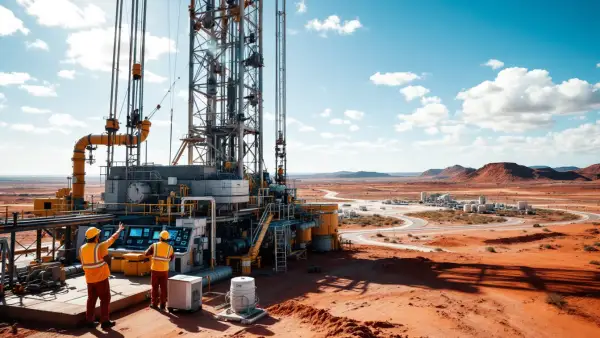
Australia’s energy exports drive significant national revenue but face rising pressures as global gas demand evolves. Chevron and its partners just greenlit a $2 billion expansion of the Gorgon natural gas project in Western Australia, signaling a pivotal move in late 2025. This decision isn’t just about pumping more gas—it’s about leveraging existing infrastructure to lower future costs and lock in market positions. Energy projects that extend platform capacity can compound advantages without proportional spend increases.
Why drilling more gas isn’t the whole story
Many see such investments as routine commodity extraction—simply adding supply. They overlook the power of constraint repositioning here. Unlike greenfield projects, Chevron builds on decades of infrastructure sunk costs in Western Australia’s harsh environment, turning sunk capital into a lever for marginal expansions. This reframes the $2 billion spend as a strategic scaling of a pre-existing system, not a pure new-cost burden.
Understanding this reframes how we see the deal’s impact. Instead of conventional cost-plus thinking, view it as a capital-efficient upgrade that unlocks operational flexibilities and extends export capacity—advantages competitors starting fresh can’t easily replicate. This mirrors findings from our analysis on debt system fragility, where positioning around constraints changes the economics fundamentally.
Building on infrastructure multiplies returns
Chevron’s Gorgon project benefits from pre-existing pipeline, LNG processing facilities, and agreements with Australian regulators. By investing incrementally within this system, the partners shift their cost per million BTU down—trading large upfront investment for smaller modular expansions. Unlike gas ventures starting with new builds, Gorgon’s logical architecture allows the partners to compound existing assets rather than reinvent infrastructure.
Compare this to global competitors who face $8-15 per million BTU costs to enter new fields or build LNG terminals from scratch. Gorgon’s strategy reduces marginal costs dramatically, turning infrastructure ownership into a leverage engine. This is the same underlying principle seen in how OpenAI scaled ChatGPT, using platform effects and incremental scaling to lower customer acquisition cost.
Why Australia’s natural gas system is uniquely positioned
Australia’s regulatory stability and established export markets provide a rare “anchor constraint” that Chevron leverages fully. Other regions with vast resources lack this, forcing riskier builds and more complex supply chains. Western Australia’s existing shipping lanes and sales contracts reduce market uncertainty and create a near-automatic revenue stream for additional gas drilled.
Other LNG producers struggle with pipeline bottlenecks, regulatory headwinds, or export access limitations. This consolidated system lets Chevron and Gorgon partners sidestep these common constraints. By focusing spend on drilling within a proven system instead of new logistics, they gain a strategic advantage that accelerates cash flow growth and deepens market control.
Which constraint just shifted and why it matters
The critical shift is turning capital-intensive greenfield risk into manageable incremental growth focused on existing assets. This moves the bottleneck from infrastructure buildout to operational efficiency and reservoir engineering, areas where Chevron excels. The $2 billion commitment signals confidence in Australia as a leverage hub for global gas supply through 2030 and beyond.
Investors and operators eyeing energy markets must recognize this ability to expand output without proportional capital risk. It implies that capital deployed inside high-capacity systems compounds returns in ways greenfield spend cannot match. Regions lacking this deep infrastructure can learn from Australia’s model for scaling natural resources efficiently.
“Strategic use of entrenched infrastructure turns expenses into compounding advantages.”
For more on constraint shifts in energy systems, see why debt fragility changes framing, and how OpenAI scaled ChatGPT through platform leverage.
Related Tools & Resources
For energy companies looking to optimize their existing infrastructure and maximize returns, investing in robust analytics tools like Hyros can offer crucial insights. By tracking ad performance and understanding where to allocate resources effectively, businesses can mirror Chevron’s strategic leverage approach in their marketing efforts. Learn more about Hyros →
Full Transparency: Some links in this article are affiliate partnerships. If you find value in the tools we recommend and decide to try them, we may earn a commission at no extra cost to you. We only recommend tools that align with the strategic thinking we share here. Think of it as supporting independent business analysis while discovering leverage in your own operations.
Frequently Asked Questions
What is Chevron's $2 billion investment in the Gorgon project?
Chevron and its partners approved a $2 billion expansion of the Gorgon natural gas project in Western Australia, planned for late 2025. This investment focuses on leveraging existing infrastructure for capital-efficient growth and extended export capacity.
How does Chevron's strategy reduce the cost of natural gas production?
By expanding on existing pipelines and LNG facilities, Chevron reduces the cost per million BTU significantly compared to new greenfield projects, which face $8-15 per million BTU. The Gorgon project’s incremental approach lowers marginal costs and maximizes infrastructure leverage.
Why is Australia particularly suited for Chevron’s gas expansion?
Australia benefits from regulatory stability, established export markets, and existing shipping lanes that provide a near-automatic revenue stream. These factors reduce market uncertainty and operational risk, enabling Chevron to scale efficiently within a proven system.
What does "constraint repositioning" mean in the context of Chevron's investment?
Constraint repositioning refers to shifting investment focus from capital-intensive greenfield builds to expanding within existing systems. Chevron uses this approach to scale output by leveraging sunk infrastructure rather than incurring new build costs, enhancing operational flexibility.
How does Chevron’s approach compare to new LNG projects globally?
Unlike competitors facing high upfront costs rebuilding infrastructure, Chevron builds on decades-old assets, enabling modular expansions at lower costs. This strategy leverages infrastructure ownership to create compounded operational advantages and deeper market control.
What are the risks Chevron avoids by expanding the Gorgon project?
Chevron sidesteps risks like pipeline bottlenecks, regulatory hurdles, and export access limitations common in other regions. Focusing on incremental drilling within an established system lowers capital risk and accelerates cash flow growth.
How does this project impact the global natural gas supply dynamics?
Chevron’s $2 billion bet enhances Australia’s role as a leverage hub for global gas supply through 2030 by increasing export capacity and operational efficiency. This model allows expanding output without proportional capital increase, influencing competitors and energy markets worldwide.
What tools can energy companies use to optimize infrastructure like Chevron?
Energy companies can use analytics tools such as Hyros to track performance and allocate resources effectively, mirroring Chevron’s strategic leverage approach. These tools help maximize return on investment by providing crucial insights into asset utilization and marketing ROI.