
How Elon Musk’s xAI Plans to Win the AI Race by 2028

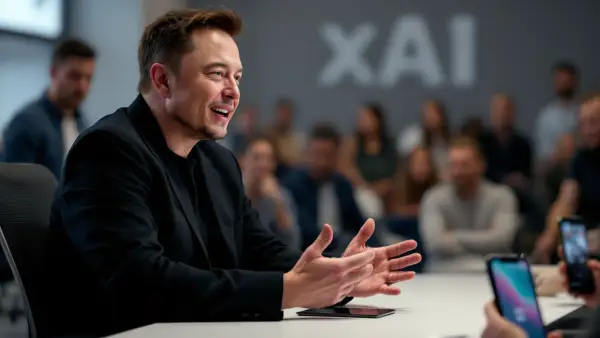
Building artificial general intelligence demands vast computing power and patient funding. xAI, led by Elon Musk in San Francisco, claims it can outlast rivals by scaling aggressively over the next two to three years. Its plan hinges on rapid growth of data centers and access to $20–30 billion annually, a strategic resource unusual for a startup this young.
But this isn’t just a funding race—the real advantage lies in plugging AI compute growth into an ecosystem of Musk’s companies like Tesla, leveraging existing infrastructure and customer channels. “Surviving the short term unlocks long-term dominance,” Musk told staff, signaling a bet on endurance over immediate breakthroughs.
Contrary to AI Hype, Scale Is a Strategic Constraint
Many see AI leadership as a sprint to build better models. The conventional wisdom assumes algorithmic superiority alone wins. That view ignores the central constraint: high-performance compute capacity and sustainable financing.
xAI’sOpenAI or Google, which built leverage through massive early compute investments, xAI aims to use its proximity to Tesla and SpaceX to shortcut infrastructure deployment.
Compounding Leverage From Ecosystem Integration
xAI’sTesla’s
This synergy means improvements to Grok’s prediction and video editing functions directly serve Tesla’sxAI
Space Data Centers and Humanoid Robots: Deploying Future Constraints Now
Musk’sTesla’s Optimus humanoid robots, a notion backed by public discussions from OpenAI and Google about space-based compute. This is constraint anticipation—a radical repositioning of physical infrastructure limits well before competitors.
Building such centers on Mars could break terrestrial power and cooling constraints that throttle AI growth today. This leverages Musk’s multi-industry playbook and radically shifts the AI scalability constraint beyond conventional cloud models.
What Operators Must Watch
xAI’s
The key constraint isn’t model quality; it’s the ability to fund and operate exponentially larger compute infrastructure with near-zero friction
Executives aiming for long-term AI leadership must focus on locking funding cycles and intertwining technology in platforms that reduce go-to-market barriers. Technology-led workforce evolution and autonomous systems adoption will parallel this infrastructural scaling.
“Survival through scalable infrastructure unlocks AI’s compounding returns and rewrites competitive landscapes.”
Related Tools & Resources
As xAI embarks on its ambitious journey to achieve artificial general intelligence, tools like Blackbox AI are instrumental for developers and tech companies looking to enhance their coding capabilities. Streamlining AI code generation not only speeds up development but also aligns with Musk's vision for leveraging integrated technology in growth strategies. Learn more about Blackbox AI →
Full Transparency: Some links in this article are affiliate partnerships. If you find value in the tools we recommend and decide to try them, we may earn a commission at no extra cost to you. We only recommend tools that align with the strategic thinking we share here. Think of it as supporting independent business analysis while discovering leverage in your own operations.
Frequently Asked Questions
What is Elon Musk's xAI and its goal in the AI race?
xAI is Elon Musk's artificial intelligence company based in San Francisco aiming to build artificial general intelligence by aggressively scaling computing power from 200,000 to 1 million GPUs by 2028.
How does xAI plan to outlast its AI rivals?
xAI plans to outlast rivals by leveraging vast funding of $20–30 billion annually and integrating its AI compute with Musk's companies like Tesla, which provides existing infrastructure and customer channels.
Why is scale a critical factor in xAI's strategy?
Scaling compute capacity is central because high-performance AI requires massive GPU resources; xAI aims to expand from about 200,000 GPUs today to 1 million GPUs to overcome compute scarcity, a key bottleneck in AI development.
How does xAI benefit from integration with Tesla's products?
xAI integrates with Tesla’s Grok Voice in-vehicle AI app, reducing customer acquisition costs from $8–15 per install to near zero by leveraging Tesla’s massive user base and internal infrastructure.
What unique infrastructure plans does Musk envision for xAI?
Musk envisions off-planet data centers on Mars managed by Tesla's Optimus humanoid robots, aiming to overcome terrestrial power and cooling constraints currently limiting AI scalability.
What is the main constraint for AI leadership according to the article?
The main constraint is not model quality but the ability to fund and operate exponentially larger compute infrastructure with minimal friction over the long term.
How much annual funding does xAI require to achieve its goals?
xAI anticipates needing $20–30 billion annually to rapidly expand data centers and computing capacity over the next two to three years.
What should AI executives focus on for long-term leadership?
Executives should focus on securing consistent funding cycles and integrating AI technology into platforms that reduce go-to-market barriers while evolving the workforce and adopting autonomous systems alongside scaling infrastructure.