
How Hershey’s Innovation Lab Turned a Viral Trend Into Agile Candy Drops

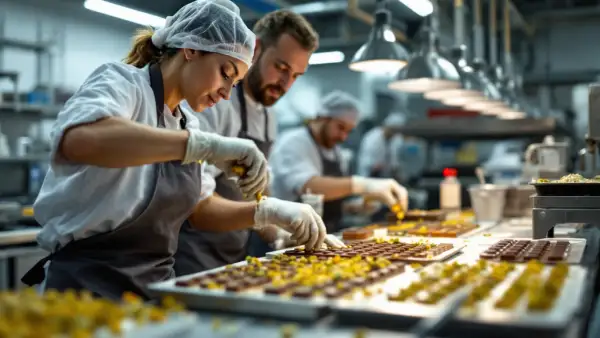
Dubai-inspired pistachio chocolates sparked widespread supply chain shortages in 2023. Hershey’s responded by engineering a limited run of just 10,000 bars, launched exclusively in New York, Philadelphia, and Chicago.
This move isn’t about chasing trends—it’s a demonstration of rapid prototyping and market agility enabled through an internal innovation system called the Velocity Lab. It shows the power of controlling product development speed as a lever in the highly competitive candy market.
“Rapid iteration beats rushing trends,” says Dan Mohnshine, VP of demand creation strategy at Hershey’s. The company flew a team to Italy, testing nine different recipes for a proprietary pistachio-kadayif cream only Hershey’s offers.
“A controlled, deliberate approach to virality is the new hidden advantage.”
Challenging the Rush-to-Market Narrative
Conventional wisdom says viral consumer trends must be exploited first movers or risk missing out. Shake Shack, Lindt, and Ghirardelli all hit the viral Dubai chocolate pistachio craze months ahead of Hershey’s.
But Hershey’s intentionally delayed, crafting a unique product and limiting supply to 10,000 bars—turning scarcity into buzz. This counters the acquisition-cost-focused cookie-cutter rush seen in digital marketing strategies often critiqued in tech, like discussed in Why Salespeople Actually Underuse LinkedIn Profiles For Closing Deals.
Leveraging Internal Rapid Prototyping to Beat Supply Constraints
Hershey’s Velocity Lab harnesses rapid prototyping for consumer packaged goods—an area traditionally locked into slow product cycles. This lab turned a viral TikTok trend into a market-ready product in two months by iterating on nine recipes sourced with authentic ingredients from Italy.
Unlike competitors that outsourced production or rushed products, the entire run was produced at the Hershey, Pennsylvania R&D center, preserving quality control and supply chain transparency during the global pistachio shortage.
Contrast this with Shake Shack’s marketing-driven Dubai Chocolate Pistachio Shake, which lacked product exclusivity. Hershey’s approach relies on the constraint of ingredient sourcing to drive differentiation rather than volume scale, mirroring insights from Why 2024 Tech Layoffs Actually Reveal Structural Leverage Failures.
Positioning Scarcity as a Strategic Asset
Releasing only 10,000 bars and limiting sales to select cities (New York City, Philadelphia, Chicago) and channels (Hershey’s Chocolate World Times Square and Gopuff) triggers immediate scarcity-driven demand in high-value urban markets.
This position reduces the complexity and cost of broad distribution, enabling Hershey’s to focus on experiential marketing and customer feedback loops, which feed future innovation cycles faster.
It’s a textbook case of constraint repositioning—turning production limits and viral competition into a deliberate scarcity model that builds exclusive cultural cachet.
This contrasts with competitors overwhelmed by viral demand crushing supply chains, as chronicled in industry reports about pistachio shortages.
Why Operators Should Track Hershey’s Velocity Lab
By unveiling a dedicated lab for rapid iteration within a legacy candy giant, Hershey’s reveals how large firms can rebuild leverage by embedding agility into product development.
The real constraint shifted from “who's first” to “who uniquely owns the offering.” Competitors chasing speed without unique recipes face margin pressure and brand dilution.
Firms with slow iteration cycles or supply-chain rigidity must reconsider how to reposition constraints into controlled scarcity or exclusive formulations to seize trend waves.
Urban markets with high density and logistics infrastructure amplify this strategy, making Hershey’s model particularly scalable in U.S. city clusters.
“Scarcity and exclusivity managed through rapid prototyping are the future of trend-driven product launches.”
Related Tools & Resources
For businesses looking to innovate within their operations, MrPeasy offers a robust manufacturing management solution that can streamline production processes and enhance supply chain visibility. By embracing this technology, you can maintain quality control and efficiency, much like Hershey's strategic approach to overcoming product development challenges. Learn more about MrPeasy →
Full Transparency: Some links in this article are affiliate partnerships. If you find value in the tools we recommend and decide to try them, we may earn a commission at no extra cost to you. We only recommend tools that align with the strategic thinking we share here. Think of it as supporting independent business analysis while discovering leverage in your own operations.
Frequently Asked Questions
What is Hershey’s Velocity Lab?
Hershey’s Velocity Lab is an internal innovation system focused on rapid prototyping and agile product development. It enabled Hershey’s to turn a viral viral trend into a market-ready pistachio chocolate bar in just two months through rapid iteration.
How many Hershey’s pistachio chocolate bars were produced in the limited run?
Hershey’s produced a limited run of only 10,000 pistachio chocolate bars, released exclusively in New York City, Philadelphia, and Chicago to create scarcity and buzz.
Why did Hershey’s limit the availability of their pistachio chocolate bars?
Hershey’s limited availability to 10,000 bars in select cities and channels to strategically position scarcity as an asset, driving exclusive demand and maintaining supply chain control during ingredient shortages.
How did Hershey’s differentiate their pistachio chocolate from competitors?
Hershey’s differentiated by crafting a unique pistachio-kadayif cream recipe, sourced ingredients from Italy, and producing exclusively at their Pennsylvania R&D center, emphasizing quality and exclusivity.
What role did rapid prototyping play in Hershey’s product launch?
Rapid prototyping allowed Hershey’s to iterate nine different recipes quickly, enabling them to launch a highly differentiated product within two months despite global supply challenges.
Which cities had exclusive access to Hershey’s pistachio chocolate bars?
The 10,000 limited edition bars were made available exclusively in New York City, Philadelphia, and Chicago through Hershey’s Chocolate World Times Square and Gopuff.
How does Hershey’s approach to viral trends differ from competitors like Shake Shack and Lindt?
Unlike competitors who rushed to market, Hershey’s deliberately delayed to create a controlled, exclusive product run, emphasizing scarcity and unique recipe ownership rather than speed alone.
What can businesses learn from Hershey’s innovation lab?
Businesses can learn the value of embedding agility through rapid prototyping, focusing on unique product offerings and scarcity instead of just speed, to build brand strength and manage supply chain constraints effectively.