
How Home Depot's Sluggish Sales Shift Retail Leverage in 2026

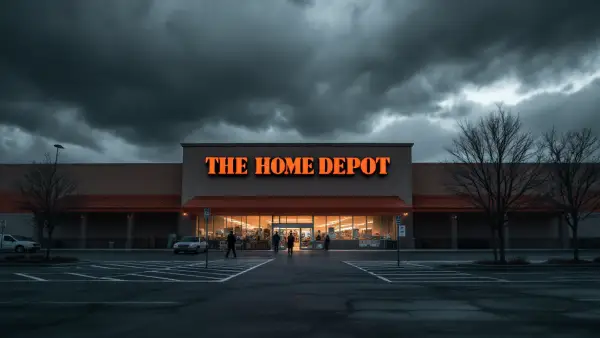
Spending slowdowns have dropped Home Depot's fiscal 2026 sales and profit below analysts' forecasts, highlighting a deeper shift in American consumer behavior. Home Depot reported this slowdown just as the retail sector faces tighter consumer budgets amid inflationary pressures and cautious home improvement demand. But the real story isn’t just weaker spending—it's about how Home Depot's traditional leverage over the market is eroding in ways operators rarely spot. Leverage in retail now depends on redesigning constraint points, not just expanding sales volume.
Why Sales Growth Isn’t The Only Leverage Constraint
Conventional thinking assumes Home Depot's ability to sustain profit relies on continuous sales growth and strong customer demand. Analysts often see missed targets as a failure in marketing or product mix. They miss that the key constraint is a structural shift in consumer spending power and priorities, which changes the entire operating system. This is a classic case where understanding systemic leverage shifts surpasses surface-level sales tracking.
Home Depot faces competitors like Lowe’s and local specialty contractors who operate leaner systems with more digital integration. These competitors have not only targeted niche markets but also locked in lower acquisition costs through platform-enabled community outreach—not heavy promotion.
How Constraint Repositioning Creates Competitive Advantage
Home Depot's previous leverage came from extensive physical footprint and inventory scale, which compressed costs and absorbed supply chain shocks. But as consumer priorities shift to digital convenience and smaller-scale projects, that asset base becomes a drag.
Unlike rivals who aggressively automate customer journeys and reduce localized inventory, Home Depot has yet to fully pivot to a hybrid model that balances digital and physical leverage. This repositioning of constraints can cut operating costs while preserving customer experience. See how OpenAI scaled ChatGPT through user-network effects rather than brute-force infrastructure—illustrating alternate leverage architectures.
Why Operational Leverage Requires Strategic Systems Over Expansion
Investment in new stores or heavy discounting diminishes return when market demand softens. Instead, Home Depot must refine inventory algorithms, local demand forecasting, and supplier coordination to unlock hidden margin pools without inflating volume. The company’s next major leverage play will be operational architectures that work autonomously at scale.
Thankfully, public companies like Home Depot can track and shift these constraints transparently, squeezing more profit from stable or even declining top-line metrics. Understanding profit lock-in constraints helps operators rethink growth under real-world limits.
Who Gains When Retail Clears These Leverage Bottlenecks?
Retailers in regions with volatile consumer spending must transition from growth-driven models to leverage-focused systems. Home Depot's near-term challenge signals that US retail giants need faster automation and smarter supply chains to survive decelerating demand.
Companies that anticipate these shifts and redesign their constraint architectures will emerge more resilient—and more scalable—regardless of market softness. “Leverage is no longer about selling more; it’s about operating smarter.”
Related Tools & Resources
Understanding consumer behavior is crucial in navigating today's retail landscape, and tools like Hyros can empower businesses to track their marketing effectiveness with precision. By leveraging advanced ad tracking and attribution capabilities, retailers can optimize their strategies in response to shifting consumer priorities, just as discussed in the analysis of Home Depot's current challenges. Learn more about Hyros →
Full Transparency: Some links in this article are affiliate partnerships. If you find value in the tools we recommend and decide to try them, we may earn a commission at no extra cost to you. We only recommend tools that align with the strategic thinking we share here. Think of it as supporting independent business analysis while discovering leverage in your own operations.
Frequently Asked Questions
Why did Home Depot's sales and profit fall below forecasts in fiscal 2026?
Home Depot's fiscal 2026 sales and profit fell below analysts' forecasts due to a spending slowdown amid inflationary pressures and cautious consumer demand for home improvement projects.
How is consumer behavior shifting in the home improvement retail sector?
Consumer behavior is shifting toward more digital convenience and smaller-scale projects, which reduces the effectiveness of traditional large physical footprints and inventory scales in home improvement retail.
What competitive advantages do Lowe's and specialty contractors have over Home Depot?
Competitors like Lowe's and specialty contractors use leaner, digitally integrated systems and community outreach platforms to lower acquisition costs, targeting niche markets more efficiently than Home Depot's traditional model.
Why is sales growth no longer the primary leverage constraint for Home Depot?
Sales growth is no longer the main leverage constraint because structural shifts in consumer spending and priorities require rethinking operational systems beyond just increasing sales volume.
What strategies can Home Depot adopt to improve operational leverage?
Home Depot can improve leverage by refining inventory algorithms, enhancing local demand forecasting, automating customer journeys, and better coordinating suppliers to reduce costs without relying on new store expansion or discounting.
How does the shift to digital convenience impact Home Depot's operational assets?
The shift to digital convenience makes Home Depot's large physical footprint and inventory scale less advantageous, potentially increasing operating costs and reducing flexibility compared to competitors focusing on automation and smaller inventories.
What does "repositioning constraints" mean in retail leverage?
Repositioning constraints means redesigning the points in the business operations that limit performance, such as shifting from sales volume focus to smarter operational systems that optimize costs and customer experience.
How will retail companies benefit from clearing leverage bottlenecks?
Retailers that automate faster and develop smarter supply chains can become more resilient and scalable despite softer demand, gaining competitive advantage by operating smarter rather than just selling more.