
How Hong Kong’s Tai Po Fire Forces Insurers to Rethink Pricing Systems

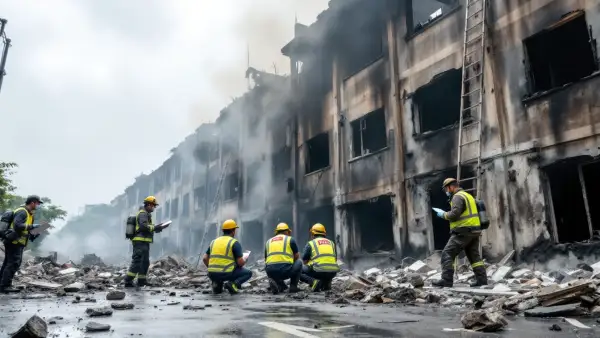
Hong Kong’s property insurers face mounting profit pressure after the deadly Tai Po fire erased underwriting margins already thinned by fierce competition. Property and casualty insurers in Hong Kong now must reassess pricing strategies shaped by years of premium erosion.
S&P Global Ratings highlights that losses from last week’s Wang Fuk Court fire will deepen sector-wide profitability challenges, forcing a recalibration of risk and price.
This geographic shock reveals the fragility of insurance pricing systems that fail to internalize rare but devastating losses—contrary to the industry narrative that competition alone governs premiums.
“Pricing must reflect true risk constraints or underwriting margins erode irreversibly,” says Emily Yi Chang Yoon from S&P.
Competition Doesn't Equal Efficient Risk Pricing
Conventional wisdom treats Hong Kong’s pricing pressure as a direct result of market oversupply and cutthroat rivalry. Yet the real leverage point is the constraint misalignment in underwriting frameworks.
The fierce competition forced insurers to lower premiums based on expected average losses but neglected tail risk exposure from catastrophic events like Tai Po’s fire. This is a classic case of profit lock-in constraints where systemic risk is underestimated in pursuit of volume.
Pricing Systems Must Capture Rare Complexity
The fire’s scale demands insurers embed improved modeling of low-frequency, high-impact risks into their pricing engines. Unlike competitors in more diversified markets who deployed advanced catastrophe modeling, Hong Kong insurers relied heavily on recent claim trends, leaving a latent exposure.
Global leaders like Munich Re and Swiss Re integrate automated catastrophe risk algorithms that trigger price adjustments without manual intervention, preserving underwriting leverage even under shock events.
Hong Kong’s insurers confront the strategic choice to build or license such automation systems. Without this, they revert to reactive pricing cycles that magnify losses and undermine capital efficiency.
The Strategic Shift This Fire Triggers
Identifying this hidden constraint in risk modeling and price feedback shows who gains leverage: those who build systems capturing rare-event risk upfront.
Process documentation and systematic re-underwriting create compounding advantage by reducing claim surprises and lowering volatility in loss reserves.
This recalibration means Hong Kong insurers could pioneer tighter risk-based pricing systems in Asia, setting a new standard for property market underwriting.
Wall Street’s tech selloff shows analogous leverage failures in a different sector, underscoring risk system fragility’s cross-industry impact.
Now, market participants must prioritize automated, adaptive pricing systems to avoid profit erosion from unforeseen catastrophes like Tai Po’s fire.
“Risk recognition, not market share, governs sustainable profits,” is the leverage insight Hong Kong’s insurers cannot ignore.
Related Tools & Resources
To effectively manage the complexities of risk modeling as highlighted in the article, tools like Copla provide robust solutions for process documentation and operations management. By creating and managing standard operating procedures, businesses can enhance their responsiveness to pricing and risk assessment challenges. Learn more about Copla →
Full Transparency: Some links in this article are affiliate partnerships. If you find value in the tools we recommend and decide to try them, we may earn a commission at no extra cost to you. We only recommend tools that align with the strategic thinking we share here. Think of it as supporting independent business analysis while discovering leverage in your own operations.
Frequently Asked Questions
How did the Tai Po fire impact Hong Kong's property insurers?
The Tai Po fire, particularly the Wang Fuk Court incident, erased underwriting margins that were already thin due to fierce competition. This event deepened sector-wide profitability challenges and forced insurers to reconsider their pricing strategies and risk models.
Why are Hong Kong insurers rethinking their pricing systems after the fire?
Hong Kong insurers must embed improved modeling of low-frequency, high-impact risks into their pricing systems, as the fire revealed a fragility in traditional pricing methods that underestimated catastrophic losses, leading to profit erosion.
What is meant by 'constraint misalignment' in insurance pricing?
Constraint misalignment refers to the gap in underwriting frameworks where insurers price premiums based on expected average losses but fail to adequately account for tail risks from rare catastrophic events like the Tai Po fire, leading to underestimated systemic risk.
How do global insurers like Munich Re and Swiss Re manage catastrophic risk differently?
Munich Re and Swiss Re use automated catastrophe risk algorithms that adjust prices proactively without manual intervention, preserving underwriting leverage during shock events. Hong Kong insurers currently rely more on recent claim trends, leaving latent exposures.
What role does process documentation play in improving insurance pricing?
Process documentation and systematic re-underwriting help reduce claim surprises and lower volatility in loss reserves. This creates a compounding advantage, enabling insurers to manage risk and pricing more effectively, as highlighted with tools like Copla in the article.
What strategic shifts are triggered by the Tai Po fire in Hong Kong's insurance market?
The fire forces a shift towards building or licensing automated, adaptive pricing systems that capture rare-event risks upfront, helping insurers pioneer tighter risk-based pricing systems and set a new underwriting standard in Asia.
How does competition affect risk pricing efficiency in Hong Kong?
Fierce competition in Hong Kong has driven premiums down based on expected average losses but neglected tail risk exposure. This has led to an erosion of underwriting margins as pricing fails to capture the complexity of rare catastrophic events.