
How IndiGo’s Operational Crisis Paralyses Indian Air Travel

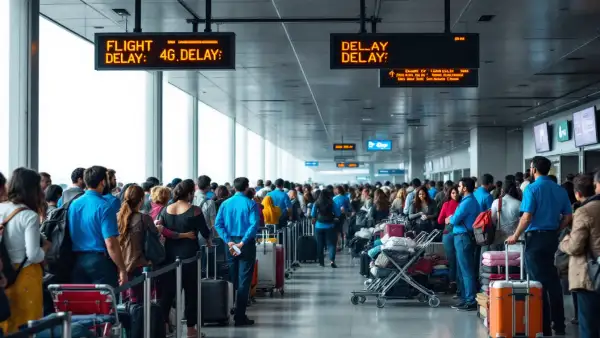
India’s domestic air travel market is among the fastest growing globally, yet faces fragile infrastructure that can halt entire networks overnight. IndiGo, India’s largest airline, hit a severe operational crisis in December 2025, grounding flights and disrupting travel nationwide. This disruption exposes how a lack of operational leverage in airline systems transforms routine hiccups into full-scale paralysis. “Scaling without buffering constraints turns leverage into vulnerability,” one industry analyst noted.
Why Operational Scale Alone Doesn’t Create Resilience
Industry watchers mostly credit IndiGo's size for market dominance and view the crisis as a temporary staffing or weather issue. That’s a simplification. What this crisis reveals is a deep constraint repositioning: It’s not just scale, but how systems integrate redundancies and flexibility to absorb disruptions. Unlike airlines in the US or Europe using decentralized crew management and predictive automation, IndiGo’s tightly coupled scheduling left virtually no room to reroute or reassign resources efficiently.
Compare this to Delta Airlines, whose operational playbook allows dynamic crew rescheduling and multi-hub operations. Dynamic work charts help Delta staff flights post-disruption without manual overwork. IndiGo’s crisis exposes an overlooked leverage gap in Indian aviation: sheer volume isn’t leverage without flexible, automated operational systems.
How Fixed Infrastructure Constraints Amplify Crisis Impact
IndiGo’s operational flow depends heavily on a small number of airports and narrow turn-around windows. Unlike competitive carriers that invest in process documentation and automation to identify pinch points, IndiGo’s systems remain largely manual and centralized. This creates a structural bottleneck where a single delay cascades exponentially, as no back-up procedures autonomously kick in.
Process documentation and automation would enable preemptive crisis management. Airlines like American Airlines have invested in partially autonomous dispatch systems that adjust flights and resources automatically, decoupling human bottlenecks from operational flow. IndiGo’s inability to do this in real time amplified a local issue into a nationwide travel freeze.
How Rebalancing Constraints Unlocks Indian Aviation Growth
This crisis resets the fundamental constraint for India’s booming air travel market. The bottleneck is not demand or fleet size—it is the lack of flexible, automated operational systems that can scale incident handling without human overload.
Investors and operators should focus on software automation, decentralized crew management, and predictive logistics for airlines. When integrated, these remove operational choke points, enabling growth without risking systemic collapses. How OpenAI scaled ChatGPT offers a parallel: automating repetitive tasks turns capacity constraints into scalable advantage.
India’s larger carriers and regulators will need to adopt these leverage systems quickly or face repeated operational shocks. Markets that automate incident response gain control over growth more than those that expand physical assets.
Related Tools & Resources
The operational challenges discussed in the article highlight the need for effective process documentation and workflow management in the aviation industry. Tools like Copla provide companies with the capacity to create and manage standard operating procedures, ensuring that when crises arise, they have robust systems in place to respond effectively and maintain operational flow. Learn more about Copla →
Full Transparency: Some links in this article are affiliate partnerships. If you find value in the tools we recommend and decide to try them, we may earn a commission at no extra cost to you. We only recommend tools that align with the strategic thinking we share here. Think of it as supporting independent business analysis while discovering leverage in your own operations.
Frequently Asked Questions
What caused IndiGo’s operational crisis in December 2025?
IndiGo’s operational crisis was primarily caused by tightly coupled scheduling with no flexible redundancies, leading to severe disruptions and grounding hundreds of flights nationwide.
How does IndiGo’s operational system compare to airlines like Delta and American Airlines?
Unlike IndiGo’s centralized, manual systems, Delta uses decentralized crew management and dynamic rescheduling, while American Airlines employs partially autonomous dispatch systems that adjust flights automatically.
Why can’t sheer operational scale prevent airline disruptions?
Sheer scale without automated, flexible systems can become a vulnerability. IndiGo’s crisis showed that operational leverage requires integrated redundancies and automation to absorb disruptions efficiently.
What infrastructure constraints amplify IndiGo’s crisis impact?
IndiGo relies on a small number of airports and narrow turn-around windows, creating bottlenecks where any delay cascades without backup procedures, amplifying disruptions nationwide.
How can Indian airlines improve resilience against operational shocks?
Adopting decentralized crew management, software automation, and predictive logistics can remove choke points. Automation enables flexible incident handling without human overload.
What role does process documentation play in airline crisis management?
Process documentation helps identify pinch points and supports automation, enabling airlines to manage crises preemptively and maintain operational flow during disruptions.
What is the significance of automation in growing India’s airline industry?
Automation transforms capacity constraints into scalable advantages by reducing reliance on physical assets and human intervention, supporting sustainable growth without systemic collapses.
What lessons can Indian aviation learn from OpenAI’s scaling of ChatGPT?
OpenAI’s example demonstrates how automating repetitive tasks effectively scales capacity. Similarly, Indian airlines can leverage automation to handle operational leverage more efficiently.