
How Japan's JFE Steel Is Reshaping India’s Steel Industry Power Balance

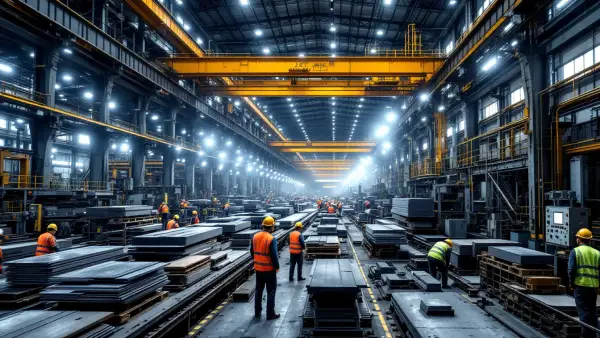
Global steel markets face rising costs and geopolitical tensions intensifying supply risks. Japan's JFE Steel just committed $1.7 billion to form a joint venture with India's JSW Steel, signaling a major shift. But this isn't a simple investment—it's a strategic redeployment of manufacturing leverage across Asia's fastest-growing steel market. Supply chains that control cross-border production hubs wield outsized leverage over global industrial flows.
Challenging the Cost-Centric View of Steel Joint Ventures
Conventional wisdom treats these mega steel deals as reactions to cost pressures or regional demand. Analysts see JFE Steel's move as a way to cut production costs by relocating capacity to India. They're overlooking the core mechanism: strategic constraint repositioning. This means JFE isn’t just chasing savings; it’s embedding operations into India’s industrial ecosystem to unlock sustained leverage.
By shifting capital-intensive steelmaking jointly with JSW Steel, JFE sidesteps capacity limits in Japan and takes advantage of India's lower labor and energy costs. This contrasts with rivals like China Baowu Steel Group and South Korea’s POSCO, which remain focused on regional domestic advantages without such cross-border integration. That difference creates a leverage gap few can replicate quickly.
See also Why Dollar Actually Rises Amid Fed Rate Cut Speculation for insight on currency effects amplifying cross-border investments.
The Joint Venture as a Platform for Scalable Competitive Advantage
JFE’sJFE’s cutting-edge technology with JSW’s local market access and regulatory know-how. This combination creates compounding operational and market access advantages far beyond what either firm could achieve solo.
Competitors investing solely in automation or capacity expansion domestically miss that cross-jurisdictional infrastructure serves as a force multiplier. For example, Tata Steel focuses primarily on Indian capacity, while JFE leverages Japan’s innovation ecosystem alongside India’s growth trajectory. This multiplies leverage with minimal human intervention after setup.
Internal systems design like this echoes themes explored in Enhance Operations With Process Documentation Best Practices, showing how operational clarity accelerates scale.
How This Shifts the Constraint From Production to Market Access
Traditionally, steelmakers see production bottlenecks as their main constraint. But by entering the Indian market with a trusted partner, JFE Steel unlocks a different strategic bottleneck: regulatory complexity and distribution reach. This JV turns market complexity into a leverage point, making execution simpler and cheaper in the long run.
JSW Steel gains from advanced technology and capital inflow while JFE gains an embedded foothold in a booming market with rising infrastructure needs. This system design reduces the need for constant costly dealmaking and government negotiations. It's a durable setup, unlike short-term capacity expansions or commodity plays.
For more on shifting constraints, see Why Wall Street’s Tech Selloff Actually Exposes Profit Lock-In Constraints.
Who Wins Next by Controlling Cross-Border Steel Ecosystems?
This JV highlights a broader Asia-Pacific trend: combining manufacturing excellence with localized market systems. Countries like India and alliances with Japan manifest new operational moats in industrial supply chains. Steelmakers unwilling to reframe constraints beyond geography risk falling behind.
Emerging economies that embrace such integrated ventures will attract capital that enables compounding returns across technology, labor, and regulation. Others will see costs rise without systemic access. Industrial leverage now belongs to those who control multi-layered production and distribution systems.
Steel deals are no longer about cost cutting—they're about controlling Asia's interconnected industrial leverage networks.
Related Tools & Resources
In the evolving landscape of the steel industry, effective manufacturing management is crucial for leveraging competitive advantages. This is where MrPeasy can play a transformative role for manufacturers, offering streamlined production planning and inventory control solutions tailored for steel enterprises navigating complex regulatory environments and cost efficiencies. Learn more about MrPeasy →
Full Transparency: Some links in this article are affiliate partnerships. If you find value in the tools we recommend and decide to try them, we may earn a commission at no extra cost to you. We only recommend tools that align with the strategic thinking we share here. Think of it as supporting independent business analysis while discovering leverage in your own operations.
Frequently Asked Questions
What is the significance of Japan's JFE Steel's $1.7 billion investment in India?
JFE Steel's $1.7 billion joint venture with India’s JSW Steel is a strategic move to shift manufacturing leverage and gain competitive advantage by embedding operations into India’s industrial ecosystem, reducing costs and enhancing market access.
How does the JFE and JSW Steel joint venture differ from other steel industry deals?
The JV is not just about cost-cutting but about strategic constraint repositioning. It combines JFE’s advanced technology with JSW’s local market access, creating a scalable competitive advantage beyond simple capacity expansion seen in rivals like China Baowu or POSCO.
Why is market access considered the new constraint in the steel industry?
By partnering with JSW Steel, JFE Steel gains regulatory and distribution advantages in India, turning market complexity into leverage rather than facing traditional production bottlenecks. This simplifies execution and lowers long-term costs.
How does JFE Steel's strategy compare to other Asian steelmakers?
Unlike China Baowu Steel Group and South Korea’s POSCO, which focus primarily on domestic advantages, JFE Steel integrates cross-border operations between Japan and India, unlocking multi-layered industrial leverage that rivals cannot easily replicate.
What operational advantages does the JFE-JSW joint venture offer?
The JV grants governance rights and system control to JFE, blending cutting-edge Japanese technology with JSW’s market know-how. This results in compounding operational benefits and access advantages that extend far beyond solo efforts.
How might this joint venture impact India’s steel industry?
The partnership positions India as a fast-growing steel market attracting major capital inflows and advanced technology, shifting power balance and industrial leverage deeper into the Asia-Pacific region.
What are the implications for global steel supply chains from this JV?
Controlling cross-border steel ecosystems like the JFE-JSW JV creates new operational moats in industrial supply chains, influencing global steel flows and amplifying leverage over competitors focused only on regional markets.
What role does technology play in this joint venture?
JFE Steel's advanced technology combined with JSW’s local presence creates a system design that multiplies leverage and efficiency with minimal additional human intervention once established.