
How Meesho’s IPO Shows Retail Investors Power India’s E-Commerce Surge

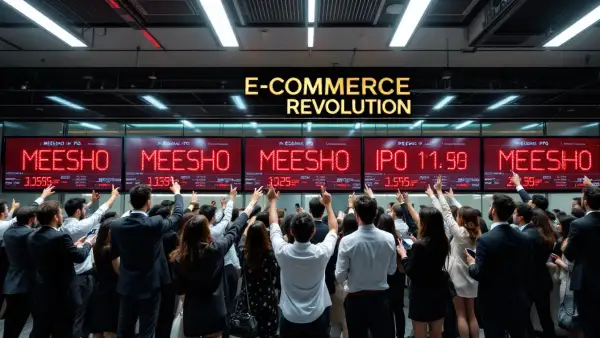
Retail trading accounts for around 15-20% of India’s equity market, a far larger slice than in many developed countries. Meesho’s $604 million IPO, fully subscribed by retail investors, signals a shift in how e-commerce startups access capital in India. This isn’t just fundraising—it’s about tapping a broad investor base to create a self-reinforcing growth engine.
Meesho, a social commerce platform, launched its IPO in late 2025, quickly reaching full subscription driven predominantly by individual investors. This reflects a strategic lever unique to India’s retail-driven capital markets that few other markets replicate at this scale.
The mechanism at play leverages intense retail demand to build a funnel of capital that fuels both marketing reach and product innovation without dependence on institutional constraints.
Retail investor engagement in India’s tech IPOs is rewriting the playbook on scaling with financial leverage that compounds network effects.
Challenging the Institutional Funding Orthodoxy
Conventional wisdom holds that late-stage startups must rely on venture capital giants or institutional investors to fuel growth. This view overlooks India’s unique capital market structure, where retail investors actively participate in IPOs, as seen with Meesho. The reliance on retail funding is not just a backup plan but a strategic decision to cultivate a distributed and engaged ownership base.
Unlike American tech companies that often face concentrated institutional ownership, Meesho gains a governance and marketing advantage through retail shareholders who can serve as organic evangelists and customers. This approach defies common fundraising models and aligns with active user participation, akin to the tactics explored in Why Salespeople Actually Underuse Linkedin Profiles For Closing Deals.
Leveraging Retail Investors to Fuel Sustainable Growth
Meesho’s $604 million IPO showcases how expanding the investor base lowers dependency on volatile venture cycles and taps into India’s vast retail savings pool. This contrasts with competitors like Flipkart and Amazon India, which mostly rely on large foreign direct investment rounds, limiting local retail involvement.
The leverage is systemic: retail investor enthusiasm triggers media buzz, reduces capital cost, and creates a feedback loop that accelerates user acquisition. Such crowd-fueled capital structures enable rapid scaling without proportionally increasing marketing expenses, embedding growth within the system itself.
Similar mechanisms appear in tech, as seen when OpenAI scaled to 1 billion users by leveraging platform effects rather than direct spend. Meesho mirrors this by structurally converting capital market participation into market share expansion.
Unlocking New Constraints in Indian Tech Capital Markets
The fundamental constraint shifted from capital scarcity to capital accessibility. Retail investor participation transforms fundraising from a gatekept process into a distributed acquisition channel for growth capital. This system design reduces friction and aligns shareholder incentives with user growth trajectories.
India’s unique retail investor density unlocks a growth moat that competitors cannot replicate without similar market structures. For operators, this model offers a blueprint for markets with large but fragmented retail investor bases. Meanwhile, governments fostering retail participation can indirectly boost startup scale and resilience.
Future Indian e-commerce players will likely imitate Meesho’s approach, further cementing retail investors as a strategic resource. Exit strategies, IPO timing, and marketing spend will increasingly synchronize with retail sentiment and distribution.
“Retail investors aren’t just buyers—they’re infrastructure for compounding growth.”
Related Tools & Resources
For e-commerce businesses looking to replicate Meesho's innovative funding strategy, tools like Centripe can provide crucial insights into profit tracking and analytics. By leveraging performance metrics effectively, you can better understand your retail investors and optimize growth accordingly. Learn more about Centripe →
Full Transparency: Some links in this article are affiliate partnerships. If you find value in the tools we recommend and decide to try them, we may earn a commission at no extra cost to you. We only recommend tools that align with the strategic thinking we share here. Think of it as supporting independent business analysis while discovering leverage in your own operations.
Frequently Asked Questions
What was the value of Meesho’s IPO and who primarily subscribed to it?
Meesho’s IPO was valued at $604 million and was fully subscribed predominantly by retail investors, highlighting their significant role in India’s equity market.
How does retail investor participation in India differ from other countries?
Retail investors account for around 15-20% of India’s equity market, a much larger share compared to many developed countries, where institutional investors dominate IPOs and equity trading.
Why is Meesho’s reliance on retail funding considered strategic?
Meesho’s reliance on retail funding is strategic because it creates a distributed and engaged ownership base that acts as organic evangelists and customers, boosting both governance and marketing advantages.
How does retail investor enthusiasm benefit Meesho’s growth?
Retail investor enthusiasm generates media buzz, reduces capital costs, and creates a feedback loop that accelerates user acquisition, enabling rapid scaling without proportional increases in marketing expenses.
How does Meesho’s funding model compare with competitors like Flipkart and Amazon India?
Unlike Meesho, competitors like Flipkart and Amazon India mostly rely on large foreign direct investment rounds, limiting local retail involvement and the associated advantages of broad retail investor engagement.
What does the shift from capital scarcity to capital accessibility mean for Indian tech startups?
This shift means that fundraising is no longer a gatekept process but a distributed acquisition channel leveraging India’s large retail investor base, which aligns shareholder incentives with user growth trajectories.
How might Meesho’s IPO strategy influence future Indian e-commerce companies?
Meesho’s IPO strategy is expected to be imitated by future Indian e-commerce players, cementing retail investors as a strategic resource and aligning IPO timing and marketing spend with retail sentiment.
What role do retail investors play in compounding growth for Meesho?
Retail investors are considered infrastructure for compounding growth as their participation not only funds growth but also contributes to a self-reinforcing engine of user acquisition and market expansion.