
How Poundland’s Store Closures Reshape UK Retail Leverage

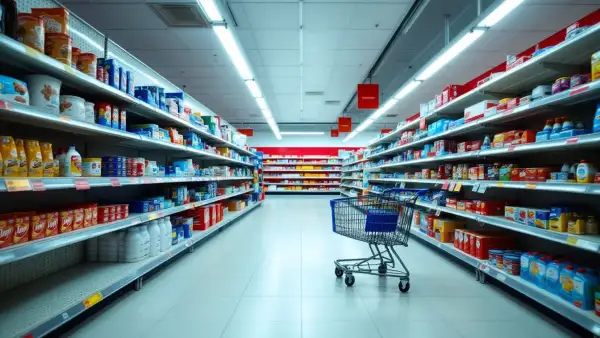
Discount retail in the UK faces mounting pressures as physical stores grapple with operational costs rising faster than revenue. Poundland revealed a new wave of store closures this winter, signaling a significant shift in its turnaround strategy under new ownership. But this move isn’t just cutting costs—it’s about recalibrating store footprint to leverage profitability constraints more effectively. Retailers that rethink physical presence gain structural advantage over competitors locked in legacy models.
Why Closing Stores Is Not Just a Cost-Cutting Play
Conventional wisdom views Poundland’s closures as simple austerity. Analysts chalk it up to trimming physical expense lines amid inflated inflation and shifting consumer habits. They overlook how this strategic downsizing repositions the core constraint from marginal profitability per store to optimized network leverage.
This contrasts with chains that maintain oversized footprints, incurring fixed costs without precision. Salesforce and other SaaS companies have adapted by repurposing assets for scalable digital channels, while Poundland must adjust physical leverage to stay competitive.
Physical Footprint as a Constraint in UK Discount Retail
Unlike competitors who maintain hundreds of outlet locations with limited flexibility, Poundland is strategically pruning underperforming stores to sharpen network efficiency. This resembles a system design where fewer, higher-performing nodes reduce overhead while preserving broad market coverage.
Whereas online rivals use automated inventory and dynamic pricing to scale without physical constraints, traditional retailers face legacy store leases and staffing costs. The selective closures reflect a repositioning of the limiting factor in profit generation—from customer footfall to real estate and personnel costs.
Online retail giants capitalize on automated systems for leverage. In contrast, Poundland’s systemic adjustment reveals the constraints unique to discount retail’s physical operations in the UK market.
New Ownership’s Role in Leveraging Systems for Turnaround
The new owners’ approach prioritizes recalibrating operational systems to reduce human intervention and fixed costs tied to unprofitable stores. Rather than a scattershot closure, this targeted strategy leverages data-driven insights to reconfigure store locations as efficient nodes.
This change unlocks potential for focusing on stores with higher throughput, tighter inventory automation, and streamlined staffing, fostering a compounding advantage as profitability scales.
Process documentation improvements also smooth this transition, enabling systemic shifts without constant human oversight—key for scaling turnaround success.
What UK Retailers Must Watch Going Forward
The crucial constraint in UK discount retail has shifted from expansion to network optimization. Poundland’s remodel signals a broader pattern: success favors retailers who identify and exploit physical footprint as a leverage point. This offers a blueprint for rivals and even international players facing similar cost pressures.
Emerging systems focus on leaner physical assets combined with automation—unlocking competitive advantage in a cost-sensitive market.
Rethinking physical presence is the new battleground for retail leverage in the UK.
Related Tools & Resources
As retailers like Poundland look to optimize their physical footprint and streamline operations, tools like Copla are invaluable for documenting processes and creating standard operating procedures. By reducing human intervention and improving operational efficiency, businesses can respond agilely to market pressures and enhance profitability. Learn more about Copla →
Full Transparency: Some links in this article are affiliate partnerships. If you find value in the tools we recommend and decide to try them, we may earn a commission at no extra cost to you. We only recommend tools that align with the strategic thinking we share here. Think of it as supporting independent business analysis while discovering leverage in your own operations.
Frequently Asked Questions
Why is Poundland closing stores in the UK?
Poundland is closing stores to recalibrate its physical footprint and address rising operational costs. The new ownership strategy focuses on pruning underperforming stores this winter to improve network efficiency and profitability.
How does Poundland’s store closure strategy differ from simple cost-cutting?
Unlike basic austerity, Poundland’s closures reposition the limiting factor for profits from marginal store earnings to optimized network leverage. This strategic downsizing sharpens store footprint to leverage physical assets better rather than just cutting expenses.
What role does physical footprint play in UK discount retail?
Physical footprint is a key constraint in UK discount retail due to fixed costs like leases and staffing. Poundland’s focused reduction of underperforming stores aims to improve throughput and streamline costs, contrasting with larger competitors maintaining oversized store networks.
How are online retailers different from physical discount stores like Poundland?
Online retailers capitalize on automated inventory and scalable digital channels without physical constraints. Poundland’s physical stores face challenges like real estate costs and staff expenses, making strategic network optimization crucial for competitiveness.
What approach has the new ownership taken to improve Poundland’s turnaround?
The new owners prioritize data-driven insights to close unprofitable stores, reduce human intervention, and improve operational efficiency with tighter inventory automation and streamlined staffing for better profitability.
What should UK retailers learn from Poundland’s store closures?
UK retailers should focus on network optimization rather than expansion. Poundland’s model highlights how leveraging physical footprint as a strategic asset can provide a structural advantage amidst market cost pressures.
How can process documentation tools aid retail operations during store closures?
Tools like Copla help retailers document processes and create standard operating procedures, enabling smoother transitions by reducing human intervention and increasing operational efficiency during systemic shifts like store closures.