
How South Africa's New Gold Mine Breaks 15-Year Industry Stalemate

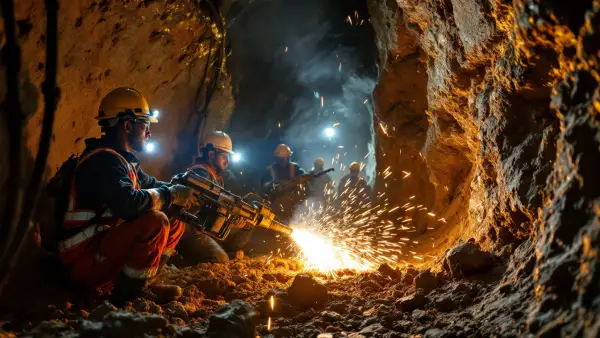
South Africa hasn’t opened a new underground gold mine in 15 years, while global gold prices surged to record highs. On Thursday, a rare new gold mine launched, aiming to capitalize on this bullion rally. But this move isn’t just about mining more gold—it’s about resetting systemic constraints blocking expansion in one of the world’s most resource-rich countries. Unlocking dormant assets can create decades of compounding leverage.
Conventional Wisdom Misses A Crucial Constraint Shift
Industry analysts celebrate the new mine as a bullish response to soaring prices. They overlook that the real barrier wasn’t price—it was regulatory and infrastructure stagnation.
Building mines in South Africa faces multifaceted delays: permitting bottlenecks, aging electrical grids, labor issues, and capital allocation fears. This is constraint repositioning—not just a simple price signal. Unlike other gold producers in Ghana or Australia, which leveraged aggressive automation or modular mine designs, South Africa's new mine integrates modern underground tech systems designed for scalability, breaking historical patterns.
How Modern Systems Lower The Capital Intensity Barrier
The new mine uses advanced mechanization and real-time data analytics to reduce human dependency and downtime. This replaces decades-old labor-driven models that capped output at fixed rates. For context, other countries with recent mine expansions automated 35-50% of extraction processes, which cut operating costs by approximately 20%.
By contrast, South Africa’s approach marries underground robotics with infrastructure upgrades, compressing lead times from permitting to production. This is a system-level play, not just an isolated project, promising easier replication across dormant mine assets. It echoes lessons from OpenAI’s platform scaling, where infrastructure unlocks exponential growth.
Why This Changes The Gold Mining Landscape In Emerging Markets
This mine sets a precedent that the main leverage isn’t gold prices or labor availability—it’s the ability to integrate systems that work without constant human intervention in high-risk environments. Unlike mines that rely mainly on cyclical hiring or commodity price speculation, this mine represents strategic positioning with built-in resilience against typical industry constraints.
South Africa’s shift should catch the eye of resource-heavy emerging economies, where vast reserves often lie idle due to outdated operational norms. Replicating this requires capital but more importantly a redesign mindset that challenges legacy mechanics.
What Mining Execs Must Watch Next
The critical constraint has shifted from raw resource availability to systemic execution bottlenecks. This unlock opens new plays: faster permitting through digital frameworks, adoption of autonomous extraction, and blurred lines between mining and tech sectors.
Operators who master this can move ahead of simple price cycles and build multi-decade compounding advantages. “Dormant assets become the biggest leverage when operational barriers fall,” signaling a new era for South Africa’s mining industry and resource economies worldwide.
Related Tools & Resources
For businesses in the mining sector looking to streamline operations and enhance production planning, MrPeasy offers a robust cloud-based ERP solution tailored for manufacturers. By leveraging modern tools like MrPeasy, operations can not only respond to evolving market dynamics but also maximize the output of dormant assets, just as South Africa's new gold mine seeks to do. Learn more about MrPeasy →
Full Transparency: Some links in this article are affiliate partnerships. If you find value in the tools we recommend and decide to try them, we may earn a commission at no extra cost to you. We only recommend tools that align with the strategic thinking we share here. Think of it as supporting independent business analysis while discovering leverage in your own operations.
Frequently Asked Questions
Why hasn’t South Africa opened a new underground gold mine in 15 years?
South Africa's mining expansion was stalled mainly due to regulatory and infrastructure stagnation, including permitting bottlenecks, aging electrical grids, and labor issues that created systemic constraints beyond just gold prices.
How does South Africa’s new gold mine differ from mines in Ghana or Australia?
Unlike Ghana or Australia which used aggressive automation or modular designs, South Africa's new mine integrates modern underground tech and robotics with infrastructure upgrades, enabling scalability and breaking historical labor-driven limitations.
What role does technology play in South Africa’s new gold mine?
The mine employs advanced mechanization and real-time data analytics to reduce human dependency and downtime, following examples where other countries automated 35-50% of extraction and cut operating costs by approximately 20%.
What systemic constraints were holding back South Africa’s gold mining industry?
The main constraints were regulatory delays, aging infrastructure, labor challenges, and capital fears that slowed permitting and production. The new mine addresses these by modernizing systems and compressing lead times.
How can other emerging markets learn from South Africa’s gold mine advancement?
Emerging markets with resource reserves can replicate this system-level redesign approach by integrating autonomous systems and digital frameworks to overcome legacy operational norms and unlock dormant assets.
What are the strategic implications of South Africa’s new gold mine for the industry?
This mine signals a shift toward system execution over raw resources or price speculation, offering resilience and multi-decade compounding advantages by reducing reliance on cyclical labor and commodity cycles.
What is the expected impact of the new mine on capital intensity and production lead times?
By combining underground robotics with infrastructure modernization, South Africa’s new mine lowers capital intensity barriers and compresses permitting-to-production lead times, enabling scalable replication across dormant assets.
What tools can mining businesses use to maximize output similar to South Africa's new gold mine?
Cloud-based ERP solutions like MrPeasy help streamline operations and enhance production planning by leveraging modern digital tools, supporting businesses in unlocking dormant asset potential in evolving market conditions.