
How Tesla’s Hidden Emergency Doors Expose Design Leverage Risks

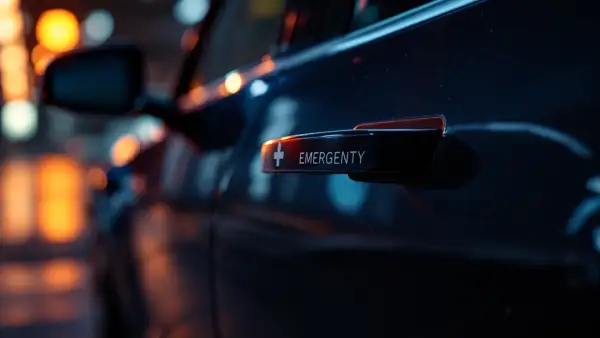
The National Highway Traffic Safety Administration (NHTSA) is probing over 179,000 Tesla Model 3 sedans from 2022 for emergency door handle defects. This follows a petition from a Tesla owner trapped in a burning Model 3 and a Bloomberg investigation linking at least 15 deaths to door failures.
But this probe isn’t just a safety story—it reveals how Tesla’s door handle design exemplifies a leverage trap rooted in user interface constraints hidden within a seemingly sleek system.
Understanding this exposes how design trade-offs in automated systems create compounding operational risks when constraints are poorly repositioned.
“Hidden controls that fail in emergencies break systemic leverage and value.”
Why Expecting Elegance Trumps Practical Emergency Access
Conventional wisdom praises Tesla for pioneering electric door handles as a futuristic, seamless innovation. Yet this overlooks the critical constraint of emergency accessibility for trapped occupants.
By pushing electric, touch-based handles that disable without power, Tesla prioritized aesthetic system design over intuitive manual overrides. This constraint repositioning makes emergency escape dependent on operator knowledge rather than mechanical simplicity.
This challenges typical narratives that innovation alone drives safer cars and aligns with findings in Why Tesla’s New Safety Report Actually Changes Autonomous Leverage.
Electric Door Handles: Power Dependency as a Hidden Constraint
Tesla’s electric handles rely on 12-volt power, which often fails in crashes or fires, disabling automatic door access. Manual emergency releases are mechanically hidden, unlabeled, and non-intuitive, as reported by Tesla owner Kevin Clouse during his 2023 escape.
Unlike traditional vehicles, where emergency door handles are visibly marked and mechanically simple, Tesla’s constraint requires users to know hidden release points—a critical knowledge asymmetry that compounds risk.
This stands in contrast to competitors like Ford or BMW, whose manual release systems emphasize direct physical control over system-dependence.
See also How Crash Champions Quietly Reached $3B in Auto Repair Revenue for how system failures cascade into operational costs.
Escaping the Trap: What Tesla’s Door Design Reveals About System Leverage
This issue illuminates the tension between design elegance and safety constraints—a classic leverage failure in product systems. Tesla’s insistence on electric handles without adequately solving power-loss scenarios creates a constraint bottleneck that disables escape mechanisms in emergencies.
Strategically, this means Tesla compounded risks by embedding critical emergency functions into fragile automated systems rather than robust mechanical backups.
Companies must recognize that not all automation adds leverage—sometimes it adds hidden constraints requiring costly, system-level fixes.
Read why this matters for autonomous systems in Why Tesla’s New Safety Report Actually Changes Autonomous Leverage.
What Operators Should Watch Next
The NHTSA probe changes the operational constraints for Tesla and could force design rewrites or retrofit programs—complex and expensive moves that erode compounding advantages.
Manufacturers in all industries must audit where automation introduces non-obvious failure modes, especially those that disable manual overrides.
Tesla’s door issue exposes a hidden leverage trap: high-tech systems demand equal attention to fallback options to maintain systemic resilience.
This is a call to redesign for clarity and emergency usability rather than pure aesthetic or conceptual elegance.
Related Tools & Resources
As manufacturers and designers rethink safety features in automotive systems, tools like Surecam can provide crucial video surveillance insights. By employing robust security cameras, companies can better understand design failures and improve emergency response, aligning with the article's emphasis on safe product design. Learn more about Surecam →
Full Transparency: Some links in this article are affiliate partnerships. If you find value in the tools we recommend and decide to try them, we may earn a commission at no extra cost to you. We only recommend tools that align with the strategic thinking we share here. Think of it as supporting independent business analysis while discovering leverage in your own operations.
Frequently Asked Questions
What is the NHTSA investigating about Tesla Model 3 door handles?
The National Highway Traffic Safety Administration (NHTSA) is investigating over 179,000 Tesla Model 3 sedans from 2022 due to defects in the emergency door handles that may fail in critical situations like crashes or fires.
Why are Tesla’s door handles considered a safety risk?
Tesla’s electric door handles rely on 12-volt power, which can fail during emergencies. Manual emergency releases are hidden, unlabeled, and non-intuitive, making it difficult for occupants to exit if power is lost.
How many deaths have been linked to Tesla door handle failures?
At least 15 deaths have been linked to emergency door handle failures in Tesla Model 3 vehicles, according to a Bloomberg investigation cited during the NHTSA probe.
How do Tesla’s door handles differ from competitors like Ford or BMW?
Unlike Tesla’s power-dependent electric handles, competitors like Ford and BMW use manually operable, visibly marked emergency door handles that emphasize direct physical control without relying solely on electrical power.
What design issue does Tesla’s door handle problem highlight?
The problem highlights a leverage trap where design elegance and automation compromise practical emergency access, embedding critical functions into fragile systems with inadequate mechanical fallback options.
What could be the consequences of the NHTSA probe for Tesla?
The probe could lead to costly design rewrites or retrofit programs that affect Tesla’s operational advantages and require addressing hidden failure modes in automated door access systems.
What should manufacturers learn from Tesla’s emergency door design issues?
Manufacturers should ensure automated systems do not disable manual overrides and design emergency features that are intuitive and mechanically robust to maintain systemic safety and resilience.