
How the Pentagon's Drug Boat Strike Changes Military Legal Leverage

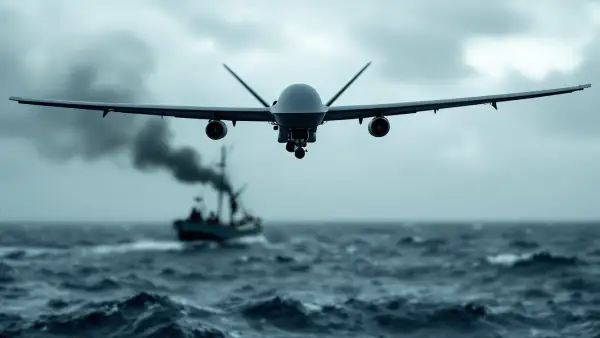
US military strikes on suspected drug-smuggling vessels in the Caribbean defy standard maritime law norms. On September 2, 2025, a US drone strike killed nine people on a suspected drug boat, followed by a second strike that reportedly killed two survivors.
While Defense Secretary Pete Hegseth denied ordering the lethal follow-up strike, the operation upended the Pentagon's own law of war manual, which explicitly forbids firing on shipwrecked individuals. This legal contradiction reveals a shift in how the US military leverages combat rules against non-state actors.
The real leverage mechanism is less about raw firepower and more about repositioning the legal constraints that govern force application in maritime interdiction operations.
"Legal frameworks shape operational freedom far more than weaponry," said retired military law expert Dan Maurer.
Challenging Assumptions on Military Constraints
The conventional view assumes military rules strictly protect incapacitated enemies, compelling rescue or humane treatment. But the Pentagon’s designation of suspected drug traffickers as "narco-terrorists" and the recent White House move to classify drug cartels as Foreign Terrorist Organizations signal a calculated repositioning of these constraints.
This shift challenges traditional maritime interdiction protocols typically led by the Coast Guard—who prioritize disabling vessels before rescue or detainment. Instead, operational control passed unusually to Admiral Frank Bradley and Special Operations Command, bypassing the regional Southern Command.
This is not a mere tactical change; it is a legal and operational realignment giving military forces broader latitude to neutralize perceived threats.
Operators studying systems should note the move resembles the kind of constraint repositioning explained in why 2024 tech layoffs actually reveal structural leverage failures. Here, the constraint of maritime law is being reinterpreted to enable more aggressive tactics.
Leveraging Legal Ambiguity to Expand Strike Authority
The Pentagon’s 1,200-page manual stresses protection for incapacitated combatants, yet the US military has executed dozens of lethal strikes on drug boats since September 2025, killing over 80 people. The follow-up strike on survivors represents a sharp break from established practice, where rescue would normally follow disabling a vessel.
Unlike typical Coast Guard operations, which switch to rescue after disarming threats, this military-led approach weaponizes legal interpretation to justify eliminating all onboard, including incapacitated survivors.
This method drastically reduces risks and costs of capture and prosecution. It shifts from a force application model requiring continuous human intervention to one relying on legal framing to sustain lethal operational leverage.
Comparatively, other countries enforcing maritime drug controls rely heavily on legal restraint to avoid international backlash and complex detainment processes. The US approach signals strategic willingness to exploit legal gray zones for operational advantage.
This tactic mirrors the leverage dynamics discussed in how Ukraine sparked a $10b drone surge in military production, where changing legal and operational frameworks magnified technology’s impact.
What This Means for Military and Legal Operators
The critical constraint no longer lies in drone or strike capability, but in how rules of engagement adapt to new threat designations and command structures.
Legal ambiguity is being weaponized as a leverage point to expand permissible military action against nontraditional combatants.
Observers in defense, law, and policy fields must monitor this evolving framework because it sets precedent for conflating criminal and combatant status, fundamentally altering force application systems worldwide.
Other countries engaged in maritime interdiction can replicate this by redefining the legal status of suspects and consolidating strike authority within specialized commands.
"Strategic leverage emerges when legal frameworks are the battlefield's true front line."
For those tracking operational leverage, understanding constraint repositioning here is vital—because it shifts what is possible without increasing costs or firefights.
See how shifting systems influence workforce dynamics in why AI actually forces workers to evolve not replace them and how operational documentation crystallizes advantage in enhance operations with process documentation best practices.
Related Tools & Resources
As the article illustrates the importance of legal frameworks in military operations, the same strategic thinking applies to marketing teams navigating complex campaign management. This is precisely where Ten Speed comes in, offering robust marketing resource management and workflow automation tools that can help streamline operations and maximize effectiveness in a challenging environment. Learn more about Ten Speed →
Full Transparency: Some links in this article are affiliate partnerships. If you find value in the tools we recommend and decide to try them, we may earn a commission at no extra cost to you. We only recommend tools that align with the strategic thinking we share here. Think of it as supporting independent business analysis while discovering leverage in your own operations.
Frequently Asked Questions
What was the Pentagon's recent drug boat strike in the Caribbean?
On September 2, 2025, the US military conducted drone strikes on suspected drug-smuggling vessels in the Caribbean, killing nine people in the initial strike and two survivors in a follow-up strike.
How did the drug boat strike change military legal leverage?
The strike defied standard maritime law norms by targeting shipwrecked survivors, contradicting the Pentagon's law of war manual and signaling a shift in how US military legal rules apply to non-state actors like drug cartels.
Why are suspected drug traffickers designated as "narco-terrorists"?
The Pentagon and White House reclassified drug cartels as Foreign Terrorist Organizations and "narco-terrorists," repositioning legal constraints to expand military operational freedom against such nontraditional combatants.
How does the new US military approach differ from traditional Coast Guard operations?
Unlike Coast Guard protocol, which disables vessels then rescues survivors, the military approach authorizes lethal strikes on incapacitated targets onboard, reducing capture risks and legal complications.
How many lethal strikes on drug boats has the US military executed since September 2025?
Since September 2025, the US military has conducted dozens of lethal strikes on drug boats, resulting in over 80 deaths, including follow-up strikes targeting survivors.
What legal contradictions arise from the Pentagon's strike tactics?
The strikes contradict the Pentagon's law of war manual that explicitly forbids firing on incapacitated shipwrecked individuals, indicating a strategic legal realignment to broaden military strike authority.
What are the implications for international maritime interdiction protocols?
The US approach signals a shift towards exploiting legal gray zones for operational advantage, potentially influencing other countries to redefine suspects' legal status and consolidate strike control.
Who commented on the strategic use of legal frameworks in military operations?
Retired military law expert Dan Maurer stated, "Legal frameworks shape operational freedom far more than weaponry," highlighting the pivotal role of legal leverage in current operations.