
How The US Air Force Built a Jet Trainer for Modern Combat

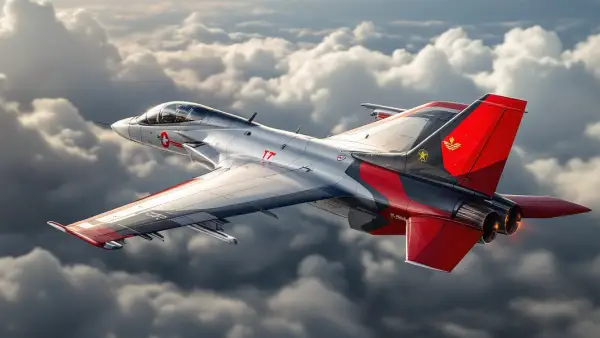
The US Air Force just replaced a 60-year-old training jet with the T-7 Red Hawk, designed for the realities of stealth and next-gen fighters. Boeing’s new trainer arrived at Joint Base San Antonio-Randolph, marking a shift from legacy platforms like the T-38 Talon. This isn’t just a new jet; it’s a system upgrade for pilot training that manages data and decision-making under combat stress. “More capable, intuitive warfighters right out of the gate” sums up why this matters for modern air power.
Why New Pilot Training Isn’t Just About Flying
Conventional wisdom says pilot trainers prepare pilots to fly planes safely and skillfully. But the decades-old T-38 Talon, despite multiple life extensions, simply cannot simulate the complex sensor data and information processing demanded by today’s stealth bombing and fighter missions. This mismatch is not a cost-cutting problem but a case of constraint repositioning—the limitations of old hardware force a redefinition of what pilot readiness means. The delayed flight simulator rollout and rising maintenance costs highlighted by the Government Accountability Office confirm that sticking to old tech is a hidden drag on force readiness. This scenario echoes system constraints in other fields, as explored in 2024 tech layoffs reveal structural leverage failures.
Flexible Design Creates Long-Term Leverage
The T-7 Red Hawk is built with an open architecture that can incorporate emerging combat platforms and sensor data real-time. Unlike prior trainers locked into fixed hardware, this flexibility cuts training obsolescence risks in half. Pilots won’t just learn to fly fifth-generation fighters like the F-22 Raptor and F-35 Lightning II, but also prepare for the upcoming B-21 Raider stealth bomber and sixth-generation F-47. Contrast this with pilot training programs tethered to legacy platforms that require costly overhauls to simulate newer battlespace realities. Similar to how OpenAI scaled ChatGPT via system design, the Air Force’s approach leverages modular upgrades to training in place of expensive new fleets.
Integrated Live-Virtual Training Extends Capability
Alongside the jet, advanced ground and maintenance systems create a live-virtual-constructive training ecosystem. Real flights, simulators, and virtual assets merge, making updates to emerging enemy threats and weapon systems seamless. This reduces the need for new hardware iterations, a massive cost and time lever for training scalability. Other militaries often replace trainers every few decades without this continuous update model. The US approach is mechanistic leverage—building upgrade paths into the system rather than chasing incremental replacements. This shift mirrors how sales teams unlock leverage by better digital tools.
The New Constraint and Who Benefits
The binding constraint shifted from mere flight proficiency to mastering complex data streams and decision environments under pressure. Operators must now train pilots not just on controls but on cognitive workflows akin to software engineers managing multi-source inputs. This forces downstream upgrades in instructor training, maintenance processes, and base infrastructure. Practical leverage for the Air Force includes faster pilot readiness, lower lifecycle costs through modular upgrades, and strategic alignment with future weapons systems. Other forces facing similar modernization pressures should watch closely. “Pilots learn to manage information, not just fly—this rewrites air combat training.”
Related Tools & Resources
As the Air Force revolutionizes pilot training through innovative approaches, similar principles can be applied to educational initiatives. If you're looking to enhance training programs or share knowledge effectively, platforms like Learnworlds are invaluable. They provide intuitive tools for creating engaging online courses that can help educators and trainers alike adapt to the evolving demands of teaching. Learn more about Learnworlds →
Full Transparency: Some links in this article are affiliate partnerships. If you find value in the tools we recommend and decide to try them, we may earn a commission at no extra cost to you. We only recommend tools that align with the strategic thinking we share here. Think of it as supporting independent business analysis while discovering leverage in your own operations.
Frequently Asked Questions
What is the T-7 Red Hawk and why was it developed?
The T-7 Red Hawk is the US Air Force's new jet trainer designed to replace the 60-year-old T-38 Talon. It supports training for modern combat realities including stealth and next-generation fighters.
How does the T-7 Red Hawk improve pilot training compared to the T-38 Talon?
The T-7 Red Hawk features open architecture enabling integration of real-time sensor data and emerging combat platforms, reducing training obsolescence by 50% and supporting pilots in managing complex combat information.
Which advanced fighter jets can pilots train for using the T-7 Red Hawk?
Pilots can train for fifth-generation fighters like the F-22 Raptor and F-35 Lightning II, as well as prepare for upcoming aircraft such as the B-21 Raider stealth bomber and the sixth-generation F-47.
What is live-virtual-constructive training and how is it integrated with the T-7 Red Hawk?
Live-virtual-constructive training combines real flights, simulators, and virtual assets into one ecosystem. Alongside the T-7 jet, it allows seamless updates to train against emerging threats without needing new hardware.
Why is the shift in pilot training considered a "constraint repositioning"?
The shift reflects moving from focusing solely on flight proficiency to mastering complex data streams and decision-making under combat stress, necessitating upgrades in instructors, maintenance, and infrastructure.
How does the T-7 Red Hawk program cut lifecycle costs for the Air Force?
The program uses modular upgrades and open design to avoid costly overhauls or fleet replacements, enabling continuous system enhancements and lowering total lifecycle costs.
What are the strategic benefits of the T-7 Red Hawk for the US Air Force?
The T-7 Red Hawk allows faster pilot readiness, aligns training with future weapons systems, and ensures long-term flexibility in adapting to evolving combat requirements.