
How Turkey’s Erdogan Shifted Black Sea Leverage in Maritime Security

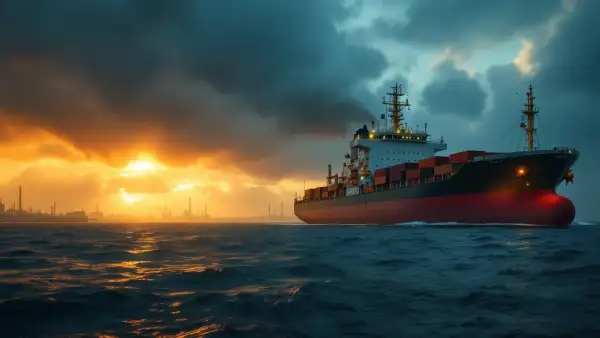
Shipping insurance globally spikes after commercial vessel attacks typically cost insurers millions per incident. Turkey just declared attacks on Black Sea commercial ships unacceptable, signaling a crucial shift in regional maritime control. President Erdogan positioned this stance not as mere protest but as a strategic move reshaping the Black Sea security system that underpins trade leverage. Control over maritime access shapes not only trade but geopolitical power projection.
On December 1, 2025, Turkey's Erdogan publicly condemned assaults on commercial vessels traversing the Black Sea, a pivot from traditional diplomatic silence. The attacks threaten vital shipping lanes for multiple countries, including Turkey, Russia, Ukraine, and other Black Sea littoral states. Erdogan’s statement shifts the maritime risk calculus from isolated incidents to systemic threat mitigation.
But this isn’t just about coastal defense. It’s about integrating security with maritime infrastructure to enforce real-time control over Black Sea trade flows, reducing risky chokepoints and hardening commercial shipping leverage. Erdogan’s move elevates Turkey’s role from passive observer to active controller in a strategically vital region.
Power flows where control over maritime transport consolidates systemic economic and military advantages.
Why maritime security is mistakenly viewed as passive diplomacy
The common view treats Black Sea shipping risks as external shocks traders must absorb or insure against. Analysts see Erdogan’s remarks as diplomatic posturing. They miss the underlying system redesign: Turkey is repositioning the key constraint governing regional trade—maritime threat response.
This contrasts with approaches like Russia’s hard power naval postures or Ukraine’s defensive proxy strategies, which focus on military dominance. Erdogan leverages Turkey’s geostrategic position, controlling the Bosporus Straits—the Black Sea’s gateway—to assert a security architecture that protects commerce while projecting political leverage. This exact mechanism parallels leverage shifts seen in other geographies where infrastructure control trumps sheer military force. See how Senegal’s debt dynamics hide a fragile systemic constraint.
How Turkey’s geographic position enables leverage over Black Sea trade flows
Turkey controls the Bosporus and Dardanelles straits, funnels for over 40% of Black Sea shipping traffic, including energy exports. Unlike countries relying solely on naval presence, Turkey’s control is reinforced by legal frameworks like the Montreux Convention, which regulates naval movement through these chokepoints.
Erdogan’s public stance converts this control into a leverage point over security protocols. By declaring attacks unacceptable, Turkey signals readiness to enforce stricter maritime controls and rapid response systems without direct engagement. This flips the constraint from reactive ship defense to proactive trade route governance.
This differs from Russia’s isolated naval threats or insurance firms’ risk pooling, transforming leverage into a system-based model that can operate autonomously, limiting conflict spillovers. The leverage strategy echoes how OpenAI scaled ChatGPT—turning a passive asset into an active control mechanism.
What Erdogan’s move unlocks for regional and global stakeholders
Changing the maritime security constraint in the Black Sea unlocks diplomatic leverage, risk reduction for commercial stakeholders, and geopolitical positioning for Turkey. Other Black Sea nations and trading partners must adapt to a framework where security isn’t just naval posturing but integrated infrastructure control.
International insurers and shipping companies face new operational standards, likely raising compliance and monitoring automation. This affects freight costs and insurance models, highlighting systemic leverage reshaped by Turkey’s repositioning.
Countries with chokepoints or trade routes can replicate this strategic integration of infrastructure and security, as seen in other domains like financial systems or data infrastructure. For deeper understanding of such leverage shifts, see how robotics firms changed operational scale.
When control of infrastructure becomes the primary constraint, power and profit compound faster and with less friction.
Related Tools & Resources
As Turkey shifts its maritime control and enhances security protocols, businesses should consider the importance of surveillance in logistics and shipping. Tools like Surecam offer reliable video surveillance solutions that can enhance security efforts, ensuring that shipping practices adapt to new geopolitical insights and protect vital trade routes. Learn more about Surecam →
Full Transparency: Some links in this article are affiliate partnerships. If you find value in the tools we recommend and decide to try them, we may earn a commission at no extra cost to you. We only recommend tools that align with the strategic thinking we share here. Think of it as supporting independent business analysis while discovering leverage in your own operations.
Frequently Asked Questions
How has Turkey's control over the Bosporus Straits influenced Black Sea maritime security?
Turkey controls over 40% of Black Sea shipping traffic through the Bosporus and Dardanelles straits. Leveraging this geographical advantage, Turkey enforces maritime security protocols under the Montreux Convention, allowing it to reshape regional trade flows and reduce risks to commercial shipping.
What was the significance of Erdogan's declaration on December 1, 2025?
On December 1, 2025, President Erdogan condemned attacks on Black Sea commercial vessels as unacceptable. This marked a strategic pivot from passive diplomacy to active maritime security enforcement, signaling Turkey's intent to proactively govern Black Sea trade routes and mitigate systemic threats.
How do Turkey's maritime security measures differ from Russia’s naval postures?
Unlike Russia's hard power naval strategies, Turkey integrates legal frameworks and infrastructure control, such as the Montreux Convention, to regulate shipping through crucial chokepoints. This approach emphasizes systemic threat mitigation and trade flow governance rather than solely military dominance.
What impact does Turkey’s maritime leverage have on international insurers and shipping companies?
Turkey’s repositioning establishes new operational and security standards for international insurers and shipping firms, likely increasing compliance and monitoring automation. This could raise freight costs and transform insurance risk models by emphasizing integrated infrastructure control over reactive defense.
Why is maritime security often misunderstood as passive diplomacy?
Maritime security is commonly viewed as a reactive or diplomatic issue; however, Turkey’s approach reveals it as a strategic redesign of systemic trade constraints. By controlling key chokepoints and enforcing security protocols, Turkey turns maritime security into an active economic and geopolitical leverage mechanism.
How does the Montreux Convention reinforce Turkey's control over Black Sea maritime traffic?
The Montreux Convention legally regulates naval movements through the Bosporus and Dardanelles straits, strengthening Turkey’s control over maritime traffic. This legal framework complements Turkey’s geographic position, enabling enforcement of security measures without direct military engagement.
What broader lessons do Turkey's maritime security strategies offer for other countries?
Turkey's strategy exemplifies how integrating infrastructure control with security can compound power and profit rapidly. Countries controlling critical chokepoints or trade routes can replicate this model to enhance diplomatic leverage and protect economic interests.
How might Turkey's maritime shift affect Black Sea regional geopolitics?
Turkey’s enhanced maritime security transforms the Black Sea security system, compelling littoral states like Russia and Ukraine to adapt. The shift integrates trade flow control with security architecture, altering traditional naval power balances and increasing Turkey’s geopolitical influence.