
How Ukraine's Covert Strikes Upend Russian Airpower Systems

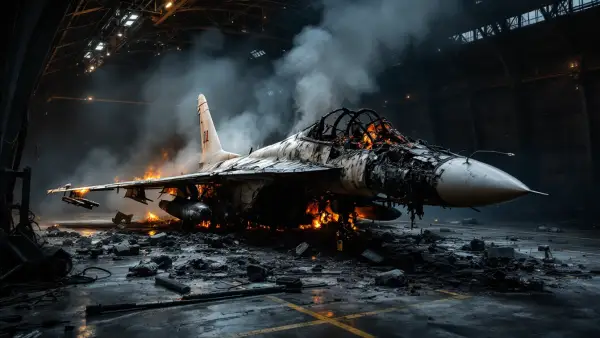
Russia invests hundreds of millions in fighter jets like the Su-30, yet Ukraine continuously destroys them with precision sabotage. This week, Ukraine's military intelligence (GUR) claimed it sneaked into a Russian airbase near Lipetsk and destroyed two Su-30 fighter jets worth up to $100 million combined. But this isn’t just about destroying hardware; it’s a strategic pivot to exploit gaps in airbase security leverage.
Ukraine’s covert infiltration operation studied guard rotation and patrol routes for two weeks before executing a precise strike inside a hangar. This highlights a leverage system where intelligence, timing, and tactical stealth compound to bypass traditional defense spending. “Effective leverage in warfare is about turning existing constraints into attack vectors,” says a defense systems analyst.
Why airbase security isn’t the ultimate constraint
Conventional wisdom focuses on spending to build more advanced jets or radars. In reality, the constraint here is protecting high-value assets in hardened locations. The Russian approach has been to disperse jets and rely on defensive patrols, but Ukraine’s human intelligence and resistance networks reposition that constraint by targeting predictable guard behaviors.
This mechanism echoes themes from Ukraine’s drone surge, where relatively cheap unmanned systems accessed deep Russian territory. Rather than brute-forcing or matching expensive platforms, Ukraine uses system understanding and human elements to amplify impact. This sharply contrasts with traditional Western air defense investments, which are often missile-centric and reactive.
How Ukrainian sabotage exploits system-level blind spots
The two-week reconnaissance phase enabled penetrating one of Russia’s reportedly heavily guarded airfields—challenging assumptions about invulnerability. Unlike the West and Russia focusing on costly interceptors like the $7 million Patriot missile, Ukraine operates where human schedules and routine guard changes are the real vulnerability.
This is a case where the constraint is not raw firepower but operational rhythm and predictability. Ukrainian forces turn this into leverage by using local resistance ties, intelligence craftsmanship, and tactical timing—mechanisms that require years of groundwork and network building, not jet manufacturing. The approach moves beyond conventional drone or missile strikes, marking a multidimensional leverage strategy.
The strategic implications for Western and global defenses
Ukraine’s strikes illuminate a new constraint for Western militaries: how to secure air assets against low-cost, high-impact espionage and sabotage, not just high-cost missile drones. NATO’s renewed focus on ground-based air defense needs to prioritize systems that disrupt predictable guard cycles and incorporate continuous human-behavior analytics.
Countries with large air forces and multiple bases must build security systems that operate autonomously against stealth human attacks. NATO’s air defense priorities are evolving accordingly, learning from Ukraine’s asymmetric leverage model.
Future warfare won't just respond to missile threats but will integrate human and autonomous defense synergy. Leverage comes from exploiting overlooked but systemic operational constraints, not just technology upgrades.
For operators, the lesson is clear: Targeting the rhythm and predictability of defensive systems multiplies impact far beyond simple cost comparisons. Systems that work without constant human intervention remain vulnerable if their human components are exploited. The geopolitical ripple of Ukraine’s method hints at a global shift where cyber, human intelligence, and drone warfare will converge into new strategic leverage layers.
Related Tools & Resources
As Ukraine has demonstrated, understanding the rhythm of your environment can create significant advantages. Similarly, for businesses looking to enhance their security, solutions like Surecam offer state-of-the-art surveillance systems that can identify and address vulnerabilities before they become threats. Taking a proactive approach might just provide the leverage you need to protect valuable assets. Learn more about Surecam →
Full Transparency: Some links in this article are affiliate partnerships. If you find value in the tools we recommend and decide to try them, we may earn a commission at no extra cost to you. We only recommend tools that align with the strategic thinking we share here. Think of it as supporting independent business analysis while discovering leverage in your own operations.
Frequently Asked Questions
How did Ukraine destroy two Su-30 fighter jets despite heavy Russian defenses?
Ukraine’s military intelligence conducted a two-week reconnaissance to study guard rotations and patrol routes, allowing a precise sabotage inside a Russian airbase near Lipetsk. This human intelligence approach bypassed traditional defense spending focused on hardware.
What was the estimated worth of the Su-30 fighter jets destroyed by Ukraine?
The two Su-30 fighter jets destroyed in the covert strike were worth up to $100 million combined, highlighting the high financial impact of Ukraine’s targeted sabotage operations.
Why is airbase security not the ultimate constraint in protecting airpower systems?
Despite investments in jets and radars, the real security constraint is predictable human factors such as guard routines and patrol schedules, which Ukraine exploited through infiltration and sabotage.
How does Ukraine’s use of human intelligence compare to traditional Western air defense strategies?
While Western militaries focus on missile-centric defenses like $7 million Patriot missiles, Ukraine leverages operational rhythms and human behavior patterns, using resistance networks and timing to create asymmetric advantages.
What lessons does Ukraine’s covert strike teach about future warfare?
Future warfare will integrate human intelligence, cyber, and autonomous defense systems to exploit systemic operational constraints rather than relying solely on expensive technology upgrades.
How is NATO adapting its air defense priorities based on Ukraine’s tactics?
NATO is shifting focus toward ground-based air defense systems that disrupt predictable guard cycles and incorporate continuous human behavior analytics to prepare for stealthy sabotage methods.
What role do resistance networks play in Ukraine’s covert strikes?
Local resistance networks provide crucial support by offering intelligence on guard routines and terrain, enabling Ukrainian forces to execute precise strikes deep inside heavily guarded Russian airbases.
Can lessons from Ukraine’s military tactics apply to business security?
Yes, understanding operational rhythms and vulnerabilities can give businesses strategic advantages. Technologies like Surecam’s surveillance systems help detect and address security gaps proactively.