
How Ukraine's Droid Drone Held Front Lines for 45 Days Straight

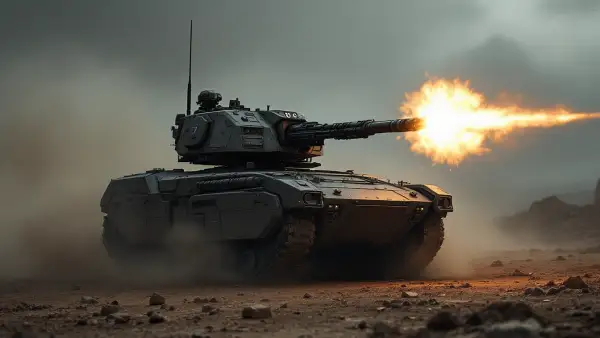
War zones average high casualty rates in frontline infantry roles. Ukraine just replaced frontline soldiers with an armed ground robot for 45 consecutive days, without casualties. Ukraine's deployment of the Droid TW 12.7 ground drone shows how remote, automated systems reshape battlefield leverage. Using machines to hold ground means shifting survival from humans to scalable tech.
Holding the Line: Why This Is Not Just Cost-Cutting
Traditional military thinking assumes frontline defense requires massed human presence, accepting inevitable casualties. Analysts see robotic deployment as marginal support or cost-cutting. They’re wrong—the real shift is constraint repositioning: replacing the most vulnerable human element with a remotely controlled system. This is a direct challenge to entrenched command models relying on infantry manpower.
The NC13 unit under Ukraine’s 3rd Assault Brigade specifically formed to operate Uncrewed Ground Vehicles (UGVs) like Droid TW 12.7. Their approach shows how combining AI navigation with remote weaponry creates a new frontline leverage point. It’s a tangible example of how robotic technology redefines battlefield constraints, not just adds marginal support. See why Ukraine’s drone surge is rewriting combat roles.
Mechanics of Leverage: From Infantry to Autonomous Defense
The Droid TW 12.7 is a tracked Uncrewed Ground Vehicle equipped with a .50-caliber M2 Browning machine gun, remotely operated up to 15 miles away with AI-assisted navigation. This system sustained frontline defense for 45 days straight, preventing enemy infiltration with zero soldier casualties. While Russia and Ukraine both develop combat UGVs, many rely on human operators close to danger zones—Ukraine’s NC13 unit controls these drones remotely, mitigating risk and force exhaustion.
Unlike conventional Russian infantry or unmanned systems requiring risky human proximity, Ukraine’s use of a radio-controlled drone with AI navigation dramatically reduces human exposure. Competing militaries still spend heavily on troop reinforcements facing high attrition, whereas this mechanized approach converts a single operator’s remote control into days-long frontline presence. This shifts the cost structure from human attrition to technology maintenance and signal security.
Strategic Implications For Modern Warfare And Beyond
The critical constraint that changed is the frontline soldier’s physical vulnerability. By substituting a durable robotic platform for infantry, Ukraine creates compounding advantages in troop longevity and operational tempo. The operators focus on remote control, AI handles navigation, and the weapon system autonomously tracks targets. This multi-layered automation reduces human fatigue and risk simultaneously.
Military strategists and defense industries globally must now recalibrate force structure and procurement priorities. The question shifts from how many soldiers to deploy to how effectively UGV systems can hold and extend operational lines. Regions with ongoing conflicts and limited human capital can replicate this model quickly, leveraging local robotics innovation with remote operation to multiply force capacity.
In warfare, survival scales when machines replace mortal constraints. This story debunks the idea that only massed troops can hold ground—it’s about embedding systems that fight continuously, remotely, and without exhaustion.
Explore how robotics firms are revolutionizing automation and why AI shifts human roles rather than replaces them. The Droid TW 12.7 marks a frontline pivot towards autonomous systems growing critical in both military and commercial leverage strategies.
Related Tools & Resources
Incorporating AI into your operations, like the way Ukraine leverages technology on the battlefield, can transform your strategic approach significantly. Tools like Blackbox AI not only enhance coding and development capabilities but also encourage innovative solutions in high-stakes environments, similar to the advancements seen in military applications. Learn more about Blackbox AI →
Full Transparency: Some links in this article are affiliate partnerships. If you find value in the tools we recommend and decide to try them, we may earn a commission at no extra cost to you. We only recommend tools that align with the strategic thinking we share here. Think of it as supporting independent business analysis while discovering leverage in your own operations.
Frequently Asked Questions
What is the Droid TW 12.7 and how is it used?
The Droid TW 12.7 is a tracked Uncrewed Ground Vehicle equipped with a .50-caliber M2 Browning machine gun. It is remotely operated up to 15 miles away and uses AI-assisted navigation to hold frontline defense positions, as seen in Ukraine's deployment for 45 consecutive days without casualties.
How did Ukraine use the Droid TW 12.7 during combat?
Ukraine's NC13 unit under the 3rd Assault Brigade operated the Droid TW 12.7 remotely to replace frontline infantry soldiers, maintaining defense lines continuously for 45 days straight. This approach minimized human exposure to danger by allowing operators to control the drone from a safe distance, up to 15 miles away.
What advantages do ground drones like Droid TW 12.7 provide in warfare?
Ground drones reduce human casualties by replacing vulnerable soldiers on the frontline. The Droid TW 12.7’s AI navigation and remote weapon control allow persistent defense with zero soldier casualties over a 45-day period, improving troop longevity and operational tempo significantly.
How does using AI and remote control shift military strategies?
The use of AI-assisted navigation combined with remote weapon operation allows forces to reposition constraints from human vulnerability to technology maintenance and signal security. This shifts military focus from massed troop deployment to effective robotic system management, as demonstrated by Ukraine’s drone usage.
What makes Ukraine’s drone deployment different from other countries?
Unlike many systems requiring operators near danger zones, Ukraine’s NC13 unit controls the Droid TW 12.7 remotely from afar, reducing risk and operator fatigue. This marks a shift towards multi-layered automation in frontline defense, a model that other militaries are beginning to consider.
What implications does the Droid TW 12.7’s deployment have for future warfare?
This deployment shows that frontline defense can be sustained by autonomous systems, shifting the critical constraint from soldier survival to technological endurance. It suggests global militaries must rethink force structures, emphasizing robotic and AI systems to multiply force capacity effectively.
Can other conflict zones replicate Ukraine’s mechanized drone model?
Yes, regions with ongoing conflicts and limited human resources can adopt Ukraine’s approach by combining local robotic innovation with remote operation. This can rapidly multiply their force capacity while minimizing human casualty risks, using systems like the Droid TW 12.7.
How does the Droid TW 12.7 impact traditional infantry roles?
The Droid TW 12.7 challenges the belief that frontline defense requires massed human troops by replacing the most vulnerable human elements with remotely controlled robotic platforms. This transition reduces attrition and operational fatigue while continuously holding defensive positions.