
How Xpeng’s Malaysia EV Hub Changes Southeast Asia’s Market Play

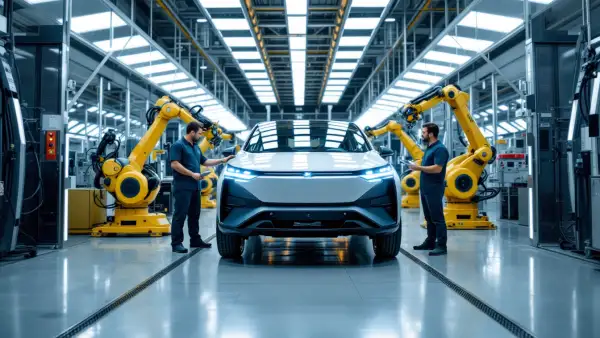
Electric vehicle production in Southeast Asia remains heavily import-dependent, inflating costs by up to 20-30%. Xpeng, the Guangzhou-based EV maker 5% owned by Volkswagen Group, is breaking this mold by launching a local assembly hub in Malaysia with EP Manufacturing Berhad (EPMB) in 2025.
This move isn’t only about cutting shipping fees or tariffs—it’s a strategic repositioning that turns Southeast Asia’s fragmented market into a unified opportunity. Malaysia becomes a production foothold that unlocks regional scale without the large fixed costs of a full factory.
That leverage lies in constraint redefinition: by using assembly partnerships, Xpeng sidesteps regulatory and logistical bottlenecks that limit competitors. Local assembly hubs convert regional complexity into replicable, lean production nodes.
“Owning assembly locally reduces cost and transforms growth into a system, not a series of one-offs.”
Why Southeast Asia’s EV Growth Isn’t Just About Building Factories
Conventional wisdom says EV makers must either build full-scale plants or continue shipping finished cars, both slow and capital intensive. This binary thinking ignores how partnerships like Xpeng’s with EPMB unlock operational leverage by outsourcing initial production steps within a local ecosystem.
This challenges assumptions explored in how OpenAI scaled ChatGPT to 1 billion users—it’s about turning bottlenecks into leverage points, not brute force expansion.
How Local Assembly Cuts Costs and Builds Market Tailoring
Shipping fully assembled EVs to Southeast Asia incurs tariffs of up to 30%, plus transportation delays and currency risks. Xpeng’s assembly hub in Malaysia converts units into semi-knocked down kits locally assembled to regional specs.
Competitors like Tesla and BYD largely ship finished vehicles or build costly full factories, limiting flexibility in a market where consumer preferences and infrastructure vary widely. Xpeng reduces per-unit costs and accelerates feedback loops through localized assembly, tailoring software and features faster.
That model mirrors themes in how 3 CEOs scaled culture during rapid pivots—agility comes from decentralized execution with centralized design.
Why Partnering With a Local Manufacturer Unlocks Expansion Limits
EPMB specializes in automotive engineering and manufacturing for Southeast Asia. This partnership allows Xpeng to avoid direct capital expenditure on factories and leverage EPMB’s deep regional supply chain knowledge.
This contrasts with other EV makers who either risk overbuilding or remain stuck with expensive imports. The system self-optimizes from local inputs, lowering regulatory and tariff friction, which is a core constraint in Southeast Asia’s market.
Market constraints define profit corridors more than top-line growth.
What This Means for Southeast Asia and Beyond
Malaysia’s rising role as an EV assembly hub signals a shift in how automotive players approach emerging markets: it’s not just about locating factories but about re-architecting production networks. Countries with similar tariff structures and fragmented markets—like Indonesia or Thailand—can replicate this modular assembly leverage.
Operators should rethink expansion constraints: it’s often easier to create **local assembly leverage** than full factory leverage. This enables faster market adaptation and profitability with less upfront risk.
“Control production nodes, and regional markets become growth platforms, not cost centers.”
Unlike Tesla’s full-factory builds, Xpeng’s hub sidesteps rigid scale traps.
Related Tools & Resources
If you're looking to streamline manufacturing processes in a local assembly model like Xpeng's, tools like MrPeasy can offer significant advantages. This manufacturing ERP simplifies inventory management and production planning, enabling businesses to adapt quickly to market changes while minimizing costs. Learn more about MrPeasy →
Full Transparency: Some links in this article are affiliate partnerships. If you find value in the tools we recommend and decide to try them, we may earn a commission at no extra cost to you. We only recommend tools that align with the strategic thinking we share here. Think of it as supporting independent business analysis while discovering leverage in your own operations.
Frequently Asked Questions
How does Xpeng’s Malaysia EV hub reduce costs in Southeast Asia?
Xpeng’s local assembly hub in Malaysia reduces costs by up to 20-30% by avoiding high shipping fees and tariffs associated with importing fully assembled electric vehicles. The hub assembles semi-knocked down kits locally, tailoring vehicles to regional specifications and cutting delays and currency risks.
Why is Malaysia chosen as the location for Xpeng’s EV hub?
Malaysia serves as a strategic production foothold that allows Xpeng to unify Southeast Asia’s fragmented EV market without the large fixed costs of building a full factory. Its favorable tariff structures and partnership with EP Manufacturing Berhad provide deep regional supply chain knowledge, making it ideal for assembly operations.
What advantages does partnering with EP Manufacturing Berhad (EPMB) provide?
Partnering with EPMB enables Xpeng to avoid direct capital expenditure on factories and leverage local manufacturing expertise. EPMB’s specialization in automotive engineering and knowledge of Southeast Asia’s regulatory environment help optimize production and reduce tariff and logistical frictions.
How does Xpeng’s local assembly approach differ from competitors like Tesla and BYD?
Unlike Tesla and BYD, who mostly ship finished vehicles or build costly full factories, Xpeng uses semi-knocked down kits assembled locally. This approach increases flexibility, lowers per-unit costs, and accelerates feedback loops for faster market adaptation and feature customization.
What market challenges does the local assembly model address?
The local assembly model tackles high tariffs (up to 30%), shipping delays, currency risks, and regulatory bottlenecks typical in Southeast Asia. By decentralizing production nodes, Xpeng transforms these constraints into leverage points for growth.
Can other Southeast Asian countries replicate Xpeng’s assembly hub model?
Yes. Countries like Indonesia and Thailand with similar tariff structures and fragmented markets can adopt modular local assembly hubs to gain operational leverage, reduce costs, and accelerate market responsiveness without heavy factory investments.
What impact will Xpeng’s Malaysia EV hub have on Southeast Asia’s EV market?
Xpeng’s hub will likely shift regional automotive strategies from building full factories to leveraging modular assembly partnerships. This promotes faster market adaptation, lowers upfront risk, and redefines production networks to turn regional markets into growth platforms.
How does local assembly influence EV software and feature customization?
Local assembly enables faster feedback loops that allow Xpeng to tailor vehicle software and features to regional consumer preferences more quickly than competitors who import fully assembled cars. This agility enhances market fit and consumer satisfaction.