
UK Metals Recycler Files for Liquidation, Revealing Systemic Leverage Gaps

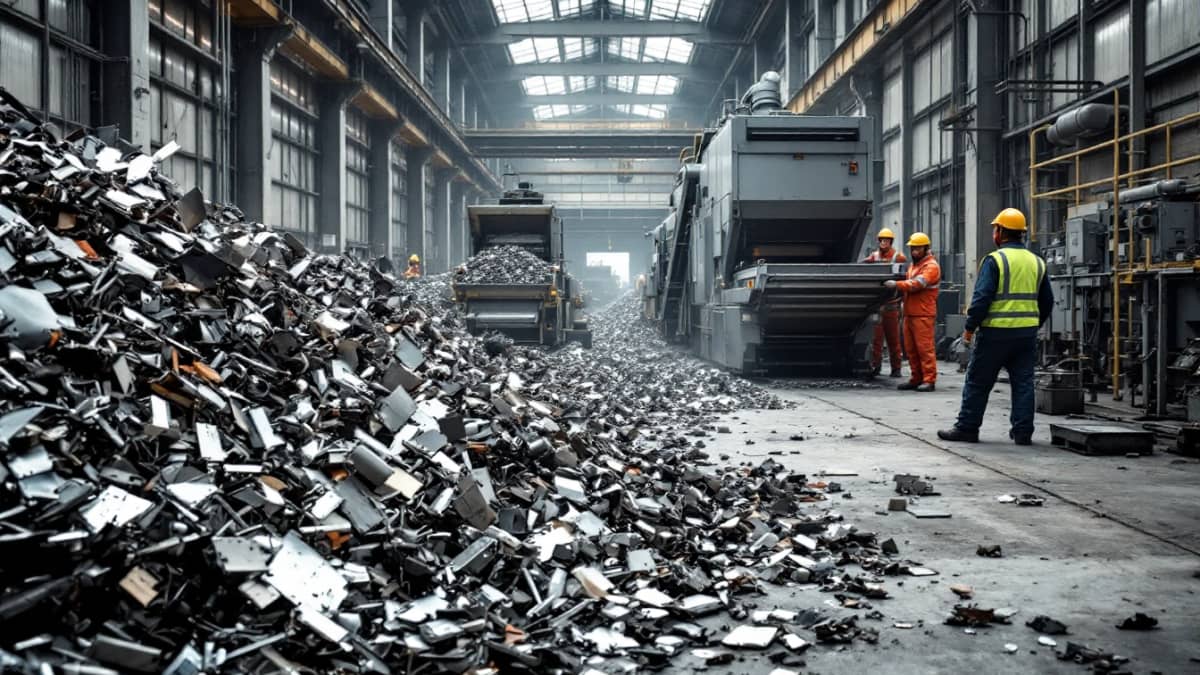
A metals recycling company with sites across the UK has filed for liquidation, putting an unknown number of jobs at risk. This development exposes a hidden operational vulnerability in the UK's metals recycling sector that goes beyond mere financial distress. The real story is about the failure to leverage scalable systems and automation to withstand market pressures. Survival depends not just on assets, but on system resilience and constraint mastery.
Why Financial Strain Is Not the Core Constraint
Conventional wisdom views liquidation as a straightforward response to cash flow issues. This UK metals recycler's collapse challenges that by highlighting the deeper problem: systemic inability to automate and optimize end-to-end recycling operations.
Unlike sectors that deploy digital supply chains or AI-enabled inventory management, this company appears trapped in labor-intensive processes vulnerable to rising costs and declining commodity prices. This contrasts with competitors in countries like Germany or Japan where investment in process automation and data-driven vendor management has created durable cost advantages. Top vendor management best practices offer a path forward they had yet to fully adopt.
Traditional recycling often relies heavily on manual sorting and legacy logistics systems that scale poorly. This creates a rigid cost base that cannot flex when market constraints tighten.
Leverage Mechanisms Missing in Metals Recycling
Leading companies leverage process improvement and automation systems that process material flows, reduce downtime, and optimize labor allocation dynamically. For instance, some regional recyclers use AI-powered sorting machines reducing human error and increasing throughput. Without this, labor cost volatility and material loss become critical bottlenecks.
Compared with sectors embracing business intelligence tools and automation frameworks—like those described in Unlocking Business Leverage Through Process Improvement and How To Automate Business Processes For Maximum Business Leverage—the metals recycling industry lags behind. This failure to reposition constraints from manual labor to technology infrastructure is a strategic vulnerability.
Forward-Looking Strategy: Repurposing Constraints for Stable Growth
The liquidation underscores that cost cutting without system redesign leaves companies exposed to market cyclicality. The critical shift is from reacting to financial constraints toward fundamentally repositioning operational constraints through automation and intelligent process mapping.
This means investing in scalable sorting technology, integrating supply chain data for real-time decisions, and cross-training employees to flex where needed. UK recycling firms must act before their competitive position erodes further in a tightening global metals market.
Operators in similar constrained industries should note: automating complex workflows transforms labor dependencies into scalable assets. This is not hypothetical but a proven leap past legacy barriers, essential for survival and growth.
Related Tools & Resources
Automation and scalable operations are critical to overcoming systemic constraints like those highlighted in the metals recycling industry. For businesses aiming to redesign workflows and implement standardized processes, platforms like Copla offer a powerful way to document, manage, and optimize standard operating procedures—transforming manual constraints into scalable, repeatable operational leverage. Learn more about Copla →
Full Transparency: Some links in this article are affiliate partnerships. If you find value in the tools we recommend and decide to try them, we may earn a commission at no extra cost to you. We only recommend tools that align with the strategic thinking we share here. Think of it as supporting independent business analysis while discovering leverage in your own operations.
Frequently Asked Questions
What are the main reasons metals recycling companies face liquidation?
Many metals recycling companies face liquidation due to systemic inability to automate and optimize end-to-end recycling operations rather than just financial distress. Labor-intensive processes and rigid cost structures that cannot adapt to market pressures are key factors.
How does automation improve resilience in metals recycling operations?
Automation improves resilience by enabling process improvement, reducing downtime, optimizing labor allocation, and minimizing material losses. For example, AI-powered sorting machines reduce human error and increase throughput, helping companies better withstand market volatility.
Why is relying solely on cost-cutting insufficient for metals recycling firms?
Cost-cutting without system redesign leaves companies exposed to market cyclicality and operational rigidity. Firms need to reposition operational constraints through automation and intelligent process mapping to achieve stable growth.
How do metals recycling companies in Germany and Japan gain a competitive advantage?
Companies in Germany and Japan invest in process automation and data-driven vendor management, creating durable cost advantages by leveraging scalable systems and reducing labor dependencies, in contrast to more manual-heavy UK firms.
What role do scalable systems and process improvements play in metals recycling?
Scalable systems and process improvements allow companies to dynamically manage material flows and labor resources, reducing labor cost volatility and material loss. This shift from manual labor to technology infrastructure is essential for strategic resilience.
What are the risks of relying on manual sorting and legacy logistics systems in recycling?
Manual sorting and legacy systems scale poorly, creating a rigid cost base that cannot adapt when market constraints tighten. This vulnerability leads to increased costs and operational bottlenecks under market pressures.
How can integrating supply chain data benefit metals recycling operations?
Integrating supply chain data enables real-time decision-making, improving responsiveness and resource allocation. This supports automation and flexible labor deployment to better navigate market fluctuations.
How does automating complex workflows affect labor dependencies?
Automating complex workflows transforms labor dependencies into scalable assets, reducing exposure to labor cost volatility and increasing operational throughput. This has been proven essential for long-term survival and growth in constrained industries like metals recycling.