
What Air Transat's Flight Suspension Reveals About Airline Leverage

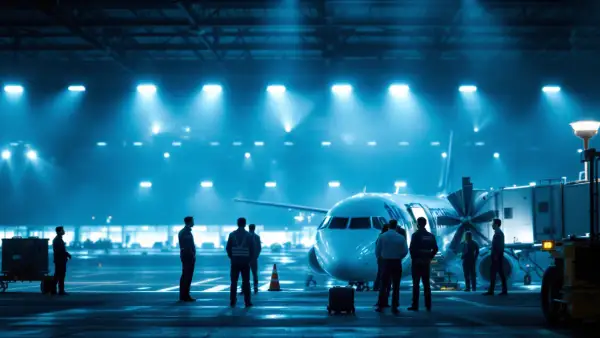
Canada's airline industry faces mounting pressure as Air Transat announces a suspension of flights following a strike notice from its pilots union. Air Transat's decision affects thousands of passengers and highlights vulnerabilities beyond labor disputes. This isn't just a labor standoff—it exposes how legacy airline systems lack scalable leverage to absorb key operational constraints.
Air Transat's pilots' strike notice triggered a flight halt that underscores the airline's limited ability to automate or delegate critical pilot roles. The move reveals a fragile system design where human capital concentration blocks resilience and growth. Legacy airline labor dynamics sharply contrast with scalable automation trends seen in other transportation sectors.
But the real issue is the structural leverage constraint—the inability to decouple core operational functions from costly human input in real-time. Air Transat illustrates why airlines remain stuck in a labor-capital bottleneck while digital platforms accelerate elsewhere.
When key human roles become unmovable constraints, entire service lines stall—revealing a leverage trap no automation alone solves.
Why Conventional Wisdom Misreads Airline Strikes as Just Cost Issues
Industry observers treat strikes as expenses to be negotiated or absorbed, missing the systemic constraint exposed here. The headline focus on pilot wages or union demands obscures the core: the critical human-dependency in airline operations is a leverage ceiling. Unlike software or manufacturing, these roles are not easily modularized or automated.
This misunderstanding mirrors structural leverage failures highlighted by 2024 tech layoffs, where companies hit ceilings by failing to redesign bottlenecks. Air Transat’s strike exposes a comparable inflexibility in aviation’s labor system.
How Airlines’ Reliance on Unionized Human Capital Limits Rapid Recovery
Unlike rideshare platforms like Uber, which treat drivers as a scalable, on-demand resource, airlines rely on certified pilots with tightly regulated schedules. This creates an operational lever with nearly zero slack.
Compared to gig-driven transport models, airlines’ labor structure hinges on few specialists, exacerbating risk from strikes. When Air Transat pilots strike, the airline can’t simply tap into a larger pool or automate flights, so the entire system grinds to a halt.
Other carriers, such as Air Canada, face similar constraints but have invested more in contingency staff and operational flexibility, illustrating a strategic axis that Air Transat is weaker on. This difference represents a deliberate positioning move, not just luck.
The Hidden Constraint: Human Capital as a Non-Replicable Operational Asset
The shortage of qualified pilots is not new, but what Air Transat reveals is the absence of an automation or multi-tenant system to substitute for human-driven control. Unlike OpenAI, which scaled by removing human bottlenecks, airlines have barely scratched automation's surface.
This constraint forces high fixed operational costs and limits scalability. Industry reports suggest replicating a pilot training pipeline requires years and hundreds of millions in capital. For Air Transat, the pilots’ strike capitalizes on this immobility, converting a human leverage failure into a service choke point.
Why Operators Must Treat Labor Constraints as Leverage Bottlenecks
Executives investing only in traditional labor negotiations miss how system design determines resilience. Airlines must rethink operational paradigms, integrating automation, predictive scheduling, and multi-site talent pools.
Markets where labor risk is high, like Canada, signal the need for new systems thinking. Countries with flexible aviation labor policies or automation adoption, such as Singapore, show early advantage in rapid recovery and cost control.
The stakes are clear: leverage is no longer about cutting costs but resolving human bottlenecks that throttle entire service systems. Airlines that design for operational elasticity will outpace legacy competitors.
Explore how transport platforms and dynamic workforce planning can transform fixed labor constraints into variable assets. Air Transat’s pause is a live case study in leverage lost and the systemic change needed.
Related Tools & Resources
To navigate the kind of operational constraints faced by Air Transat, companies need to consider tools like Copla. By streamlining standard operating procedures and enhancing process documentation, businesses can better manage human capital dependencies and improve overall resilience in their operations. Learn more about Copla →
Full Transparency: Some links in this article are affiliate partnerships. If you find value in the tools we recommend and decide to try them, we may earn a commission at no extra cost to you. We only recommend tools that align with the strategic thinking we share here. Think of it as supporting independent business analysis while discovering leverage in your own operations.
Frequently Asked Questions
Why did Air Transat suspend flights recently?
Air Transat suspended thousands of flights following a strike notice from its pilots union, highlighting critical operational vulnerabilities tied to human capital constraints.
How does Air Transat's strike expose airline operational weaknesses?
The strike revealed that airline systems heavily depend on specialized pilots, limiting automation or delegation, which creates a leverage ceiling that blocks operational resilience and growth.
What makes airline labor different from gig economy models like Uber?
Unlike gig platforms where drivers are scalable on-demand resources, airlines rely on tightly regulated certified pilots, creating operational constraints with nearly zero slack or scalability.
How does Air Transat's approach compare with other airlines like Air Canada?
Air Canada has invested more in contingency staffing and operational flexibility, while Air Transat’s limited contingency reveals a strategic disadvantage in managing labor disruptions.
Why is pilot shortage a significant issue for airlines?
Pilot training pipelines take years and require hundreds of millions in investment, making pilots a scarce and non-replicable human capital asset that limits airlines' scalability and recovery speed.
What can airlines do to overcome labor-related operational bottlenecks?
Airlines need to rethink system designs by integrating automation, predictive scheduling, and multi-site talent pools to transform fixed labor constraints into variable operational assets.
What is the broader significance of airline labor strikes beyond cost disputes?
Strikes expose systemic leverage failures where human-dependent roles act as choke points that no amount of cost negotiation alone can resolve, impacting entire service lines.
How can tools like Copla help companies manage human capital dependencies?
Tools like Copla streamline operating procedures and improve process documentation, helping companies better manage human capital risks and increase operational resilience.