
What Amazon’s Robotaxi and Ultrafast Delivery Reveals About AI Leverage

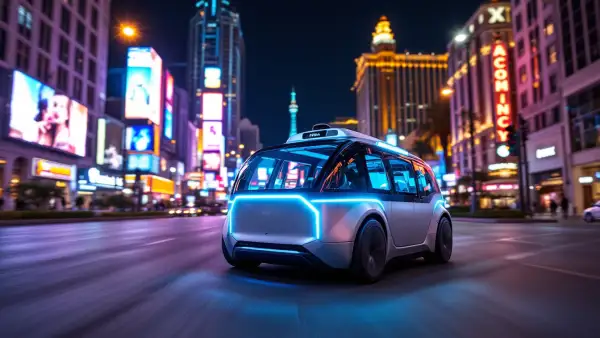
Amazon is pushing beyond e-commerce with experiments that blur robotics, ultrafast delivery, and AI automation. The company’s new Amazon Now service in Seattle promises deliveries in as little as 23 minutes, while its Zoox robotaxi debuted on the Las Vegas Strip at AWS re:Invent. Meanwhile, AWS SVP Colleen Aubrey reveals AI agents are becoming “teammates,” fundamentally reshaping development.
But this isn’t just a race to move faster or automate tasks—it reflects a deliberate shift to system designs that multiply leverage via AI-powered autonomy and infrastructure. “AI teammates aren’t just tools—they’re enablers of compounding advantage,” Aubrey said.
Why faster delivery isn’t really about speed
Conventional wisdom holds ultrafast delivery is a logistics cost center—just a gimmick to win market share. That’s wrong. What Amazon Now reveals is a reorientation of constraints: from human-driven dispatch to robotic fulfillment and network orchestration.
Unlike competitors burning $8–15 per customer acquisition on ads, Amazon aims to transform delivery into a live feedback loop that lowers operating leverage. This aligns with insights from USPS's price hike signaling operational shift, where infrastructure redesign unlocks sustainable margins.
Robotaxis unlock leverage through embedded autonomy
The debut of Zoox robotaxi on the Las Vegas Strip is not merely a PR stunt—it exposes a hidden leverage mechanism. By integrating autonomous vehicles into real urban ecosystems, Amazon builds a self-scaling fleet that requires fewer human operators.
This contrasts sharply with human-dependent ride services, which cap growth on labor costs and regulatory complexity. The Tesla safety report showed how safety data becomes a leverage asset; Amazon’s Zoox extends this by embedding AI agents as continuous learning teammates in mobility fleets.
AI teammates: shifting from tools to collaborators
AWS’s Colleen Aubrey explains the leap to “agentic coding” where AI agents don’t just assist but actively co-develop software. This flips the cost equation for building complex systems, previously limited by developer headcount.
This insight resonates with why AI forces worker evolution: AI teammates multiply human output, changing constraints from labor scarcity to AI orchestration. It’s a structural pivot few competitors have operationalized at scale yet.
What changed — and what’s next
Amazon’s moves reflect a unified system redesign: leveraging AI agents, robotics, and infrastructure to create self-scaling compounding advantages in delivery and mobility. The core constraint shifted from human labor to AI-enabled autonomy and resource orchestration.
Operators watching this should rethink building leverage not by fighting costs but by systematically embedding AI and robotics as teammates and infrastructure. Regions like Seattle and Las Vegas will incubate these models before broader rollout.
“Scaling systems with AI teammates creates leverage invisible to competitors who see only tools, not collaborators.”
Related Tools & Resources
In a landscape where AI is becoming integral to operational efficiency and innovation, tools like Blackbox AI can empower developers to automate coding and streamline software development. This aligns perfectly with the article's insights on AI-enabled autonomy, helping businesses leverage technology to enhance productivity and reduce costs. Learn more about Blackbox AI →
Full Transparency: Some links in this article are affiliate partnerships. If you find value in the tools we recommend and decide to try them, we may earn a commission at no extra cost to you. We only recommend tools that align with the strategic thinking we share here. Think of it as supporting independent business analysis while discovering leverage in your own operations.
Frequently Asked Questions
What is Amazon Now and how fast are its deliveries?
Amazon Now is Amazon's ultrafast delivery service launched in Seattle, promising deliveries in as little as 23 minutes through robotic fulfillment and AI-driven network orchestration.
What is the significance of Amazon's Zoox robotaxi debut in Las Vegas?
The Zoox robotaxi debuted on the Las Vegas Strip as a self-scaling autonomous fleet that reduces reliance on human operators, showing Amazon's leverage of embedded AI autonomy in mobility services.
How are AI agents transforming software development at AWS?
AWS SVP Colleen Aubrey describes AI agents as "teammates" that actively co-develop software, enabling agentic coding which flips the cost equation by reducing dependence on human developers.
Why is ultrafast delivery more than just a speed race according to Amazon?
Amazon’s ultrafast delivery reorients constraints from human dispatch to robotic fulfillment and network orchestration, creating a live feedback loop that lowers operating leverage and costs compared to competitors spending $8–15 per customer acquisition.
How does Amazon’s robotaxi fleet differ from traditional ride services?
Amazon’s Zoox robotaxi fleet integrates continuous AI learning and autonomy, enabling self-scaling systems that overcome labor cost caps and regulatory constraints faced by human-dependent ride services.
What does "AI teammates" mean in Amazon’s operational strategy?
"AI teammates" refers to AI agents functioning as collaborative partners that multiply human productivity and enable complex system development beyond traditional labor limits.
Which cities are the initial focus for Amazon's new AI and robotics models?
Seattle and Las Vegas are the pilot regions where Amazon is introducing its ultrafast delivery and Zoox robotaxi AI-powered systems before wider rollouts.
What role does Blackbox AI play related to the article’s insights on AI autonomy?
Blackbox AI automates coding and streamlines software development, supporting the article’s theme of AI-enabled autonomy and helping businesses leverage technology for operational efficiency.