
What AWS CEO’s AI Hiring Stance Reveals About Talent Leverage

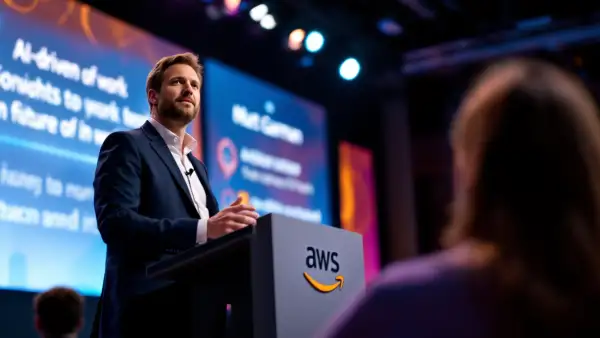
Replacing junior employees with AI seems like an obvious cost-saving move. Yet Amazon Web Services CEO Matt Garman calls it “one of the dumbest things I’ve ever heard.” Garman insists that preserving a fresh talent pipeline offers strategic leverage beyond immediate efficiency.
In a recent WIRED interview, he challenged the growing industry belief AI will simply replace entry-level roles. Instead, he highlighted how investing in energetic junior talent familiar with AI is vital to sustaining innovation at AWS and beyond.
This isn’t just about headcount; it’s about how companies build compounding advantage by mentoring and evolving workforce skills. Garman’s perspective reveals a key constraint shift: talent pipelines become leverage mechanisms, not cost centers.
“If you have no talent pipeline that you’re building and no junior people that you’re mentoring, that’s where we get some of the best ideas,” Garman said. Long-term company health demands this structural approach to workforce design.
Why Replacing Junior Talent Is a Shortcut with Hidden Costs
Conventional wisdom assumes AI’s efficiency makes entry-level employees obsolete, driving firms to cut junior roles first. This view ignores two critical leverage points: lower salary cost and AI-tool fluency among young workers.
Think in Leverage has explored how AI primes junior workers to amplify output if integrated thoughtfully. Unlike competitors who spend millions automating away their talent pipelines, AWS maintains this system deliberately.
By sidelining juniors, companies risk creating a knowledge vacuum that AI alone cannot fill. “The whole thing explodes on itself,” says Garman. This constraint repositioning debunks simplistic layoff narratives common in Amazon’s recent cuts, mostly focused on middle management.
How AWS Leverages Junior Talent to Unlock AI’s Potential
AWS is channeling AI not as a replacement but as a force multiplier for junior engineers. By keeping juniors who already possess deep AI familiarity, the company composes teams that reorganize workflows and innovate faster.
Unlike rivals who push automation aggressively with uncertain human fallback plans, AWS focuses on skill evolution. This approach blends AI improvements with human creativity, a balance competitors like Google and Microsoft are still fine-tuning.
This echoes themes in dynamic work design, showing how team composition and learning pipelines create scalable impact without endless costs.
Forward Implications: Rethinking Leverage Around Talent and AI
The real constraint now is not AI itself, but who wields it within organizations. Companies ignoring junior talent’s strategic role face long-term innovation droughts.
This matters most in the U.S. tech ecosystem, where entry-level software roles are disproportionately affected by AI, as a Stanford study confirms. Firms must rebuild workforce strategies that blend AI with talent development to avoid falling behind.
“There is going to be some disruption in there for sure,” Garman warns, but the winners will be those who think long term about leveraging evolving human-AI collaboration systems.
2024 tech layoffs and labor market shifts signal the need for this shift. The silent system-building around junior talent will separate market leaders from laggards in this AI era.
“Buy audiences, not just products—the asset compounds.”
Related Tools & Resources
As companies look to enhance their workforce through AI, tools like Blackbox AI become essential for developers aiming to leverage AI coding capabilities effectively. By integrating such innovative coding assistants into your team, you can ensure that junior talent collaborates seamlessly with AI to drive productivity and creativity, aligning perfectly with the strategic insights discussed in the article. Learn more about Blackbox AI →
Full Transparency: Some links in this article are affiliate partnerships. If you find value in the tools we recommend and decide to try them, we may earn a commission at no extra cost to you. We only recommend tools that align with the strategic thinking we share here. Think of it as supporting independent business analysis while discovering leverage in your own operations.
Frequently Asked Questions
Why does AWS CEO Matt Garman oppose replacing junior employees with AI?
Matt Garman considers replacing junior talent with AI "one of the dumbest things" because it cuts off a strategic talent pipeline key for innovation. He highlights that mentoring juniors fuels new ideas and long-term company health, beyond immediate cost saving.
How does AWS leverage junior talent to enhance AI potential?
AWS keeps junior engineers with AI familiarity to act as force multipliers, reorganizing workflows and driving innovation faster. This skill evolution approach blends AI improvements with human creativity, distinguishing AWS from competitors aggressively automating entry-level roles.
What are the hidden costs of cutting entry-level jobs in favor of AI?
Cutting juniors creates a knowledge vacuum AI alone can’t fill. This leads to long-term innovation droughts and loss of workforce evolutionary leverage, as experienced by firms ignoring the strategic role of junior talent during 2024 tech layoffs.
What does recent research say about AI's impact on entry-level tech jobs?
A Stanford study confirms AI disproportionately affects entry-level roles in U.S. tech, emphasizing the need to rebuild workforce strategies that integrate AI and talent development to sustain competitive advantage.
How do junior workers benefit from AI integration according to Think in Leverage?
Junior workers amplify output when AI is integrated thoughtfully. Their lower salary cost combined with AI-tool fluency creates a leverage point, enabling companies like AWS to maintain compounding advantages rather than just cost cuts.
What are the long-term implications of ignoring junior talent in AI-era workforce design?
Ignoring junior talent risks structural failures in workforce leverage, leading to disruption and loss of innovation capacity. Companies that build human-AI collaboration systems with evolving talent pipelines stand to become market leaders.
How do competitors like Google and Microsoft compare in AI and junior talent strategy?
Competitors such as Google and Microsoft are still fine-tuning the balance between AI improvements and human creativity. Unlike AWS, some push aggressive automation without clear plans for maintaining talent pipelines and workforce skill evolution.
What role do tools like Blackbox AI play in junior talent and AI collaboration?
Innovative AI coding assistants like Blackbox AI help junior developers collaborate seamlessly with AI, driving productivity and creativity. Such tools align with strategic insights supporting workforce innovation discussed in the article.