
What BYD’s Brazil Factory Plan Reveals About EV Market Leverage

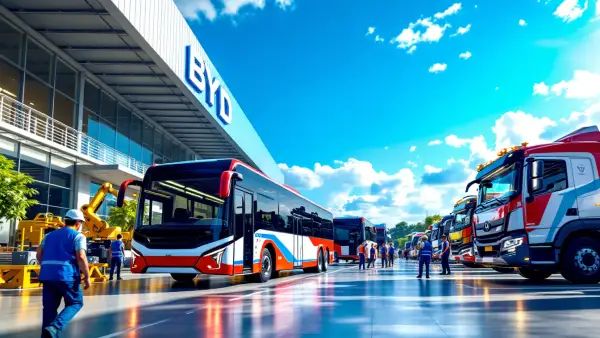
Electric vehicle production remains constrained by localized manufacturing capacity in emerging markets, where demand outpaces supply by wide margins. BYD, the Chinese EV giant, has announced plans to build a massive factory in Brazil within three years, addressing a critical choke point in South America’s electric bus and truck market. But this move isn’t just a production scale-up—it’s a strategic play to unlock regional leverage by embedding manufacturing deep in local ecosystems. Automakers controlling local capacity dictate market penetration speed and cost structure in growth regions.
Why Expanding Factories in Emerging Markets Isn’t Just Capacity Growth
Common thinking treats new EV plants as simple volume expansions to meet rising demand. Analysts focus on output numbers and short-term economies of scale, missing the strategic repositioning of constraints this entails. This dynamic is similar to conventional wisdom challenged in recent Think in Leverage coverage on systems that quietly shift bottlenecks.
BYD’s Brazil factory will relocate the production constraint from import logistics and limited supply toward local manufacturing leverage. Unlike competitors relying on imported kits or limited assembly lines, BYD will own deep integration, enabling faster innovation cycles and pricing control throughout South America.
How BYD’s Brazil Factory Changes Cost and Market Control Dynamics
Currently, electric bus and truck makers in South America face inflated costs due to shipping, tariffs, and supply delays. By building a plant in Brazil, BYD cuts these layered expenses and can underprice imports from China or Europe. This is a system-level redesign: instead of just building more vehicles, BYD captures a manufacturing platform that compounds advantage across logistics, suppliers, and tech updates.
Unlike firms that chase demand with incremental assembly plants, BYD’s scale investment resets the operational leverage point. Replicating this requires competitors to navigate complex regional trade agreements and build supplier networks over years—barriers effectively locking BYD into a dominant emerging market position. Relatedly, see how tariff deals alter cost structures.
What This Means for the Global Electric Vehicle Industry
BYD proves that unlocking regional manufacturing constraints is the hidden lever for EV market dominance, especially in high-growth geographies like Brazil. Import-dependent competitors face a structural disadvantage—they exchange short-term cost savings for longer-term margin erosion and slower innovation.
Investors and operators should watch how BYD’s Brazil facility shifts production capacity constraints and how local ecosystems respond. This move signals a new phase in the global EV race where system-level manufacturing leverage—not just battery or software innovation—drives competitive moats. Companies ignoring localized production constraints repeat mistakes detailed in our analysis on operational constraint repositioning.
Regional manufacturing control is the quiet lever behind accelerated EV adoption and cost leadership worldwide.
Related Tools & Resources
For manufacturers looking to leverage the advantages of localized production like BYD, MrPeasy offers an integrated ERP solution that helps manage production planning and inventory efficiently. This tool can enhance your operational effectiveness, allowing you to respond quickly to market demands and shifts in the supply chain. Learn more about MrPeasy →
Full Transparency: Some links in this article are affiliate partnerships. If you find value in the tools we recommend and decide to try them, we may earn a commission at no extra cost to you. We only recommend tools that align with the strategic thinking we share here. Think of it as supporting independent business analysis while discovering leverage in your own operations.
Frequently Asked Questions
What is BYD's plan for its factory in Brazil?
BYD plans to build a massive electric vehicle factory in Brazil within three years to address supply constraints in South America’s electric bus and truck market, shifting production to local manufacturing leverage.
Why is local manufacturing capacity important for the EV market in emerging regions?
Localized manufacturing capacity is crucial because demand in emerging markets like South America outpaces supply, and controlling local production allows automakers to reduce costs, speed up innovation, and better penetrate the market.
How does BYD's Brazil factory affect electric bus and truck costs?
BYD's factory will cut costs related to shipping, tariffs, and supply delays, enabling the company to underprice imports from China or Europe by owning local production and reducing layered expenses.
What competitive advantage does BYD gain by building a factory in Brazil?
BYD gains a strategic competitive advantage by creating operational leverage in South America, controlling manufacturing platforms, supplier networks, and logistics, which competitors find difficult to replicate due to trade and regional complexities.
How does BYD's factory impact the global electric vehicle industry?
BYD’s Brazil factory shifts production constraints to local manufacturing leverage, signaling a new phase where regional manufacturing control, rather than just battery or software innovation, drives EV market dominance and cost leadership.
What challenges do competitors face without localized EV production like BYD's?
Competitors relying on imports face structural disadvantages such as higher tariffs, shipping costs, and slower innovation, risking margin erosion and losing market share to players like BYD with local manufacturing control.
What are the system-level changes BYD introduces with its Brazil factory?
BYD’s factory changes the system by capturing manufacturing platforms that combine advantages in logistics, suppliers, and technology updates, effectively repositioning production constraints away from import dependencies.
Are there tools to help manufacturers leverage localized production advantages?
Yes, tools like MrPeasy provide integrated ERP solutions to manage production planning and inventory efficiently, enhancing operational effectiveness and responsiveness in localized production environments like BYD’s.