
What CATL's Lithium Mine Restart Reveals About EV Supply Chains

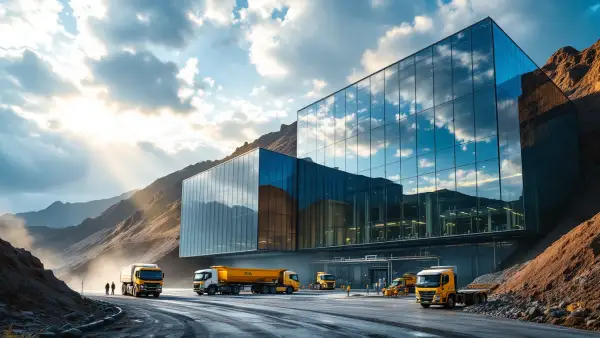
Raw material costs drive over 50% of battery prices globally. China's dominance in lithium mining shapes electric vehicle economics worldwide.
Contemporary Amperex Technology Ltd (CATL), the world’s biggest EV battery maker, plans to resume operations at the Yichun lithium mine in Jiangxi province shortly after the Lunar New Year break.
This move isn’t just about restarting a mine—it’s about reshaping supply constraints that ripple across the global EV ecosystem.
“Control over raw materials rewires competitive dynamics for the EV future.”
Why lithium supply isn’t just about volume but control
Conventional wisdom treats lithium supply as a simple throughput problem—more mines, more lithium, lower costs. Analysts often expect market prices to self-correct via global competition.
That view misses how Chinese companies like CATL embed supply chain leverage by aligning mining assets with battery production, reducing margin leakage and stabilizing costs.
See this in contrast with Western battery makers who rely on spot-market lithium purchases, facing volatile input costs and limited downstream control.
For a deeper dive, see Why Wall Street’s Tech Selloff Actually Exposes Profit Lock-In Constraints and Why USPS’s January 2026 Price Hike Actually Signals Operational Shift.
How CATL’s vertical reintegration lowers costs and execution risk
CATL paused Yichun when its license lapsed, a regulatory hurdle common in China’s mining sector. Restarting it quickly not only revives lithium output but reclaims predictability for battery feedstock.
Unlike competitors spending $8-15 per installed vehicle lithium on spot markets or long-term OEM contracts, CATL controls lithium production upstream, pushing acquisition cost closer to infrastructure maintenance.
This drops commodity input volatility, letting CATL plan capital allocation more aggressively for battery innovation and capacity.
Compare this to Lithium Americas or Albemarle that face regulatory delays and fragmented production models across multiple jurisdictions.
What this means for China’s EV supply chain dominance
The regulatory approval timing around Lunar New Year signals Beijing’s tacit recognition of CATL’s systemic role in global EV leverage.
The constraint that shifted isn’t just supply; it’s control over critical processing infrastructure that sustains tech scaling without price shocks.
Stakeholders across the auto and battery sectors must heed this: securing integrated lithium production hubs accelerates competitive advantage.
Other countries pursuing EV independence cannot simply mine lithium; they must emulate the China-aligned vertical integration model to unlock similar compounding effects.
“Supply chain control creates leverage that no market price alone can replicate.”
For related reads, explore how OpenAI scaled ChatGPT via infrastructure and why Wall Street tech selloffs reveal profit lock-in traps—both showcase leverage through system design.
Related Tools & Resources
As companies like CATL demonstrate the importance of integrated operations within supply chains, tools like MrPeasy can be invaluable for manufacturers looking to optimize their production planning and inventory control. By utilizing such an ERP system, businesses can ensure that they stay ahead in the competitive landscape of EV supply chains, much like the strategic moves being made by industry leaders. Learn more about MrPeasy →
Full Transparency: Some links in this article are affiliate partnerships. If you find value in the tools we recommend and decide to try them, we may earn a commission at no extra cost to you. We only recommend tools that align with the strategic thinking we share here. Think of it as supporting independent business analysis while discovering leverage in your own operations.
Frequently Asked Questions
Why is lithium supply critical for electric vehicle battery prices?
Raw material costs, especially lithium, account for over 50% of battery prices worldwide. Controlling lithium supply helps stabilize costs and reduces volatility in EV battery production.
What role does CATL’s Yichun lithium mine play in the EV supply chain?
CATL's Yichun lithium mine, restarting after a regulatory pause, strengthens China's vertical integration in lithium mining and battery production, reducing input cost volatility and execution risks.
How does CATL’s vertical integration benefit its battery manufacturing?
By controlling lithium production upstream, CATL lowers acquisition costs from $8-15 per vehicle seen in spot markets, enabling more aggressive capital allocation toward battery innovation and capacity expansion.
How does China’s approach to lithium mining differ from Western companies?
Chinese firms like CATL integrate mining with battery production for better supply chain leverage, while Western companies rely more on spot-market lithium buying, facing higher price volatility and fragmented supply models.
What does CATL’s mine restart indicate about China’s position in EV supply chains?
The timely regulatory approval signals Beijing’s recognition of CATL’s vital role in controlling critical lithium processing infrastructure, sustaining EV tech scaling without price shocks.
Why can’t other countries achieve EV supply chain independence by just mining lithium?
Effective EV supply chains require vertical integration, not just mining lithium. Countries must align lithium production with battery manufacturing to replicate China’s compounding competitive advantages.
What challenges do companies like Lithium Americas and Albemarle face?
They experience regulatory delays and fragmented production across jurisdictions, which contrasts with CATL’s integrated model, leading to higher costs and execution risks in lithium supply.
How can manufacturers optimize their EV supply chain operations?
Using ERP systems like MrPeasy can help optimize production planning and inventory control, enabling manufacturers to remain competitive in the evolving EV supply chain landscape.