
What China’s EV Sales Surge Reveals About Subsidy Leverage

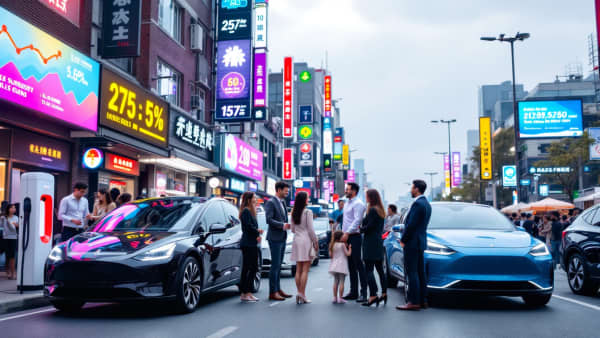
The Chinese electric vehicle market just recorded a historic spike, with at least three local EV makers smashing monthly sales records in November 2025. Stellantis-backed Leapmotor alone delivered 70,327 vehicles, its seventh consecutive all-time monthly high. This frenzy preceded the government’s January 1 removal of key tax breaks and cash subsidies.
But this isn’t mere consumer rush—it’s a system-level example of how temporary financial incentives reorder market constraints to create explosive demand. China’s EV subsidies act like a time-limited scalpel carving out customer acquisition windows, concentrating buying power before the pipeline freezes.
These mechanics foreground how strategic incentive design functions as an indirect operational lever. Buyers optimize timing around subsidies, while manufacturers front-load production and logistics, creating a compressed, high-leverage growth burst.
“Demand timing creates leverage by shifting the constraint from sales capacity to subsidy access,” transforming how EV makers scale growth in China.
Why The Surge Is More Than Just Incentives
Conventional wisdom treats subsidy removal as a blunt demand destroyer. Analysts expect sharp delivery drops in 2026, attributing November’s sales rush simply to last-minute buying.
That view misses how subsidy design functions as constraint repositioning. Like financial markets reacting to Fed signals, Chinese EV makers manipulated timing to amplify demand within a fixed window.
This dynamic resembles OpenAI’s ChatGPT launch strategy, where user acquisition accelerates via engineered scarcity, rather than steady drip growth.
Comparing China’s Subsidy Model To Global Alternatives
Unlike Europe or United States, where EV incentives phase in gradually or lack clarity, China’s policy set a sharp cut-off date. This shaped not just buyer behavior but entire supply chains.
Leapmotor and peers ramped up production capacity and delivery logistics for November specifically, leveraging a subsidy cliff to maximize unit sales. Competitors without this leverage face slower, more uncertain demand curves.
China’s subsidy system essentially externalizes part of the acquisition cost to taxpayers but concentrates it within a strategic horizon. This drops unit customer acquisition from sustained ad spend to subsidy-driven volume.
What The EV Incentive Phase-Out Unlocks Next
The January phase-out flips constraints: manufacturers must now shift to organic demand generation, lower-cost production, and longer-term cost structure improvements.
Market watchers should focus on which players adapt by building proprietary product advantages rather than depending on subsidies. This moving constraint parallels trends in chipmakers navigating cyclical demand.
Other emerging markets eyeing EV adoption can decode China’s subsidy leverage to design incentive windows that magnify market growth without long-term fiscal drain.
Financial stimuli timed with production capacity create explosive yet organized demand that rewrites growth rules.
Related Tools & Resources
For manufacturers looking to adapt and thrive in a rapidly fluctuating market, platforms like MrPeasy can streamline your production management and inventory control. By leveraging smart manufacturing solutions, you can position your business to not only respond to shifts in demand but also innovate ahead of the competition. Learn more about MrPeasy →
Full Transparency: Some links in this article are affiliate partnerships. If you find value in the tools we recommend and decide to try them, we may earn a commission at no extra cost to you. We only recommend tools that align with the strategic thinking we share here. Think of it as supporting independent business analysis while discovering leverage in your own operations.
Frequently Asked Questions
What caused the surge in Chinese electric vehicle sales in November 2025?
The surge was driven by local EV makers like Leapmotor breaking monthly sales records, with Leapmotor delivering 70,327 vehicles in November 2025, fueled by government subsidies ending January 1, 2026.
How do EV subsidies in China influence consumer buying behavior?
China’s EV subsidies create a time-limited window that incentivizes buyers to optimize purchase timing before subsidies end, resulting in concentrated demand bursts.
How do Chinese EV subsidies differ from those in Europe and the United States?
Unlike Europe and the US, where incentives phase out gradually or lack clarity, China imposes a sharp cut-off date creating a subsidy cliff that compresses demand and production spikes.
What strategies do manufacturers use to maximize sales before subsidy phase-out?
Manufacturers like Leapmotor ramp up production and delivery logistics ahead of the subsidy deadline to capitalize on concentrated buyer demand, creating a high-leverage growth burst.
What challenges do Chinese EV makers face after the subsidy removal in 2026?
Post-subsidy, manufacturers must shift toward generating organic demand, reducing costs, and enhancing their product advantages as financial incentives vanish.
Can other emerging markets learn from China’s EV subsidy approach?
Yes, emerging markets can design time-limited incentive windows similar to China’s system to stimulate rapid market growth without long-term fiscal burdens.
How does the subsidy removal affect EV sales forecasts for 2026?
Analysts expect sharp delivery drops as the government ends subsidies, but the phase-out also repositions constraints from sales capacity to subsidy access, changing growth dynamics.
What role does timing play in scaling growth for EV manufacturers in China?
Demand timing shifts constraints from sales to subsidy access, enabling manufacturers to strategically scale growth by aligning production and logistics with subsidy windows.