
What CME's Outage Reveals About Systemic Risk in US Markets

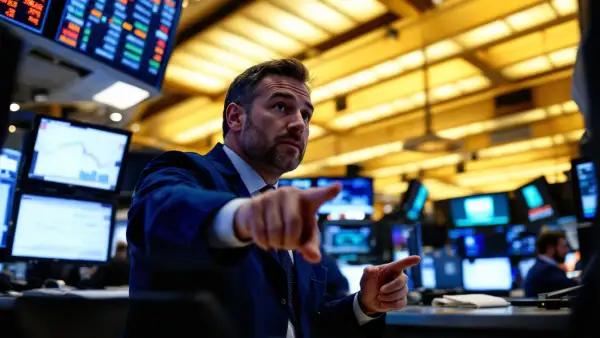
The Chicago Mercantile Exchange outage that froze trading for hours cost ripple effects through US derivatives and futures markets. Former SEC Chair Gary Gensler confirmed that US regulators are intensifying scrutiny of this disruption on December 2, 2025.
This is not just a one-off tech failure—it exposes how critical infrastructure systems in American financial markets carry hidden fragilities that compound risk silently.
System dependencies that operate 24/7 without human oversight create leverage points most operators underestimate.
Regulators now face a pivotal test: controlling these systemic fault-lines without crippling market efficiency.
Why System Resilience Is Misunderstood in Market Infrastructure
Conventional wisdom treats outages at exchanges like the Chicago Mercantile Exchange as rare accidents, isolated from broader business concerns. Industry narratives focus on rapid incident response and short-term fixes.
They miss that outages highlight a core constraint: these networks are interconnected black boxes with automatic failovers that sometimes cascade failures instead of containing them. This is an example of operational shift constraints that silently bake risk into daily workflows.
How US Financial Markets Depend on Hidden Automation Levers
The CME Group represents the backbone for derivatives trading across currencies, commodities, and interest rates. Their systems execute thousands of contracts per second globally, all reliant on real-time automated processes.
Unlike decentralized crypto exchanges or regional markets, the CME relies on tightly synchronized software and hardware platforms that cannot tolerate interruptions. Its competitors, like ICE and Eurex, employ more distributed redundancy but face tradeoffs in latency and throughput.
The failure reveals the real constraint: complete automation with minimal human checkpointing reduces costs but elevates outage risk exponentially. Profit lock-in constraints push exchanges to optimize uptime relentlessly, yet these optimizations harden fragility under rare stresses.
What Regulators’ Intensified Scrutiny Means for Market Design
The outage reframes the critical challenge US regulators like the SEC face: how to mandate resilience in complex, automated market systems without undermining their speed and efficiency.
This involves re-evaluating where human intervention fits and which fail-safe mechanisms automatically engage under stress. The constraint to crack is balancing automation with intentional system slack — a form of engineered resilience often sidelined in favor of performance.
Markets in Europe and Asia offer lessons; their exchanges sometimes adopt different architectures blending automation with manual override, trading milliseconds of latency for stability.
Financial operators who master this balance will unlock new operational leverage, minimizing systemic risk while maintaining market dominance.
Understanding these dynamics is critical for executives running exchanges or institutional investors navigating market risk today.
Learn more about systemic leverage constraints in similar contexts: Why USPS’s January 2026 Price Hike Actually Signals Operational Shift and Why Wall Street’s Tech Selloff Actually Exposes Profit Lock-In Constraints.
Related Tools & Resources
Understanding the systemic risks in market infrastructure can be daunting, but leveraging analytics tools like Hyros can provide insights that enhance decision-making efficiency. For institutions grappling with the balance of automation and oversight discussed in this article, Hyros offers advanced ad tracking and analytics, ensuring that every marketing dollar is effectively monitored and optimized. Learn more about Hyros →
Full Transparency: Some links in this article are affiliate partnerships. If you find value in the tools we recommend and decide to try them, we may earn a commission at no extra cost to you. We only recommend tools that align with the strategic thinking we share here. Think of it as supporting independent business analysis while discovering leverage in your own operations.
Frequently Asked Questions
What caused the Chicago Mercantile Exchange outage on December 2, 2025?
The CME outage was caused by a critical system failure in its tightly synchronized software and hardware platforms that operate with minimal human checkpointing, leading to a trading freeze lasting several hours.
How does the CME outage reveal systemic risk in US financial markets?
The outage exposed how automated market infrastructure with 24/7 operations and minimal human oversight can create hidden fragilities that compound systemic risk silently and escalate outage impact.
What role do US regulators play following the CME outage?
Following the outage, US regulators, including the SEC chaired by Gary Gensler, intensified scrutiny to balance market resilience mandates without undermining speed and efficiency in market design.
How do CME's systems differ from other exchanges like ICE and Eurex?
CME relies on tightly synchronized systems with full automation and minimal human intervention, while ICE and Eurex use more distributed redundancy architectures that trade off latency and throughput for stability.
What is the challenge in balancing automation and resilience in market infrastructure?
The main challenge is to maintain high-speed automated trading while integrating human checkpointing or engineered system slack to reduce systemic fault-lines and mitigate outage risk.
What lessons can US markets learn from European and Asian exchanges?
European and Asian exchanges often blend automation with manual overrides, accepting milliseconds of latency to achieve greater system stability and engineered resilience.
How can financial operators reduce systemic risk while maintaining market dominance?
Operators can reduce systemic risk by mastering the balance between automation and intentional system slack, leveraging operational controls to unlock resilience without sacrificing market performance.
What tools help institutions manage systemic risk and automation balance?
Analytics tools like Hyros provide advanced ad tracking and analytics that help institutions optimize decision-making efficiency while managing the balance between automation and oversight in financial markets.