
What Disney’s OpenAI Deal Reveals About AI’s Creative Leverage

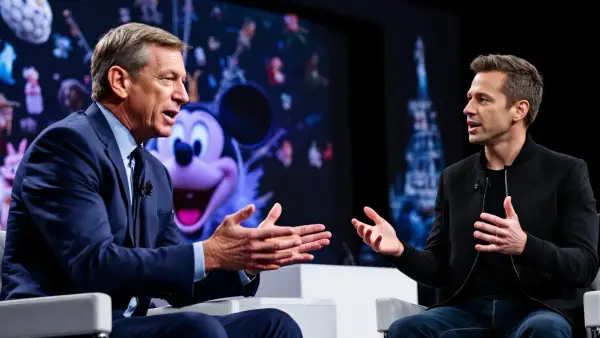
Licensing 200 iconic characters from Disney to OpenAI for $1 billion signals more than a media partnership—it reshapes creative production economics. Announced by Disney CEO Bob Iger and OpenAI CEO Sam Altman in December 2025, the deal integrates Disney’s IP into OpenAI's Sora platform and plans user-generated content for Disney+. But this is not just licensing; it’s a system-level move exploiting AI to turn legacy IP into an endlessly scalable creative engine.
“Creativity is the new productivity,” said Iger, capturing the pivot from traditional content creation costs to leveraging AI-generated video at scale. This partnership reveals how intellectual property and user engagement combine into a compounding value system that sidelines competitors like Google, who face cease-and-desist actions for IP misuse. Disney’s aggressive IP licensing with safety guardrails and fees exposes a new leverage mechanism in media and AI collaboration.
Why Licensing Is Not Just Protection but a Leverage Play
Conventional wisdom sees media-IP licensing as risk mitigation: Protect assets from unauthorized AI use. Yet, Disney’s approach flips this expectation. By selectively licensing 200 characters (excluding voices and likeness rights), it creates controlled access to its IP on OpenAI’s Sora. This curation enables automated, user-driven content creation without losing legal or creative control.
This strategy contrasts sharply with Google, which faces pushback over unlicensed IP use in AI models. Disney’s license-fee model becomes a structural moat, converting what was a potential liability into a predictable revenue stream and ecosystem advantage. The move exemplifies constraint repositioning that forces creative roles to evolve rather than vanish.
Building a System That Compounds User Creativity and Engagement
OpenAI reports “off the charts” demand for Disney characters to generate custom videos, a user behavior unlocked by lowering technical barriers to content creation. Compared to streaming platforms like YouTube or TikTok, which rely on organic uploads, Disney+ integrating user-prompted Sora videos positions its IP as both content and a creative toolkit.
This knit of content creation and IP ownership creates a flywheel effect: User-generated AI content on a flagship streaming platform binds fans more deeply, lowering acquisition costs from expensive paid ads to infrastructure expenses alone. Unlike competitors who must spend millions on acquisition, Disney shifts leverage to its copyrighted assets and AI platform partnership. See a similar structural upgrade discussed in how OpenAI scaled ChatGPT.
The Real Constraint Shift and Who Wins Next
The implicit constraint isn’t the AI’s technical capability but who controls the creation rights and user interfaces enabling scalable personalized content creation. Disney’s deal changes the negotiation of control and profit from a fragmented, combative framework to a collaborative ecosystem.
Other media giants ignoring this shift risk watching their IP exploited without compensation or platform integration. This move should pressure rights holders worldwide to rethink licensing as active ecosystem design, not just legal defense. For operators, this unlocks strategies akin to the transformative licensing shifts seen in digital media’s early days (Nvidia’s GPU licensing evolution).
“Buy audiences, not just products—the asset compounds,” is the imperative learning from this deal. Disney’s aggressive but nuanced position exemplifies capturing leverage through system architecture and constraint control in a rapidly transforming AI landscape.
Related Tools & Resources
For businesses embracing the creative potential of AI, tools like Blackbox AI can elevate the development process significantly. With its AI-powered coding assistance, it enables creators to focus on transforming their visionary ideas into scalable content, perfectly aligning with Disney's strategic use of AI in their IP-centric initiatives. Learn more about Blackbox AI →
Full Transparency: Some links in this article are affiliate partnerships. If you find value in the tools we recommend and decide to try them, we may earn a commission at no extra cost to you. We only recommend tools that align with the strategic thinking we share here. Think of it as supporting independent business analysis while discovering leverage in your own operations.
Frequently Asked Questions
What is the Disney and OpenAI deal about?
In December 2025, Disney licensed 200 iconic characters to OpenAI for $1 billion. This deal integrates Disney's intellectual property into OpenAI's Sora platform, enabling scalable AI-driven user-generated content on Disney+.
How does Disney's licensing strategy differ from other media companies?
Unlike others that see licensing mainly as IP protection, Disney uses selective licensing of 200 characters to create controlled access on OpenAI's platform. This approach combines legal control with creative leverage, turning legacy IP into a revenue-generating ecosystem.
What role does OpenAI's Sora platform play in this partnership?
OpenAI's Sora platform hosts Disney's licensed characters and allows users to generate custom AI-driven videos. This lowers technical barriers, driving “off the charts” demand and deepening user engagement on the Disney+ streaming service.
Why is this deal significant for the future of creative production?
The partnership exemplifies a shift from traditional costly content creation to AI-generated scalable creativity. It represents a system-level move leveraging AI and IP to compound user creativity and engagement, fundamentally changing media production economics.
How does Disney's deal impact competitors like Google?
Disney's aggressive licensing model contrasts with Google, which faces cease-and-desist actions for IP misuse. Disney turns IP into a structural moat, converting potential legal liabilities into predictable revenue and ecosystem advantages.
What are the potential risks for media companies ignoring this model?
Media companies that neglect active ecosystem design risk their IP being exploited without compensation or platform integration. Disney's example pressures rights holders worldwide to rethink licensing as strategic leverage rather than mere legal defense.
How does this deal affect user engagement and acquisition costs?
By integrating AI-driven user-generated content, Disney+ lowers user acquisition costs from expensive paid ads to primarily infrastructure expenses. This flywheel effect binds fans more deeply through co-creation on the platform.
What does the phrase 'Creativity is the new productivity' mean in this context?
Disney CEO Bob Iger's statement reflects the shift from traditional, labor-intensive content creation to scalable AI-generated creativity. AI enables faster, cost-effective production, making creative output a critical productivity factor in media.