
What Exxon’s Iraq Talks Reveal About Oilfield Strategic Leverage

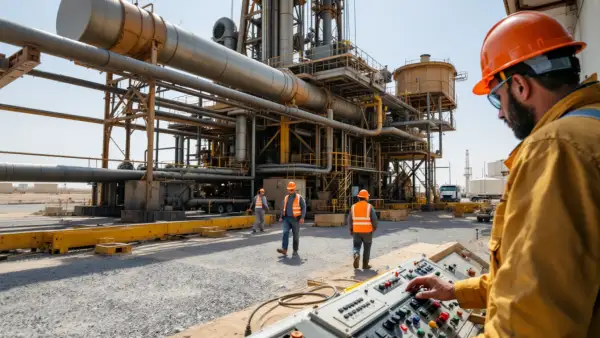
Oilfields like West Qurna 2 dominate global production yet often stay locked under complex ownership webs costing billions to untangle. Exxon is in talks with Iraq to buy Lukoil’s stake in this giant oilfield, reflecting a shift few outside energy circles fully grasp.
But this isn’t just a transaction between giants—it’s a move unlocking a hidden layer of leverage through asset consolidation in one of the world’s most geopolitically sensitive energy hubs.
Exxon’s
“Control over upstream assets creates systemic advantage beyond extraction,” says industry analysts. That’s the true prize here.
Why Analysts Misread This as Just a Portfolio Swap
Most commentary treats acquisitions like these as incremental volume plays or opportunistic expansions. They miss that Exxon
This deal sidesteps hurdles many western firms face: navigating national partnerships and operational complexity in Iraq, plus the challenge of maximizing output from multi-decadal fields.
Unlike competitors who might chase new drilling or greenfield projects, ExxonU.S. equities appreciate by consolidating control rather than raw expansion.
How Asset Consolidation Unlocks Compounding Advantage
Owning a larger stake in West Qurna 2 lets Exxon leverage existing infrastructure without proportionally higher capital expense—unlike greenfield projects requiring billions upfront.
This stake purchase effectively lowers operational constraints on scaling output and cost efficiency.
In contrast, rivals like PetroChina and Shell have opted to diversify geographically, spreading capital thin, losing out on scale economies that compound profits.
Currency and political risk also play into this — consolidating within Iraq reduces exposure while increasing control over revenue streams.
The Real Constraint Changing Here Is Control, Not Capacity
Exxon is moving beyond raw capacity to greater influence on how oilfield operations integrate with broader regional energy networks.
This unlocks leverage in negotiations with governments and larger customers, improving contract terms and accelerating cash flow.
It resembles how OpenAI focused on distribution leverage rather than raw user acquisition costs.
By controlling the operator’s seat in West Qurna 2, Exxon gains a persistent advantage that compound over decades without constant reinvestment.
Who Benefits and What’s Next for Iraq’s Energy Future?
This move signals a turning point for Iraq’s energy sector, where foreign investors prioritize leverage through strategic partnerships over budget-draining expansions.
Competitors must weigh whether to compete by scale or reposition around control points.
The real lesson: “Ownership consolidation in critical assets delivers systemic, compounding returns unlike volume chase,” a sector expert notes.
Other energy-rich countries with complex ownership models—like Libya or Nigeria—could replicate this constraint-focused strategy to attract stable capital.
Related Tools & Resources
As Exxon focuses on strategic leverage through asset consolidation, the same principles apply to how businesses expand their networks and efficiencies. Tools like Apollo can help organizations identify and connect with key stakeholders, optimizing their outreach and relationships in competitive environments. Learn more about Apollo →
Full Transparency: Some links in this article are affiliate partnerships. If you find value in the tools we recommend and decide to try them, we may earn a commission at no extra cost to you. We only recommend tools that align with the strategic thinking we share here. Think of it as supporting independent business analysis while discovering leverage in your own operations.
Frequently Asked Questions
What is Exxon negotiating with Iraq regarding West Qurna 2?
Exxon is in talks to purchase Lukoil’s stake in the West Qurna 2 oilfield, a move that focuses on consolidating control over a giant oil-producing asset rather than simply expanding output.
Why is controlling upstream oil assets important according to analysts?
Control over upstream assets like West Qurna 2 creates a systemic advantage beyond extraction by enabling leverage over infrastructure and revenue without requiring operational overhaul or large new investments.
How does Exxon’s strategy differ from competitors like PetroChina and Shell?
Unlike PetroChina and Shell, which diversify geographically spreading their capital thin, Exxon is focusing on consolidating ownership in Iraq to maximize scale economies and compound profits through strategic leverage.
What challenges does Exxon avoid by consolidating its stake in Iraq?
By acquiring a larger stake, Exxon sidesteps national partnership complexities and operational constraints prevalent in Iraq’s energy sector, improving cash flow predictability over pursuing new greenfield projects.
How does asset consolidation impact Exxon’s operational expenses?
Owning a larger stake in West Qurna 2 allows Exxon to leverage existing infrastructure without proportionally increasing capital expenses, thus lowering operational constraints on scaling output efficiently.
What broader effect does Exxon’s control have on Iraq’s energy sector?
This transaction signals a strategic shift in Iraq’s energy industry, where foreign investors now prioritize leverage through ownership consolidation over budget-draining expansions, potentially influencing similar moves in other countries like Libya and Nigeria.
What is meant by "control, not capacity" being the real constraint?
The key constraint shifting in Iraq’s oilfields is Exxon's increased influence over operational decisions and regional energy integration, which enhances negotiation power and contract terms beyond just increasing production capacity.
How could Exxon’s strategy affect investors and competitors?
Exxon’s leverage-focused approach offers stable, compounding returns by controlling critical assets, prompting competitors to reconsider strategies focused solely on scale or expansion versus control points.