
What Kroger’s Ecommerce Push Reveals About Food Retail Margins

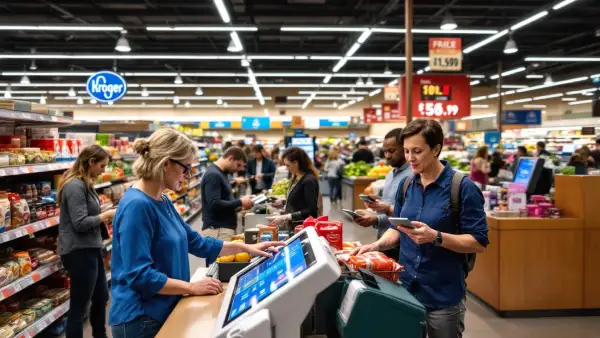
Food spending growth is weakening in the U.S., squeezing traditional grocers. Kroger is doubling down on ecommerce margins to fight back, betting on digital sales as a profitability lever. But this isn’t just about shifting sales channels—it’s about realigning operational constraints to unlock higher-margin growth. Profitability in food retail now demands mastering ecommerce efficiency, not just bigger baskets.
Why Margin Growth Means Rethinking Ecommerce, Not Just Sales
Conventional wisdom holds that expanding ecommerce sales hedges against declining in-store traffic by boosting revenue. That misses a key point: the real constraint is margin compression, not sales volume. Kroger’s bet focuses on ecommerce as a margin improvement system, not a pure growth engine.
This approach contrasts sharply with competitors like Amazon Fresh and Walmart Grocery, which disproportionately chase volume through aggressive discounts and subsidies. The overlooked challenge is that food ecommerce typically suffers from high fulfillment costs that crush margins.
See why traditional volume plays often conceal a hidden leverage failure in retail systems in Why Wall Street’s Tech Selloff Exposes Profit Lock-In Constraints.
How Kroger’s Ecommerce System Aligns Margins with Technology and Logistics
Kroger invests heavily in automation, proprietary logistics, and demand forecasting to cut ecommerce fulfillment costs below industry averages. Unlike peers paying $8-15 per new customer acquisition on Instagram ads, Kroger cuts customer acquisition cost by integrating ecommerce into its existing store network.
This creates a compounding advantage: every increment in online order automatically leverages physical store inventory and automation infrastructure, diluting fixed costs. Other grocers rely on standalone fulfillment centers that add layers of cost and complexity.
For comparison, Walmart recently handed off leadership to accelerate its ecommerce focus, reflecting a wider shift in grocers’ system designs (How Walmart Quietly Handed Leadership to Unlock Next Growth Phase).
Beyond Grocery: Ecommerce Margins as a Constraint Leverage Play
Food retail has structural margin constraints from perishability and low pricing power. Kroger’s ecommerce margin focus reveals how the true limit is not consumer demand but operational efficiency. This changes the strategic playbook: improving tech-enabled fulfillment systems yields sustainable profitability gains.
The constant human intervention of manual fulfillment and third-party logistics outsourcing has long been a growth inhibitor. Kroger’s system design creates leverage that works continuously, edging closer to full automation.
Operators studying this should note parallels with AI scaling at OpenAI, where infrastructure integration turned cost centers into profit drivers.
New Constraints, New Plays: Who Benefits and Why
The key constraint shifted from top-line expansion to margin optimization through system design. Grocers that can replicate Kroger’s integration of ecommerce with physical assets and automation will dominate.
This move invites a rethink across retail sectors where low-margin products mask leverage opportunities in fulfillment tech. Regions still relying on manual food ecommerce logistics can leapfrog incumbents by adopting Kroger’s system approach.
“Profitability in food retail now demands mastering ecommerce efficiency, not just bigger baskets.” Staying ahead means turning operational complexity into leveraged advantage.
Related Tools & Resources
For grocers like Kroger looking to optimize their ecommerce strategy, leveraging analytics is key. Centripe provides the insights and tracking needed to refine profit margins and streamline operations, turning ecommerce data into actionable strategies for success. Learn more about Centripe →
Full Transparency: Some links in this article are affiliate partnerships. If you find value in the tools we recommend and decide to try them, we may earn a commission at no extra cost to you. We only recommend tools that align with the strategic thinking we share here. Think of it as supporting independent business analysis while discovering leverage in your own operations.
Frequently Asked Questions
How is Kroger improving its ecommerce margins compared to competitors?
Kroger improves ecommerce margins by investing in automation, proprietary logistics, and demand forecasting to reduce fulfillment costs below industry averages. Unlike competitors that rely on expensive customer acquisition channels, Kroger leverages its existing store network to cut costs and increase efficiency.
Why is margin growth more important than sales volume in food retail ecommerce?
Margin growth is critical because food ecommerce faces high fulfillment costs that compress profits. Kroger's strategy focuses on improving operational efficiency rather than simply increasing sales volume, which contrasts with competitors who chase volume through aggressive discounts but hurt margins.
What disadvantages do standalone fulfillment centers present for grocers?
Standalone fulfillment centers add layers of cost and complexity, increasing fulfillment expenses. Kroger avoids this by integrating ecommerce operations with its physical store network, thereby diluting fixed costs and improving profitability.
How does Kroger's ecommerce strategy differ from Amazon Fresh and Walmart Grocery?
While Amazon Fresh and Walmart Grocery prioritize volume through discounts and subsidies, Kroger prioritizes margin improvement by leveraging automation and its store network to lower fulfillment costs, making it a margin improvement system rather than purely a growth engine.
What structural constraints affect food retail margins?
Food retail margins are constrained by product perishability and low pricing power. Kroger's ecommerce focus reveals that operational efficiency, particularly tech-enabled fulfillment systems, is key to overcoming these limits and achieving sustainable profitability.
How does Kroger reduce customer acquisition costs in ecommerce?
Kroger reduces customer acquisition costs by integrating ecommerce operations with its existing physical stores, avoiding high spending on ads like the $8-15 per new customer acquisition cost observed with competitors using Instagram ads.
What can other grocers learn from Kroger's ecommerce system?
Other grocers can replicate Kroger’s integration of ecommerce with physical assets and automation to dominate the market. This approach transforms operational complexity into leveraged advantage, reducing fulfillment costs and enhancing margins.
How does Kroger’s approach relate to AI scaling strategies like OpenAI’s?
Kroger’s system design parallels AI scaling at OpenAI, where integration of infrastructure turns cost centers into profit drivers by enabling continuous leverage and moving closer to full automation.