
What Nvidia CEO’s China Uncertainty Reveals About AI Chip Leverage

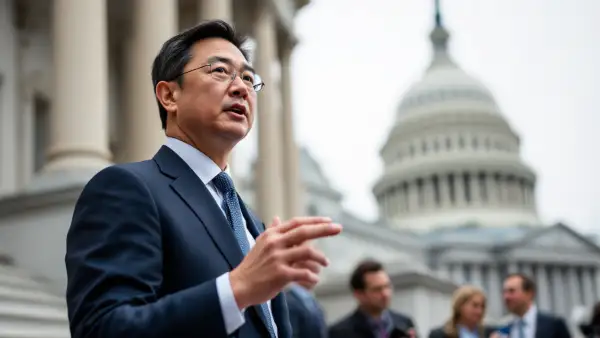
AI chips define a $100 billion battleground where national policy and supply chains intersect. Nvidia CEO Jensen Huang met with former US President Donald Trump in early December 2025 to discuss export controls on the company’s advanced H200 AI processors. But Huang openly admitted uncertainty that China would accept the H200 chips even if US restrictions ease.
This nuance reveals a core constraint in semiconductor leverage: export policy alone doesn’t guarantee market access. The global competition for AI dominance hinges not just on manufacturing, but on the complex interplay of trust, supply chain ties, and technology standards. “Leverage isn’t simply about what you can sell—it’s what others choose to buy,” Huang’s uncertainty implies.
Conventional Wisdom Mistakes Export Controls For Market Control
Many observers frame US export restrictions as a blunt tool: if the rules relax, chips flow, and Chinese AI companies gain instant advantage. This view overlooks a deeper mechanism of leverage—market acceptance as a system constraint. Nvidia’s hesitation signals that regulatory permission doesn’t equate to operational partnership or demand. China can—and often does—favor domestic chipmakers and alternative supply routes, signaling resistance beyond policy.
This flips the leverage question from mere regulation to ecosystem alignment. For contrast, OpenAI successfully scaled ChatGPT by embedding itself in global developer tools, turning distribution leverage into user growth at scale. See how OpenAI Actually Scaled ChatGPT To 1 Billion Users for an example of strategic positioning that transcends raw technology.
H200 Chips Expose The Hidden Levers Of Geopolitical Trust
Nvidia’s H200 is cutting-edge, but adoption depends on more than technical specs: it requires supply chain security, compatible software ecosystems, and geopolitical trust. Even if export bans lift, Chinese firms face internal constraints preferring local alternatives or technologies not reliant on US-based chips.
Meanwhile, US rivals like Intel and AMD face similar systemic challenges. Unlike competitors who focus solely on chip performance, Nvidia controls key AI frameworks and software tools, a non-tangible system-level advantage. This shows a leverage pivot from hardware to integrated ecosystems, a topic explored in Why Nvidia’s 2025 Q3 Results Quietly Signal Investor Shift.
The Real Reason Market Access Is Not Just About Exports
Constraints have shifted from physical barriers to relational and strategic alignments. The question for Nvidia is not if they can export to China, but whether Chinese AI firms trust and prioritize US technology over local or alternative sources, especially as China doubles down on its semiconductor sovereignty.
Operators should note this changes the leverage equation: acquiring regulatory relief is one step; sustaining market penetration requires ecosystem influence and geopolitical navigation. See Why Investors Are Quietly Pulling Back From Tech Amid US Labor Shifts for context on shifting operational leverage in tech geopolitics.
Geopolitical Constraints Reshape AI Leverage—Who Wins Depends On Ecosystem Control
Nvidia’s CEO spotlight on China’s uncertain reception of its H200 processors underscores a new leverage frontier. The constraint is no longer just production or policy, but ecosystem adoption influenced by trust and national strategy.
Companies operating globally must rethink leverage beyond supply chains, positioning themselves in software, distribution, and geopolitical ecosystems. Leverage goes beyond what you make to what markets accept—and that even ruling export policy can’t guarantee.
Related Tools & Resources
As AI chips continue to shape the landscape of technology and geopolitics, leveraging the right development tools becomes critical for success. This is where Blackbox AI can assist developers in creating more robust and competitive AI solutions, providing the coding resources needed to capitalize on these evolving opportunities. For those aiming to navigate the complexities of AI technology and ecosystem alignment, integrating an AI coding assistant like Blackbox AI can be a game changer. Learn more about Blackbox AI →
Full Transparency: Some links in this article are affiliate partnerships. If you find value in the tools we recommend and decide to try them, we may earn a commission at no extra cost to you. We only recommend tools that align with the strategic thinking we share here. Think of it as supporting independent business analysis while discovering leverage in your own operations.
Frequently Asked Questions
Why is Nvidia CEO uncertain about selling H200 AI chips to China?
Nvidia CEO Jensen Huang is uncertain because even if US export restrictions ease, China may not accept the H200 AI chips due to preferences for domestic chipmakers and supply chain trust issues.
What is the significance of the $100 billion AI chip market?
The AI chip market, valued at $100 billion, is a critical battleground where national policies, supply chains, and technology ecosystems intersect, affecting global competition for AI dominance.
How do export controls relate to market access for AI chips?
Export controls regulate supply but don't guarantee market access. Market acceptance depends on ecosystem alignment, trust, and strategic priorities of countries like China, beyond just regulatory permissions.
What advantages does Nvidia have compared to Intel and AMD?
Nvidia owns key AI software frameworks and tools, providing systemic leverage beyond hardware performance, which helps it control integrated ecosystems better than competitors like Intel and AMD.
Why is ecosystem influence important for AI chip companies?
Ecosystem influence ensures adoption through compatible software, supply chain security, and geopolitical trust, enabling companies like Nvidia to maintain market penetration beyond physical exports.
How does geopolitical trust impact AI chip adoption?
Geopolitical trust affects whether countries like China choose US-based chips or domestic alternatives, influencing leverage in AI markets beyond just manufacturing and export policies.
What lessons does OpenAI's growth provide for AI market leverage?
OpenAI’s growth shows that embedding products into global developer ecosystems, like ChatGPT reaching 1 billion users, creates leverage through distribution and user adoption rather than just technology.
What role does Blackbox AI play in the AI development ecosystem?
Blackbox AI supports developers with coding resources to build robust AI solutions, helping companies navigate technical and ecosystem challenges critical for succeeding in the AI chip landscape.