
What Nvidia’s Server Boost Reveals About China’s AI Race

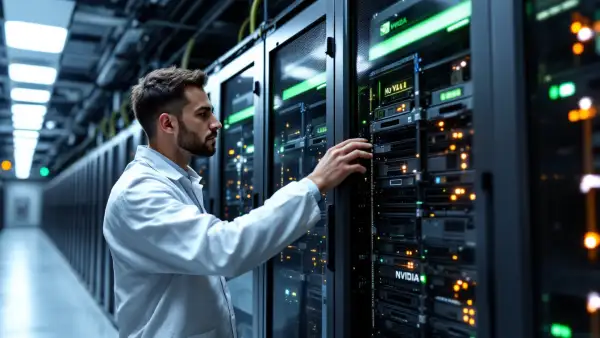
The cost of training advanced AI models is scaling rapidly worldwide. China has accelerated this with Moonshoot AI and other firms adopting Nvidia servers that speed up AI processing tenfold.
This leap isn’t just about raw speed—it’s a deliberate play on the critical infrastructure layer for AI development. Nvidia’s server integration shows how highly specialized hardware is resetting competition in the AI arms race.
Markets that control AI training hardware consolidate long-term innovation leverage.
Breaking the Myth of Software-Only AI Competition
Conventional wisdom holds that AI breakthroughs come primarily from novel algorithms or massive datasets. Investors and operators focus on training techniques or data access, overlooking compute.
But this ignores a core constraint: AI models require immense computational power to iterate and scale. The true bottleneck is hardware efficiency—exactly where Nvidia’s tenfold speedup overturns assumptions. This reframes the competitive landscape entirely, similar to insights exposed in Nvidia’s 2025 Q3 results analysis.
Why Specialized Servers Trump Generic Cloud Compute
Moonshoot AI isn’t unique; other Chinese firms rapidly adopted Nvidia’s latest server tech. This contrasts with Western groups that often rely on raw cloud compute, which lacks the custom optimizations Nvidia offers for AI model training.
This is the difference between renting time on commodity servers and owning a performance-optimized platform. Replicating this requires years of hardware-software co-design, a high capital barrier that rivals cannot easily cross. It explains why OpenAI and Anthropic also invest heavily in co-locating AI models on customized hardware, a topic we explored in OpenAI’s scaling strategy.
China’s Strategic Infrastructure Play in AI
The speed gains extend beyond cost savings: they enable faster model iteration, reducing the feedback loop from months to weeks. This shifts AI development from trial-and-error to systematic optimization.
China’s AI firms thus gain a leverage advantage by controlling key infrastructure constraints: hardware access and training speed. This is a structural repositioning akin to how AI shifts labor leverage—not about replacing effort but about upgrading the system itself.
Who Wins the Next AI Frontier?
The constraint has moved from data availability to training efficiency. Countries and companies that combine tailored hardware with smart software stack dominate where innovation compounds.
Operators in AI development must treat infrastructure as a strategic asset, not a commoditized input. China’s rapid integration of Nvidia servers shows that controlling hardware ecosystems unlocks an exponential leverage multiplier few can replicate quickly.
Future leaders will be those who break free from cloud-only compute models and invest in layered infrastructure that works without constant human intervention.
“True AI leadership depends on controlling the unseen backbone of AI innovation: compute speed and scale.”
Related Tools & Resources
As companies like Nvidia reshape the landscape of AI through specialized hardware, developers need robust tools to keep pace with innovation. Blackbox AI, with its AI-powered coding assistance, empowers programmers to iterate quickly and efficiently, enhancing their capabilities to build on the rapid advancements seen in AI processing and training. Learn more about Blackbox AI →
Full Transparency: Some links in this article are affiliate partnerships. If you find value in the tools we recommend and decide to try them, we may earn a commission at no extra cost to you. We only recommend tools that align with the strategic thinking we share here. Think of it as supporting independent business analysis while discovering leverage in your own operations.
Frequently Asked Questions
How do Nvidia servers impact AI training speed?
Nvidia servers accelerate AI processing by up to ten times, enabling faster model iteration and reducing feedback loops from months to weeks, significantly enhancing AI development efficiency.
Why is hardware efficiency crucial in AI development?
Hardware efficiency is a core constraint in AI because training advanced models requires immense computational power. Nvidia's specialized servers increase speed tenfold, shifting the competitive advantage from software alone to include hardware capabilities.
How does China's adoption of Nvidia servers influence its AI race?
Chinese firms like Moonshoot AI have rapidly integrated Nvidia's latest server technology, gaining strategic leverage by controlling key infrastructure and speeding up AI training, thus reshaping the competition with faster and more efficient development.
What differentiates specialized AI servers from generic cloud compute?
Specialized AI servers, such as Nvidia's, are optimized through hardware-software co-design for AI training, unlike generic cloud servers that lack these enhancements. This results in better performance, higher speed, and a significant capital barrier for competitors.
How do Nvidia's servers affect innovation in AI?
By increasing training speed tenfold, Nvidia's servers allow AI models to iterate much faster, turning AI development into a systematic optimization process, which accelerates innovation and compounds competitive advantages.
What role does infrastructure play in AI leadership?
Infrastructure, especially hardware access and training speed, is a strategic asset in AI development. Controlling specialized compute resources, like Nvidia’s customized servers, provides a leverage multiplier that influences long-term innovation and leadership.
Why is the AI competitive landscape shifting from data to compute?
The main bottleneck has moved from data availability to training efficiency and hardware speed. Companies controlling optimized hardware, as Nvidia's servers enable, dominate AI model development and innovation.
What is the significance of Nvidia’s server boost for global AI competition?
Nvidia’s tenfold speedup in AI training hardware highlights the crucial role of specialized infrastructure in the AI arms race, giving countries like China a structural advantage in controlling compute speed and scale.