
What Rivian’s EV Buyer Split Reveals About U.S. Market Leverage

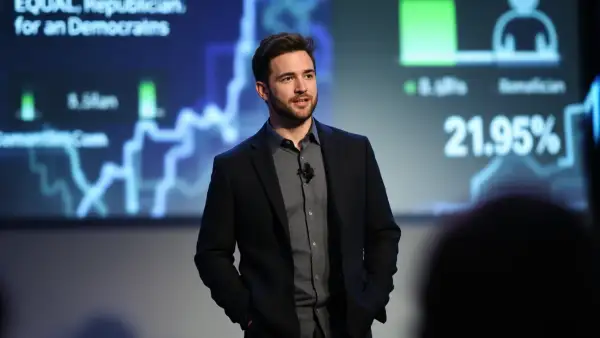
Electric vehicle adoption in the U.S. remains stuck despite global momentum, but Rivian reveals a surprising truth: R1 SUV buyers split evenly between Republicans and Democrats. At the Fortune Brainstorm AI conference, CEO RJ Scaringe dismantled the myth that EV ownership is a political statement. Instead, buyers prioritize product excitement and fit over ideology.
But this story isn’t just about politics—it exposes a critical market system leverage in America. The EV market’s main constraint is not demand, but a “shocking lack of choice,” according to Scaringe. Unlike Europe and China, the U.S. rejects Chinese EV brands, artificially limiting supply options and locking in Tesla’s dominance around the $50,000 price segment. Rivian’s upcoming R2 SUV priced at $45,000 challenges this with a new entry point.
Understanding this supply-side constraint changes how operators and investors approach EV growth strategies in the U.S. market. RJ Scaringe’s long view explicitly ignores political wind shifts, betting instead on broadening consumer choice to trigger adoption curves.
Challenging The 'Political EV Buyer' Myth Gives Leverage Clarity
Conventional wisdom brands EVs as a wedge issue separating American left and right. This binary view misses how product positioning rewires market dynamics. According to Scaringe, buyers from both parties ask the same questions: “Is it exciting? Does the brand resonate? Does it meet my needs?” It's a system where political identity is irrelevant, unseating a constraint many companies misdiagnose as demand volatility.
This perspective forces a rethink of electric mobility adoption. Rather than chasing policy incentives or worrying about political cycles, the key constraint is consumer product diversity. This shifts strategic focus from lobbying to engineering, and from messaging friction to expanding portfolio breadth—a subtle but transformational repositioning. See how dynamic work charts unlock faster organization growth for parallels in strategy execution.
Supply Limitations and Market Positioning Drive EV Demand
Tesla’s hold over the $50,000 EV segment thrives on limited competition in the U.S., a market closed to major Chinese EV brands that flood Europe and Asia. This supply gatekeeping artificially narrows consumer choices and slows overall demand growth. Rivian’s R2 SUV promises to cut into this space with a $45,000 starting price, embodying a system move that repositions supply constraints as growth drivers.
Consider how Wall Street’s tech selloff reveals profit lock-in constraints illuminate parallels. Market dominance by a single player without diverse upstream options disables fluid scaling. Rivian’s choice to build a mid-sized SUV diversifies the ecosystem and lowers barriers for Republican and Democrat buyers alike, decoupling adoption from political tempests.
EV Choices Create Competitive Dynamics Driving Market Growth
Scaringe welcomes more competition, even a flood of foreign brands, to accelerate EV penetration. While some countries respond with tariffs to block low-priced imports, Rivian sees choice as essential leverage. More competing products multiply consumer touchpoints and vendor innovation without constant government intervention.
From a leverage perspective, expanding EV choices is a system-level fix that improves capacity utilization across manufacturing, marketing, and charging infrastructure. This enhances operational scalability and consumer accessibility—two keys for unlocking U.S. EV mass adoption. OpenAI’s ChatGPT growth reflects similar compounding effects from expanding choice and access.
Changing Supply-Side Constraints Reframe EV Adoption Strategy
The real leverage lies in shifting from demand uncertainty to supply-side capacity. RJ Scaringe fundamentally changed the constraint: from selling only to a politicized base to servicing a broad market hungry for options. This strategic repositioning means companies and policymakers focused on increasing U.S. EV options hold the key to disruptive growth.
Operators should watch how Rivian navigates competition and pricing in the $45,000 range, potentially unlocking volumes unattainable through political gambits or incremental tech improvements. The U.S. market’s supply bottleneck will define winners, not consumer ideologies.
“Choice drives penetration by unleashing latent demand across all political lines,” remains the hard truth reshaping U.S. EV markets.
Related Tools & Resources
For manufacturers and businesses looking to navigate the evolving landscape of electric vehicle production, MrPeasy offers a robust ERP solution to streamline operations and optimize supply chains. By enhancing production management and inventory control, tools like MrPeasy can help prepare for the increased competition and market diversity highlighted in the article. Learn more about MrPeasy →
Full Transparency: Some links in this article are affiliate partnerships. If you find value in the tools we recommend and decide to try them, we may earn a commission at no extra cost to you. We only recommend tools that align with the strategic thinking we share here. Think of it as supporting independent business analysis while discovering leverage in your own operations.
Frequently Asked Questions
What does Rivian's buyer political split reveal about the US EV market?
Rivian's R1 SUV buyers are evenly split between Republicans and Democrats, showing that EV ownership is driven more by product excitement and fit than political ideology.
Why is the US EV market growth slower compared to Europe and China?
The US EV market growth is constrained by a lack of choice, as it rejects Chinese EV brands that flood Europe and Asia, limiting competition and supply options.
How is Rivian addressing supply-side constraints in the EV market?
Rivian plans to launch the R2 SUV priced at $45,000, entering below Tesla’s $50,000 segment to diversify options and increase consumer choice in the US market.
What is RJ Scaringe's perspective on EV buyer motivations?
RJ Scaringe believes EV buyers focus on whether the product is exciting, resonates with the brand, and meets needs, rather than political affiliations.
How does competition impact EV adoption in the US?
Increased competition, including more foreign EV brands, can multiply consumer choices and innovation, which are essential to unlocking broader EV adoption in the US.
What strategic shift is critical for EV growth according to this article?
The strategic focus should shift from political demand concerns to expanding supply-side capacity and consumer product diversity to drive EV market growth.
How does Tesla currently dominate the US EV market?
Tesla dominates the approximately $50,000 EV price segment largely due to limited competition and supply restrictions in the US market.
What role do government policies play in the EV market dynamics?
Government policies, including tariffs, can restrict imports and competition, but strategic growth relies more on engineering broader product portfolios than lobbying for political gains.