
What Singapore’s SGX Bid Reveals About Exchange Expansion Trends

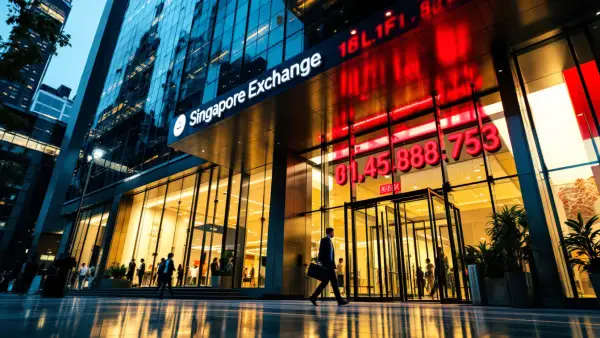
Australia's stock exchange sector is valued at billions, yet Singapore is moving beyond typical growth tactics by eyeing Cboe Global Markets Inc.'s Australian unit. The Australian Financial Review recently reported that Singapore Exchange (SGX) is considering this strategic acquisition in 2025. This is not just a cross-border purchase—it's a tactical leverage play to reshape regional market position. Grabbing control over market infrastructure means owning the rules of financial engagement.
Conventional Wisdom Overlooks Constraint Repositioning in Exchange Deals
Many analysts view exchange acquisitions as simple cost-saving or market-entry moves focused on immediate revenue gains. They see SGX’s bid as a straightforward expansion into the Australian market to enlarge trading volumes or cut operational expenses. This misses the key mechanism: SGX is repositioning a strategic constraint, moving from competitor to infrastructure gatekeeper. This shift parallels dynamics explored in how currency movements reveal leverage in monetary policy, where possession of system control transforms power.
Owning Cboe Australia Means Restructuring Regional Market Levers
Unlike organic growth or launching parallel platforms, acquiring Cboe Australia provides SGX direct control of market infrastructure with minimal friction. This structural ownership lets SGX set transaction rules, data access, and operational standards—elements that work without constant intervention but create compounding barriers to entry for competitors. Unlike exchanges relying on regulatory goodwill, this move reproduces a self-scaling advantage, similar to OpenAI’s AI scaling mechanisms as detailed here.
Competitors like ASX or Cboe’s other units depend on decentralized systems or partnerships, creating greater execution complexity and cost. Singapore leverages its existing financial ecosystem and regulatory alignment to make integration smoother, lowering the cost curve drastically compared to greenfield expansion.
Why This Changes Cross-Border Exchange M&A Strategy
This move signals a new way to approach expansion: prioritize infrastructure control over surface-level gain. It shifts the constraint from market size or liquidity to who holds protocol-level authority. Exchange operators that own these layers gain compounding value without daily management overhead.
Market operators in Asia-Pacific and other emerging financial hubs must take note. This acquisition model enables faster regional consolidation and lock-in of financial activity, raising barriers to late entrants. Similar mechanisms were quietly at play in tech labor market shifts, where controlling platform roles redefined leverage.
Control the infrastructure, and you control the economic outcomes. Financial operators and regulators watching SGX’s move will soon see how system ownership dictates who wins the Asia-Pacific financial race.
Related Tools & Resources
Understanding the intricacies of market infrastructure is pivotal for operators looking to gain a competitive edge. This is where platforms like Hyros can enhance your marketing effectiveness by providing advanced ad tracking and attribution. By leveraging data, you can replicate the strategic moves discussed in SGX's bid to ensure you maintain control over your market positioning. Learn more about Hyros →
Full Transparency: Some links in this article are affiliate partnerships. If you find value in the tools we recommend and decide to try them, we may earn a commission at no extra cost to you. We only recommend tools that align with the strategic thinking we share here. Think of it as supporting independent business analysis while discovering leverage in your own operations.
Frequently Asked Questions
What is the significance of SGX's bid for Cboe Australia's Australian unit?
SGX's bid for Cboe Australia in 2025 represents a strategic move to control market infrastructure rather than just expanding trading volume, enabling SGX to own the rules of financial engagement in the region.
How does owning market infrastructure benefit stock exchanges?
Owning market infrastructure allows exchanges like SGX to set transaction rules, control data access, and impose operational standards that create barriers to entry and generate compounding advantages without needing daily management.
Why is SGX's expansion strategy different from conventional exchange acquisitions?
Unlike typical growth tactics that focus on immediate revenue or cost savings, SGX aims to reposition itself from competitor to infrastructure gatekeeper, shifting control from market size to protocol-level authority.
What challenges do competitors like ASX face compared to SGX's strategy?
Competitors such as ASX rely on decentralized systems or partnerships, resulting in higher complexity and costs, whereas SGX leverages regulatory alignment and its existing financial ecosystem to integrate more smoothly and cost-effectively.
How might SGX's acquisition impact the Asia-Pacific financial market?
The acquisition could accelerate regional consolidation by locking in financial activity and raising barriers for new entrants, influencing the competitive landscape for Asia-Pacific’s emerging financial hubs.
What parallels exist between SGX's strategy and developments in technology scaling?
SGX's approach to controlling market infrastructure resembles OpenAI’s AI scaling mechanisms, where owning system control creates self-scaling advantages and strategic leverage.
Are there any tools recommended for market operators to gain competitive edges in such environments?
Platforms like Hyros can help by providing advanced ad tracking and attribution capabilities, allowing operators to replicate strategic leverage through improved marketing effectiveness and data use.
What does "repositioning a strategic constraint" mean in the context of SGX's bid?
It means SGX is shifting its role from being just a market participant to becoming the gatekeeper of critical market infrastructure, thus controlling the framework within which competitors operate.