
What Sinopec’s $690M Hydrogen Fund Reveals About China’s Energy Pivot

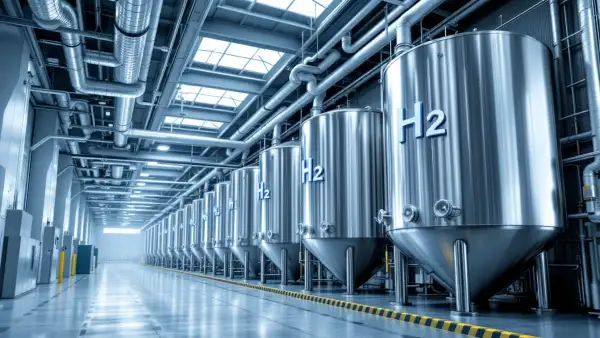
China faces rising pressure to meet its climate goals while competing globally in clean energy. Sinopec just launched a $690 million venture capital fund focused on hydrogen energy, marking one of the country’s biggest clean fuel bets. But this isn’t just about investing in green tech—it's about building a systemic edge around next-gen energy infrastructure. Control over hydrogen innovation now defines future industrial leadership.
Why Hydrogen Isn't Just Another Clean Energy Play
Conventional wisdom treats hydrogen like any renewable—another asset to diversify a portfolio or decarbonize operations. That view misses the key leverage: hydrogen is an infrastructure bottleneck. Ownership of production, distribution, and usage technologies compounds over time, creating barriers for competitors.
Unlike solar or wind, where resources are broadly accessible, hydrogen systems require massive upfront capital and tightly integrated supply chains. Sinopec’s fund signals a strategic shift from commodity refining to owning energy system design. This rebalance echoes how OpenAI scaled ChatGPT by locking in foundational AI models, not just features (source).
How China’s Hydrogen Investment Diverges from Global Peers
Europe’s hydrogen efforts, like Germany’s National Hydrogen Strategy, emphasize public subsidies and regulatory nudges. The US relies more on private venture capital scattered across startups with diverse tech bets. In contrast, China’s approach centers on state-backed conglomerates like Sinopec funneling hundreds of millions into targeted ventures.
This funneling consolidates technical standards, supply chain control, and intellectual property within a cluster of government-aligned firms, accelerating system-level integration. By centralizing capital and ventures, Sinopec effectively builds a hydrogen moat, a sharp contrast to fragmented Western efforts.
Other energy giants such as Shell and BP have similarly launched hydrogen ventures but on a smaller scale and more distributed basis.
The Constraint Shift Behind China’s Energy Leverage Play
The critical bottleneck in hydrogen adoption has shifted from raw production capacity to the ability to deploy market-ready systems at scale. Sinopec’s fund isn’t just fueling startups—it’s creating a venture pipeline feeding into an industrial ecosystem that auto-scales innovations across refining, transport, and power generation.
This vertical integration bypasses slow regulatory approval timelines and fragmented market incentives that stall competitors. For operators watching this, the constraint isn’t technology scarcity; it’s establishing a self-reinforcing hydrogen ecosystem that runs autonomously once set.
Similar execution dynamics unfolded when Meta cut 20,000 jobs to refocus on AI efficiency—a leverage play in headcount and tech resources (source).
Who Benefits and What’s Next for Global Energy Leverage
Chinese firms and provinces aligned with Sinopec will solidify leadership in hydrogen infrastructure, locking out competitors reliant on generic tech or capital. Countries like South Korea and Japan should study this model to shift from importer to system integrator.
The real leverage lies in turning hydrogen investment into a systemic control point—a platform that rewards cumulative innovation and operational lock-in. This fund is less a financial play and more a blueprint for industrial dominance.
“Control over hydrogen infrastructure will dictate power and profits in the next energy era.”
For details on how system constraints reshape industries, see our analysis on leverage failures in tech layoffs and OpenAI’s AI infrastructure scaling.
Related Tools & Resources
As businesses navigate the complexities of hydrogen adoption and infrastructure development, leveraging advanced tools like Blackbox AI can enhance efficiency in coding and software development. By streamlining operations and integrating AI-driven insights, companies can better position themselves in the competitive landscape of clean energy innovation. Learn more about Blackbox AI →
Full Transparency: Some links in this article are affiliate partnerships. If you find value in the tools we recommend and decide to try them, we may earn a commission at no extra cost to you. We only recommend tools that align with the strategic thinking we share here. Think of it as supporting independent business analysis while discovering leverage in your own operations.
Frequently Asked Questions
What is Sinopec's $690 million hydrogen fund?
Sinopec's $690 million venture capital fund focuses on hydrogen energy, aiming to build a strategic edge in hydrogen infrastructure and innovation within China’s clean energy sector.
Why is hydrogen considered different from other renewable energies?
Hydrogen is seen as an infrastructure bottleneck requiring massive upfront capital and integrated supply chains, unlike solar or wind which have broader resource accessibility.
How does China’s hydrogen investment strategy differ from Europe and the US?
China's approach centers on state-backed conglomerates like Sinopec funneling large capital into focused ventures, consolidating technical standards and supply chains, unlike Europe’s public subsidies or the US’s fragmented private VC investments.
What benefits does Sinopec’s hydrogen fund provide to Chinese firms?
Chinese firms and provinces aligned with Sinopec can solidify leadership in hydrogen infrastructure, establishing system-level integration that creates competitive barriers for others.
How does the hydrogen fund impact global energy markets?
The fund supports China’s goal to shift from a commodity refiner to a system integrator in hydrogen, potentially locking out competitors and influencing energy leadership in Asia and beyond.
What is meant by the 'hydrogen moat' in the article?
The "hydrogen moat" refers to Sinopec’s strategy of centralized control over technical standards and supply chains, creating high barriers for competitors to enter or scale in hydrogen energy.
How does Sinopec’s vertical integration affect hydrogen adoption?
Vertical integration through the fund bypasses slow regulatory approvals and fragmented markets, accelerating deployment of market-ready hydrogen systems at scale.
What are some examples of companies making similar moves in hydrogen energy?
Energy giants like Shell and BP have launched hydrogen ventures, but on a smaller and more distributed scale compared to Sinopec’s centralized strategy.