
What SpaceX and Blue Origin’s Moon Plans Reveal About NASA’s Leverage Shift

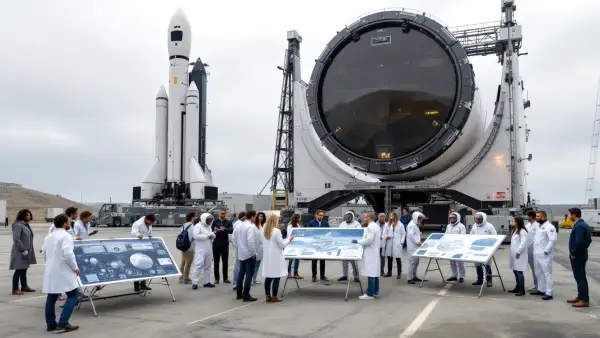
SpaceX and Blue Origin recently submitted competing plans to speed up NASA’s return to the Moon. Both are pushing for accelerated astronaut missions under NASA’s Artemis program, each leveraging distinct systems and capabilities to meet a tighter timeline. But this isn’t just about faster moon landings—it’s a bet on *system-level leverage* NASA is quietly realigning around. When mission speed is the constraint, repositioning partnerships rewrites the playbook.
Why NASA’s Race to the Moon Defies Traditional Aerospace Timelines
Conventional wisdom treats space exploration as a slow, bureaucratic slog reliant on government development cycles. The reality NASA reveals is that with the right leverage model, timelines collapse. Instead of relying on developing proprietary spacecraft over a decade, NASA is letting entrants like SpaceX and Blue Origin provide turnkey solutions accelerates deployment.
This upends classic aerospace dynamics where program length is dictated by in-house engineering. Dynamic systems empowerment, where NASA sets strategic guardrails and enlists private capabilities, shifts the bottleneck from engineering to coordination. NASA shifts from builder to orchestrator—rewiring constraint and leverage.
How SpaceX and Blue Origin Use Different Systems to Achieve the Same Accelerated Goal
SpaceX accelerates moon mission readiness by evolving its Starship architecture, which already boasts deep flight and launch data from numerous orbital tests. This compounding knowledge base creates a feedback loop compressing iteration cycles.
Blue Origin leverages its established New Glenn rocket and invests in modular lunar landers, positioning for faster deployment by reusing proven booster technology. Unlike SpaceX’s aggressive iteration, Blue Origin bets on system reuse to constrain development effort.
Neither approach duplicates traditional NASA development. Both reposition the constraint: it’s not rocket building, but integration, launch cadence, and astronaut readiness. This mirrors moves in other sectors where the greatest leverage comes from repurposing or recombining existing assets rather than building from scratch. See how OpenAI scaled ChatGPT to 1B users via platform leverage.
What the Shift Means for Space Policy and Commercial Space Race Strategy
By focusing on plans to get astronauts back to the moon faster, NASA signals a systemic pivot: partnerships with multiple launch providers unlock *parallel development* and *risk diversification*, which compound speed and reliability. The constraint no longer lies in single-engine space agency timelines but in coordinating external assets.
Operators in other countries and industries should note how constraint repositioning can compress time-to-market dramatically when the right system is leveraged. This system orchestration enables NASA to scale mission frequency while controlling cost escalation—two traditionally opposing forces.
“Speed in complex missions now comes from repositioning legacy constraints, not building faster.”
Future space programs will increasingly require managing ecosystems rather than single providers. The leverage here: build a modular, interoperable partner platform, not a monolithic system. This unlocks exponential gains as new providers enter and competition drives innovation.
Related Tools & Resources
As NASA shifts to a more collaborative approach by leveraging external partnerships, firms looking to adapt to similar ecosystems can benefit from platforms like Apollo. This sales intelligence tool aids B2B teams in optimizing their outreach, much like how NASA is reinventing its mission strategy by integrating diverse capabilities for accelerated results. Learn more about Apollo →
Full Transparency: Some links in this article are affiliate partnerships. If you find value in the tools we recommend and decide to try them, we may earn a commission at no extra cost to you. We only recommend tools that align with the strategic thinking we share here. Think of it as supporting independent business analysis while discovering leverage in your own operations.
Frequently Asked Questions
Why is NASA accelerating its Artemis moon missions?
NASA is accelerating Artemis moon missions by partnering with private companies like SpaceX and Blue Origin to leverage turnkey solutions, allowing faster deployment and compressing traditional aerospace timelines.
How do SpaceX and Blue Origin differ in their approaches to moon mission readiness?
SpaceX uses an evolving Starship architecture with rapid iterative testing, while Blue Origin relies on reusing proven boosters like New Glenn and modular lunar landers to constrain development effort; both approaches reposition mission constraints to integration and coordination.
What does it mean that NASA is shifting from builder to orchestrator?
NASA is moving away from developing proprietary spacecraft internally to orchestrating partnerships with multiple launch providers, which unlocks parallel development, risk diversification, and faster mission cadence.
How does leveraging existing systems help accelerate space missions?
Leveraging existing systems like boosters or launch platforms allows companies to reduce development time and effort by focusing on integration and reuse rather than building new rockets from scratch, speeding up deployment.
What is the significance of repositioning constraints in aerospace programs?
Repositioning constraints means shifting the main bottleneck from engineering development to coordination and launch cadence, enabling faster time-to-market and scaled mission frequency despite traditional cost escalations.
How can other industries learn from NASA's leverage shift in space exploration?
Other industries can compress time-to-market dramatically by repositioning legacy constraints and leveraging ecosystem partnerships, as NASA does by managing multiple providers rather than single-source systems.
What role do partnerships play in NASA’s new moon mission strategy?
Partnerships with multiple launch providers enable NASA to parallelize development and diversify risks, which compounds mission speed and reliability beyond what single-engine timelines allow.
Why is modular, interoperable partner platform building important for future space programs?
Modular, interoperable platforms allow new providers to enter the market easily, fostering competition and innovation, leading to exponential gains in mission frequency and cost control.