
What Taylor’s University’s SkillForce Move Reveals About Talent Development

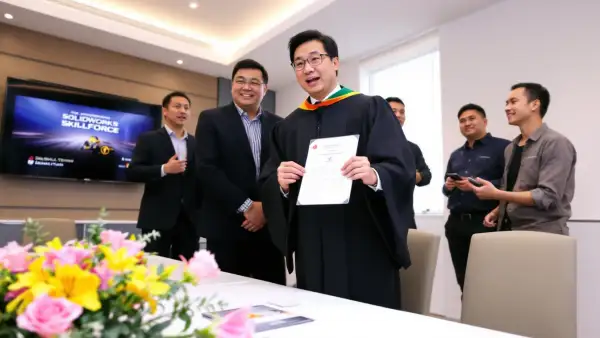
Countries racing to build engineering talent often emphasize curriculum expansion and research funding. Malaysia flipped this script by launching the Solidworks SkillForce programme through a partnership between Taylor’s University, Dassault Systèmes, and IME Technology. This integration goes beyond teaching theory—it embeds industry-grade software certification and workplace readiness into education. Building real-world skills within academic frameworks is the new constraint that defines competitive talent pipelines.
Conventional Upskilling Is Broken Without Industry Alignment
Traditional talent development views university training as a standalone block before internships or employment. This disconnected model inflates ramp-up time and mismatches skills with employer needs. Critics often call for more university funding or linkages but overlook the real bottleneck: practical engineering capabilities aligned tightly with ongoing industry standards.
This partnership directly challenges that assumption, echoing insights from why dynamic work charts unlock faster org growth. It’s not just about more education hours; it's about repositioning the constraint from knowledge delivery to certifiable, usable skill sets that function without constant human intervention during onboarding.
Embedding Certified Skills Creates Compounding Leverage in Talent Pipelines
Dassault Systèmes’ Solidworks SkillForce isn’t simply a software training programme—it is a global initiative connecting 53 countries with over 2,500 applicants. Taylor’s University commits to delivering training that aligns with the Certified Solidworks Associate certification, transforming classrooms into leverage points where students gain immediately applicable skills.
IME Technology adds another layer by developing induction programming to prepare students for real workplace demands, reducing friction in transition. Unlike competitors reliant on fragmented internships or ad hoc training, this system embeds a seamless automation of skill certifiable by industry benchmarks right from education.
Malaysia’s Move Exposes Hidden Talent System Leverage Others Miss
Countries often assume increasing raw graduate numbers suffices, but this ignores the hidden constraint: the ability to translate academic knowledge into instantly deployable skills. This initiative repositions that constraint, leveraging certification and practical readiness to reduce employer onboarding costs and speed innovation.
Compared to other regional efforts, Malaysia’s system uses a public-private partnership design that actually automates the correlation between education output and industry input requirements. This systemic approach enables stronger, sustained talent flows without constant retraining, a mechanism that AI adoption also depends on.
Exciting Implications for Malaysia and Beyond
The critical constraint has shifted from producing graduates to engineering graduates with guaranteed real-world engineering leverage. Operators in education, government, and industry should track this approach—it unlocks exponentially higher ROI on talent development by embedding leverage via certification and workplace-ready skills upfront.
Other emerging economies eyeing accelerated industrial innovation can replicate this model as a platform play, turning universities into ongoing engines of skill certification and innovation readiness. “Countries controlling the skill certification infrastructure control economic growth trajectories,” as Sharon Toh of Dassault Systèmes implies.
Related Tools & Resources
As educational institutions pivot towards integrating practical skills with certified training, platforms like Learnworlds can empower educators to create impactful online courses. By leveraging such tools, universities can enhance their curriculums, ensuring that students emerge workplace-ready with the skills that align with industry needs. Learn more about Learnworlds →
Full Transparency: Some links in this article are affiliate partnerships. If you find value in the tools we recommend and decide to try them, we may earn a commission at no extra cost to you. We only recommend tools that align with the strategic thinking we share here. Think of it as supporting independent business analysis while discovering leverage in your own operations.
Frequently Asked Questions
What is the Solidworks SkillForce programme at Taylor’s University?
The Solidworks SkillForce programme is a partnership initiative involving Taylor’s University, Dassault Systèmes, and IME Technology that integrates industry-grade software certification and workplace readiness directly into university education.
How many countries and applicants are involved in the SkillForce initiative globally?
Dassault Systèmes’ Solidworks SkillForce connects 53 countries worldwide with over 2,500 applicants participating in the program.
Why is traditional talent development considered broken without industry alignment?
Traditional models separate university education from practical workplace skills, causing longer ramp-up times and skill mismatches. The current bottleneck is the lack of practical engineering capabilities aligned with industry standards.
How does the partnership between Taylor’s University, Dassault Systèmes, and IME Technology improve workplace readiness?
The partnership embeds the Certified Solidworks Associate certification into training and adds induction programming to prepare students for real workplace demands, reducing friction in transitioning from education to employment.
What is the key constraint Malaysia’s SkillForce move addresses in talent development?
Malaysia’s programme addresses the constraint of transforming academic knowledge into instantly deployable, certified engineering skills that reduce employer onboarding costs and speed innovation.
Can other emerging economies replicate Malaysia’s talent development model?
Yes, the approach of integrating skill certification and workplace readiness into university training offers a scalable platform that other emerging economies can adopt to accelerate industrial innovation and talent flow.
How does the SkillForce programme impact employer onboarding processes?
By providing certified, practical skills during education, the SkillForce programme reduces onboarding time and costs since graduates are workplace-ready with industry-recognized certifications.
Who is Sharon Toh and what is her view on skill certification?
Sharon Toh of Dassault Systèmes states that "Countries controlling the skill certification infrastructure control economic growth trajectories," emphasizing the strategic value of certification in economic development.