
What the US Stake in xLight Reveals About Chipmaking Leverage

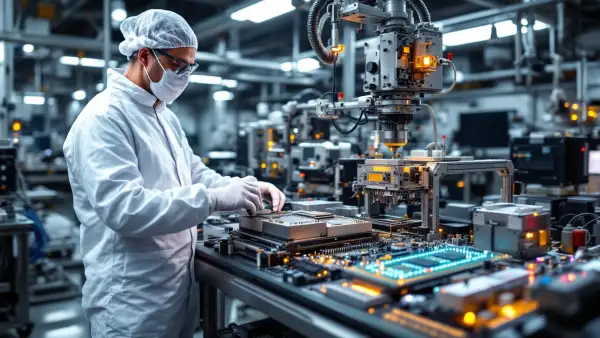
While Taiwan and South Korea dominate advanced semiconductor manufacturing, the United States is quietly reshaping its chipmaking future. The US government plans to invest up to $150 million in xLight, a Palo Alto startup chaired by former Intel CEO Pat Gelsinger, aiming to revive domestic chip production with breakthrough technology. This move isn't just about funding—it targets rewriting chipmaking constraints by innovating lithography sources in the US.
"Countries that master cutting-edge manufacturing unlock strategic independence," said Commerce Secretary Howard Lutnick.
Why US Chip Funding Challenges Conventional Wisdom
The consensus is that US chip manufacturing struggles mainly due to cost or talent shortages. This view misses the core system-level bottleneck—advanced lithography technology. The semiconductor race hinges on the ability to produce extreme ultraviolet (EUV) lithography machines, dominated exclusively by Dutch firm ASML. By investing in xLight, which develops free-electron laser EUV systems, the US targets this hidden but crucial constraint. Unlike competitors who import EUV machines, xLight's technology could reduce capital and operating expenses dramatically, repositioning the production leverage point.
This approach reshapes how NVIDIA and Intel play on the global stage by addressing a supply chain chokehold. Intel'sIntel abandons this, the US loses a critical foothold in chipmaking innovation, further cementing foreign dominance led by TSMC and Samsung.
How xLight’s Free-Electron Laser Repositions Manufacturing Constraints
Standard EUV lithography uses light sources that impose steep costs and technical limits. xLight's free-electron laser offers an alternative light source, potentially enhancing precision and lowering expenses. By integrating with ASML's
Compared to the long lead times and enormous capital of buying new EUV equipment from ASML, xLight’s
This dynamic contrasts sharply with legacy chipfoundries reliant on tens of billions of capital expenditures and decades of expertise. Playground Global, the venture firm backing xLight, exemplifies this new coupled venture-to-scale model, blending startup agility with federal capital injection from the CHIPS Act.
Forward-Looking Implications: Strategic Autonomy and Replicable System Design
The US government's equity stake signals a decisive shift from subsidies to direct ownership—giving it a say in the technology roadmap rather than waiting passively for global market shifts. This changes the constraint from "how to fund" to "how to build technology sovereignty." Observers must watch how this stake enables faster iteration cycles and domestic control over lithography advancements.
Other countries eyeing semiconductor independence can learn from this combined capital-and-control approach. By repositioning the constraint around proprietary lithography systems, the US creates a system that compounds on itself rather than one vulnerable to external geopolitical shocks.
"Owning the manufacturing frontier requires owning its architecture, not just its factories," Pat Gelsinger noted when joining xLight. This is leverage at a national scale—redesigning the bottleneck, not just throwing money at symptoms.
Related Tools & Resources
As the article highlights the importance of innovative manufacturing processes in chip production, MrPeasy offers a robust manufacturing ERP solution that can help businesses streamline their production management and inventory control. This aligns perfectly with the strategic shift towards enhancing domestic chip manufacturing capabilities. Learn more about MrPeasy →
Full Transparency: Some links in this article are affiliate partnerships. If you find value in the tools we recommend and decide to try them, we may earn a commission at no extra cost to you. We only recommend tools that align with the strategic thinking we share here. Think of it as supporting independent business analysis while discovering leverage in your own operations.
Frequently Asked Questions
What is the significance of the US investing in xLight?
The US government plans to invest up to $150 million in xLight, a startup developing free-electron laser EUV lithography technology, aiming to reduce dependency on Dutch firm ASML and reshape semiconductor manufacturing leverage.
How does xLight’s technology differ from traditional EUV lithography?
xLight utilizes free-electron laser EUV systems offering an alternative light source that could drastically lower capital and operating costs while enhancing precision compared to traditional EUV systems predominantly supplied by ASML.
Why is EUV lithography technology important for chip manufacturing?
EUV lithography is critical because it enables the production of advanced semiconductor chips with extreme ultraviolet light. Currently, Dutch firm ASML exclusively dominates this technology, creating a supply chain bottleneck that the US aims to address through innovations like xLight’s.
What challenges have limited US chip manufacturing before this investment?
US chip manufacturing has faced bottlenecks mainly due to reliance on expensive and complex EUV lithography tools, mostly imported from ASML, as well as system-level constraints in lithography technology rather than just cost or talent shortages.
How might xLight’s approach impact global semiconductor supply chains?
By reducing US reliance on ASML’s EUV machines and developing domestic free-electron laser systems, xLight could diversify supply chains, lower costs, and accelerate innovation, helping the US regain strategic autonomy in chip production.
What role does the CHIPS Act play in supporting xLight?
The CHIPS Act facilitates federal capital injection combined with venture funding, such as from Playground Global, to back innovative startups like xLight, promoting faster iteration cycles and technological sovereignty in US semiconductor manufacturing.
Who is leading xLight, and why is this significant?
Pat Gelsinger, former Intel CEO, chairs xLight. His involvement signals a strategic shift emphasizing ownership of manufacturing architecture and bottleneck redesign to enhance US leverage in advanced chipmaking technology.
What are the potential advantages of combining xLight’s technology with ASML’s machines?
Integrating xLight’s free-electron laser light source with ASML’s lithography equipment could create a hybrid system that boosts fab productivity, enables new chip architectures, and reduces long lead times and capital expenses.