
What Turning Point USA’s Endorsement Reveals About GOP’s Post-Trump Rift

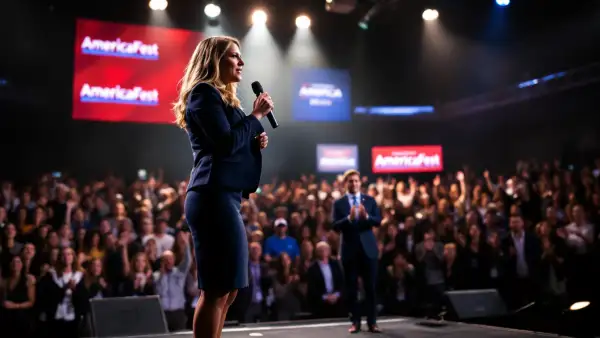
The next Republican presidential election is shaping up far differently than previous successions, with factional fractures quietly redefining party control. Turning Point USA, a key conservative youth organization, just endorsed Vice President JD Vance for 2028 at its AmericaFest convention, aiming to transfer grassroots energy into early primary momentum.
But this endorsement masks a deeper systemic tension: the fractured Make America Great Again coalition lacks a clear power transfer mechanism after Donald Trump exits the scene. Turning Point USA’s leverage comes from its grassroots network, yet it faces internal conflicts about ideological control and candidate selection.
What’s unfolding isn’t just a leadership contest—it’s a scramble over the party’s core mobilization machinery. “Who gets the machinery when the president exits the scene?” asked commentator Tucker Carlson at the conference.
Political leverage now depends on control of distributed volunteer networks, not just high-profile endorsements.
Conventional Wisdom Overlooks The True GOP Power Constraint
The common narrative frames Trump’s absence as a simple leadership vacuum that any strong candidate can fill. Conventional analysis assumes endorsements will unify the party and replicate Trump’s base as a monolith.
But this misses the crucial constraint: control over grassroots mobilization infrastructure—the volunteer armies and local organizing that underpin early primaries. Endorsements alone don't guarantee network loyalty or momentum.
This constraint reframes the 2028 GOP contest as a systems design problem rather than mere candidate competition, echoing failures of other organizations to maintain leverage after founder departure, as seen in tech and political spheres alike (Tech Layoffs Reveal Leverage Failures).
Turning Point USA’s Move To Back JD Vance Leverages Grassroots Control
Turning Point USA commands a nationwide network of conservative volunteers that can activate in early states. Their endorsement is not just about signaling candidate preference—it is a strategic positioning that aims to direct the operational machinery of grassroots influence toward Vance.
This is where Erika Kirk’s support becomes leverage, transferring not only legitimacy but control of a volunteer pipeline perfected under her late husband Charlie Kirk’s leadership, which was so impactful that Vice President JD Vance personally intervened after Charlie Kirk’s assassination.
Alternative candidates like Marco Rubio or Speaker Mike Johnson lack similar entrenched access to this network, raising Vance’s leverage from early endorsements to potential gatekeeper of conservative ground game operations in 2028.
This echoes similar constraints in other sectors where control over distribution channels, rather than headline endorsements, determines sustainable advantage (LinkedIn Leverage for Salespeople).
Factional Discord Signals A Fracturing System, Not Just Ideological Conflict
Turning Point USA’s conference revealed sharp disputes over antisemitism, Israel policy, and environmental regulations, reflecting deeper struggles to unify varied conservative tribes under one operational framework.
Commentator Tucker Carlson called the idea of a Republican civil war “totally fake,” attributing attacks on Vance to attempts to disrupt control over the movement’s core infrastructure.
But the discord exposes a fragmented leverage system where no single faction fully controls the volunteer apparatus. This unreconciled fragmentation increases the risk of coalition collapse, akin to early-stage startups losing product-market fit amid internal power struggles (Rapid Culture Pivots and Scaling).
Post-Trump GOP Leverage Depends On Who Controls The Machinery
The critical constraint: the transfer of infrastructure control from Donald Trump to a successor who can command loyalty and operational efficiency from the grassroots network.
Turning Point USA’s endorsement of JD Vance is an effort to position him as the inheritor of this machinery. Others lack similar system ownership, making Vance’s leverage structural, not just symbolic.
For operators, this means success will depend less on star power and more on controlling distributed systems that execute voter mobilization without constant top-down attention.
Understanding the real contest as a race to control activist platforms changes the game entirely.
Related Tools & Resources
For organizations navigating factional fractures similar to those seen in the GOP, it’s essential to have robust marketing operations in place. Platforms like Ten Speed can streamline workflow automation, enabling teams to focus on what truly matters—mobilizing grassroots efforts effectively and efficiently. Learn more about Ten Speed →
Full Transparency: Some links in this article are affiliate partnerships. If you find value in the tools we recommend and decide to try them, we may earn a commission at no extra cost to you. We only recommend tools that align with the strategic thinking we share here. Think of it as supporting independent business analysis while discovering leverage in your own operations.
Frequently Asked Questions
What significance does Turning Point USA's endorsement of JD Vance hold for the 2028 GOP presidential race?
Turning Point USA's endorsement strategically leverages its nationwide grassroots volunteer network to boost JD Vance's early primary momentum, positioning him as a key contender controlling operational grassroots machinery in 2028.
How is the GOP's internal factional struggle affecting the party's future after Donald Trump?
The factional discord within the GOP reflects a fragmented leverage system over grassroots mobilization infrastructure. This fragmentation risks coalition collapse as no single faction currently controls the critical volunteer apparatus for voter mobilization.
Why is grassroots mobilization infrastructure vital in the GOP's 2028 presidential contest?
Grassroots mobilization infrastructure comprises volunteer networks and local organizing critical for influencing early primaries. Control over this infrastructure defines political leverage more than endorsements, making it a central constraint in the GOP race.
What role does Erika Kirk play in backing JD Vance through Turning Point USA?
Erika Kirk supports JD Vance by transferring legitimacy and control of a volunteer pipeline developed under her late husband Charlie Kirk’s leadership. This network is crucial for mobilizing conservative volunteers nationwide.
How do other GOP candidates like Marco Rubio and Mike Johnson compare to JD Vance in grassroots control?
Unlike JD Vance, candidates such as Marco Rubio and Mike Johnson lack entrenched access to Turning Point USA’s volunteer infrastructure, limiting their grassroots leverage and operational influence in the 2028 primaries.
What issues contributed to factional disputes at Turning Point USA’s AmericaFest conference?
Sharp disputes emerged over antisemitism, Israel policy, and environmental regulations, highlighting ideological conflicts and operational struggles to unify varied conservative factions under a cohesive mobilization framework.
How does the GOP's post-Trump leverage compare to organizational challenges in other sectors?
The GOP’s struggle mirrors challenges in tech and startups where leadership departure causes loss of leverage. Control over distribution networks and grassroots systems, rather than top-down endorsements, determines sustainable advantage.
What is the primary factor determining success for GOP candidates in the upcoming 2028 election?
Success hinges on controlling distributed grassroots systems that execute voter mobilization efficiently without constant top-down management, making operational control more critical than star power or endorsements.