
What Uber’s AI Hiring Surge Reveals About Engineer Leverage

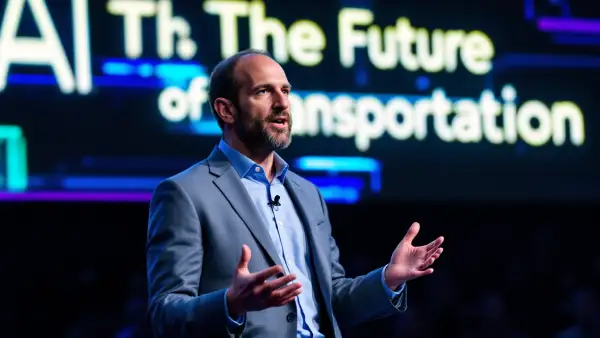
AI-driven labor cost savings are the default lens for evaluating tech investments. Uber just flipped that assumption by hiring more engineers, not fewer, after deploying AI tools to boost productivity.
Uber CEO Dara Khosrowshahi revealed in December 2025 that 80%-90% of Uber’s developers now use AI agents that constantly monitor systems and diagnose problems in real time. Rather than cutting headcount, Uber is scaling its engineering team because AI has turned engineers into “superhumans.”
This isn’t about replacing humans with automation — it’s about compounding value per engineer through AI-augmented workflows. The implications extend beyond Uber to any company that treats AI as a force multiplier, not a cost cutter.
“I just think they become superhumans,” Khosrowshahi said. “Every engineer got more valuable to me.”
The Conventional Wisdom on AI and Headcount
Many tech leaders assume AI’s main value is reducing engineering teams by 20%-30%. The narrative is clear: AI tools inflate productivity, enabling fewer engineers to do more.
That assumption led to widespread 2024 layoffs in tech, which analysts covered extensively. But structural leverage failures explain why headcount cuts often hurt growth rather than help it.
Uber’s approach exposes this false tradeoff. By investing heavily in AI infrastructure and data centers, instead of cutting engineers, Uber unlocks compounding leverage — magnifying the output of every developer on the team.
How Uber’s AI Agents Create Continuous System-Level Oversight
Uber’s AI doesn’t just code faster. It acts as a near-constant watchdog on system health, diagnosing errors that previously required hours of manual troubleshooting.
The AI agents monitor all service components in real time, surfacing actionable insights to engineers instantly. This shifts the bottleneck from finding problems to creative problem solving and innovation.
While competitors like DoorDash or Lyft focus on incremental AI use cases or conservative automation, Uber’s scale of AI adoption—80 to 90% of devs using AI tools—is massive. It creates a platform where AI functions as a built-in leverage system, not a mere tool.
Contrast this to other AI investments that chase flashy capabilities but fail to change operational constraints. Uber’s model illustrates how AI forces human roles to evolve, enhancing value and enabling new hiring strategies rather than layoffs.
The Hidden Mechanism Behind Uber’s Cost vs. Value Tradeoff
The massive spending on data centers and AI chips is often criticized as a bubble risk. But Uber rides atop this infrastructure rather than builds it.
They leverage investments made by ecosystems funding GPU farms and computing hardware—shifting that capital expense away from direct labor costs.
This financial model resembles how Marriott manages hotels without owning assets and how private equity invests in infrastructure to enable operating companies.
By pairing AI’s power with strategic partnerships and a growing engineering base, Uber converts fixed AI infrastructure costs into disproportionate human productivity gains, unlocking leverage no simple headcount cut can replicate.
What This Means for Tech Operators and Investors
The crucial constraint Uber cracked is engineering value per head, not headcount itself. This repositions labor as a scaling vector amplified by AI, not as a cost center to be minimized.
Companies still fixated on AI layoffs miss that this strategy traps them in diminishing returns. Instead, operators should bet on AI to augment and multiply talent impact, then add people to expand capability.
Investors tracking AI infrastructure spending also must consider who is layering intelligent leverage systems on top.
Watch for firms adopting this “engineer superpower” model to drive exponential growth and shift competitive dynamics. Uber’s approach quietly exposes flaws in common AI valuation bets.
“Turning engineers into superhumans rewrites the growth playbook,” Khosrowshahi’s move signals. This is leverage at scale—powered by AI and human ingenuity combined.
Related Tools & Resources
For organizations looking to amplify the potential of their engineering teams just like Uber, utilizing tools like Blackbox AI can drastically enhance productivity and innovation. By integrating AI-driven coding assistants, you can turn your developers into powerful assets, enabling them to focus on creative problem solving rather than mundane troubleshooting tasks. Learn more about Blackbox AI →
Full Transparency: Some links in this article are affiliate partnerships. If you find value in the tools we recommend and decide to try them, we may earn a commission at no extra cost to you. We only recommend tools that align with the strategic thinking we share here. Think of it as supporting independent business analysis while discovering leverage in your own operations.
Frequently Asked Questions
How has Uber integrated AI into its engineering team?
Uber has deployed AI agents used by 80%-90% of its developers to continuously monitor systems and diagnose problems in real time, enhancing productivity rather than reducing staff.
Why did Uber increase its number of engineers despite using AI?
Instead of cutting engineers, Uber scaled its team because AI turned engineers into "superhumans," compounding value per engineer and enabling higher productivity.
What is the traditional viewpoint on AI’s impact on engineering headcount?
The conventional wisdom is AI reduces engineering teams by 20%-30%, enabling fewer engineers to do more work. However, Uber’s approach challenges this assumption by increasing headcount.
How do Uber’s AI agents improve system monitoring?
Uber’s AI agents provide continuous system-level oversight, instantly surfacing actionable insights and shifting focus from problem detection to creative problem solving and innovation.
What financial strategy supports Uber’s AI infrastructure investment?
Uber leverages investments in AI chips and data centers funded by broader ecosystems, converting fixed AI costs into human productivity gains without bearing full capital expense.
What can tech companies learn from Uber’s AI and hiring strategy?
Tech firms should treat AI as a force multiplier to augment engineer impact and expand teams rather than as a tool for layoffs, unlocking exponential growth potential.
How does Uber’s model differ from competitors like DoorDash or Lyft?
Unlike DoorDash or Lyft, which adopt AI incrementally or conservatively, Uber uses AI at scale with 80%-90% developer AI adoption, creating a system-level leverage effect.
What role do AI tools like Blackbox AI play in enhancing engineering teams?
Tools like Blackbox AI act as AI-driven coding assistants, boosting developer productivity by automating mundane tasks and enabling engineers to focus on innovation, similar to Uber’s approach.