
What Ukraine’s Strikes Reveal About Russia’s Energy Leverage Crisis

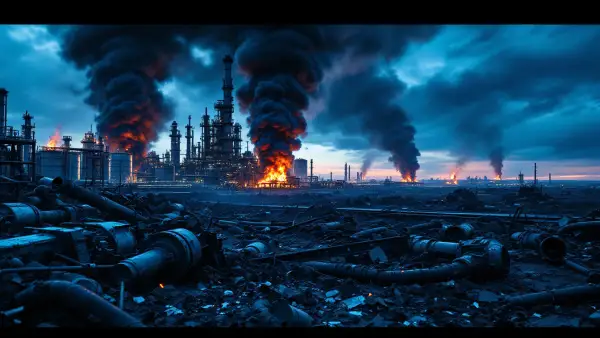
Russia’s oil infrastructure faces rare direct disruption, while most global oil producers rely on large, centralized refineries shielded by layered security and redundancy. Ukraine recently targeted Rosneft PJSC’s Syzran refinery and a small port on Russia’s Azov Sea coast, marking a costly operational blow to Moscow and its oil export capacity.
But this isn’t simply a military skirmish. It’s an illustration of how concentrated energy assets combine with fragile supply chains create strategic vulnerabilities under asymmetric pressure. This dynamic will reshape how energy operators worldwide rethink systemic resilience.
Conventional analyses frame the strikes as tactical hits on infrastructure, but they overlook the deeper leverage Ukraine is unlocking by forcing Russia to repeatedly patch high-value chokepoints. Ukraine’s drone escalation exemplifies this systemic shift.
“Controlling physical chokepoints defines lasting leverage over resource flows,” explains this unfolding energy conflict.
Why Strategic Energy Resilience Is More Than Hardened Facilities
Experts often assume oil and gas operators can absorb infrastructure losses through stockpiles or alternate routes. Yet, Russia’s Syzran refinery strike exposes a brittle system built on centralized refining rather than diversified modular facilities.
This contrasts with nations like Saudi Arabia which invested in redundancy and distributed storage, minimizing single points of failure. Senegal’s debt fragility analysis similarly underscores how concentration risks deepen systemic vulnerabilities.
The Emerging Leverage of Targeted Tactical Disruption
Ukraine’s approach turns tactical strikes into strategic leverage by forcing Russia to constantly divert resources to defense and repair, eroding their economic endurance. The Syzran attack is part of an intensified campaign hitting multiple nodes, including the Azov Sea port, critical for export logistics.
This contrasts starkly with traditional oil warfare that risks large-scale confrontations; this method weaponizes precision and systemic repetition.
Competitors like Saudi Aramco and ExxonMobil have long built multi-tiered supply chain defenses, leveraging automated monitoring and diversified export routes, whereas the Russian oil sector must now cobble fragile patches under fire.
Also relevant is how tech-enabled forces like OpenAI’s scaling of ChatGPT demonstrate that systemic leverage thrives on modular, scalable solutions—not centralized, brittle assets.
Which Constraints Shift and What Operators Must Watch
The constraint switching here is clear: from simple physical control of oil assets to managing systemic exposure across logistics, refining, and export infrastructure simultaneously. Russia’s inability to decentralize refining and export operations quickly hands Ukraine persistent leverage.
Energy operators must now consider how tactical disruption pools into strategic system fragility and rethink hardened facilities as just one piece of a layered defense.
Regions with concentrated energy hubs—such as Eastern Europe and Central Asia—can learn from this dynamic to build distributed, automated resilience.
“Energy infrastructure without systemic defense is leverage denied,” remains the key insight moving forward.
Conclusion: Why Energy Control Is System Control
The events around the Syzran refinery and Azov Sea port reveal that physical assets are deeply intertwined with logistics, automation, and systemic redundancy. Ukraine’s campaign is shifting leverage from brute force to asymmetric systemic pressure.
This pattern echoes in other industries, where shifting constraints redefine the playing field. For example, read why 2024 tech layoffs signal structural leverage failures here.
Operators with the foresight to integrate distributed systems and leverage automation can turn fragile chokepoints into resilient platforms, unlocking persistent advantage.
Related Tools & Resources
As Ukraine's tactical disruptions highlight the need for resilience in energy operations, manufacturing businesses can benefit from tools like MrPeasy, which streamline production management and inventory control. By leveraging a cloud-based ERP system, manufacturers can improve their supply chain resilience and adapt to the shifting dynamics discussed in this article. Learn more about MrPeasy →
Full Transparency: Some links in this article are affiliate partnerships. If you find value in the tools we recommend and decide to try them, we may earn a commission at no extra cost to you. We only recommend tools that align with the strategic thinking we share here. Think of it as supporting independent business analysis while discovering leverage in your own operations.
Frequently Asked Questions
How have Ukraine's strikes impacted Russia's oil export capacity?
Ukraine's targeted strikes on Russia's Syzran refinery and a small port on the Azov Sea coast have caused costly operational disruptions, weakening Russia's oil export logistics and forcing repeated resource diversion for repairs.
Why is Russia's oil infrastructure vulnerable to these attacks?
Russia relies on large, centralized refineries such as the Syzran refinery, which lack the redundancy and distributed storage seen in countries like Saudi Arabia, making them prime targets and creating strategic vulnerabilities.
What strategic advantage does Ukraine gain from these tactical strikes?
Ukraine's consistent strikes force Russia to divert resources repeatedly to defend and repair critical oil chokepoints, eroding its economic endurance and giving Ukraine systemic leverage over Russian energy flows.
How do other energy producers mitigate risks differently from Russia?
Nations like Saudi Arabia invest in redundancy and distributed storage with multiple supply chain defenses and automated monitoring, minimizing risk from single points of failure unlike Russia's centralized system.
What does the term "systemic leverage" mean in this energy conflict?
Systemic leverage refers to applying repeated, precise pressure on fragile, centralized infrastructure to create strategic disadvantages, as Ukraine does by targeting key chokepoints continuously.
How can energy operators build resilience against such tactical disruptions?
Energy operators can adopt distributed, modular facilities, layered defenses, and automation to avoid systemic fragility, turning potential chokepoints into resilient platforms as demonstrated by competitors like Saudi Aramco.
What role do modern technologies play in this shift in energy leverage?
Technologies like drones enable precise, systemic strikes as shown by Ukraine's drone escalation, while automation and scalable modular solutions enhance systemic resilience, moving control from brute force to asymmetric pressure.
Which regions should be most concerned about energy infrastructure vulnerabilities?
Regions with concentrated energy hubs such as Eastern Europe and Central Asia need to build distributed and automated resilience to avoid similar vulnerabilities exposed by concentrated chokepoint attacks like those in Russia.