
What Ukraine’s Submarine Drone Strike Reveals About Naval Warfare

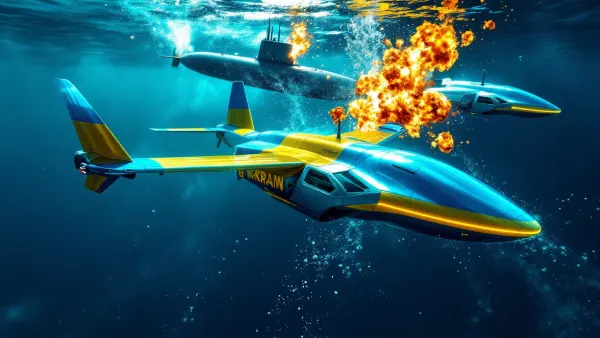
Destroying a $400 million submarine with a low-cost underwater drone breaks traditional naval cost assumptions. Ukraine just carried out the first-ever underwater drone strike on a Russian Kilo-class submarine at the Black Sea port Novorossiysk. This operation marks a turning point not in payload size, but in how undersea warfare can be automated and decentralized. Underwater drones are rewriting naval leverage–small systems can inflict strategic damage without fleets.
Why the Conventional Naval Power Model Misses the Real Constraint
The traditional model says submarine power means expensive, manned platforms and heavy investment in counter-submarine fleets. Analysts often interpret naval strength as sheer firepower and platform count. They miss the real constraint: controlling the undersea battlespace autonomously at scale.
Ukraine’s naval drone innovations show fleets of expensive vessels become sitting ducks to small, expendable uncrewed systems. This is not just about weapons; it's redistributing undersea threat visibility and strike capability from centralized fleets to distributed drone networks.
How Ukraine’s Underwater Drones Shift Naval Engagement Leverage
Ukraine’s Sub Sea Baby drone is an underwater analog to the surface Sea Baby naval drone, repurposed to strike stealthy, submerged Kilo-class Russian submarines. This drone functions like a slow-moving, remotely controlled mine or torpedo, able to operate covertly without onboard human support.
Traditional anti-submarine warfare depends on expensive detection systems and manned attack submarines or aircraft. Ukraine’s underwater drone lowers strike costs drastically by trading scale and automation for platform complexity. Unlike nations investing billions into large sub fleets, Ukraine’s system leverages simple autonomous vehicles deployed at scale—a strategic force multiplier.
This contrasts with Russian reliance on costly Kilo-class submarines—each valued around $400 million. Repairs and replacements are hindered by international sanctions, raising their long-term operational cost. Other navies, including NATO countries, are accelerating underwater drone development, underscoring this shift.
The Forward Path: Shaping Naval Leverage Through Unmanned Systems
Ukraine’s strike resets the naval warfare constraint: control of the undersea battlefield can no longer be assumed by platform sophistication alone. Instead, operators must integrate unmanned underwater systems to maintain influence.
Naval powers globally should pivot toward autonomous drone fleets that impose constant, distributed threat. This remaps strategic leverage by increasing surveillance and strike density while lowering human risk and expense.
Emerging maritime players and established fleets that invest in networked underwater drones will command sea lanes more cost-effectively and resiliently. The future belongs to those who master the system design behind unmanned undersea warfare.
This shift parallels how operators unlock advantage from overlooked constraints in other fields. Autonomous leverage is no longer theoretical but battle-tested.
“Small, distributed systems now hold the strategic keys to undersea dominance.”
Related Tools & Resources
As naval warfare becomes increasingly reliant on unmanned systems, the need for effective surveillance solutions like Surecam is paramount for businesses and military operations. Implementing advanced video surveillance can help organizations monitor and adapt to emerging threats, ensuring a strategic advantage in a rapidly changing landscape. Learn more about Surecam →
Full Transparency: Some links in this article are affiliate partnerships. If you find value in the tools we recommend and decide to try them, we may earn a commission at no extra cost to you. We only recommend tools that align with the strategic thinking we share here. Think of it as supporting independent business analysis while discovering leverage in your own operations.
Frequently Asked Questions
What was unique about Ukraine's submarine drone strike?
Ukraine carried out the first-ever underwater drone strike on a Russian Kilo-class submarine, valued at around $400 million. This operation represents a breakthrough in using low-cost, autonomous underwater drones to inflict strategic naval damage.
How do Ukraine’s underwater drones change traditional naval warfare?
By using simple, expendable autonomous drones at scale, Ukraine shifts naval leverage from expensive manned platforms to distributed, automated systems, reducing strike costs and increasing threat density without large fleets.
What are Kilo-class submarines and why are they significant?
Kilo-class submarines are Russian submarines valued at approximately $400 million each. They traditionally represent significant naval power but are increasingly vulnerable to low-cost underwater drone attacks, especially with repair limitations due to sanctions.
Why is controlling the undersea battlespace considered the real constraint?
Traditional models focus on expensive platforms, but true naval strength lies in autonomous, large-scale control of undersea surveillance and strike capabilities. Distributed underwater drones improve threat visibility and strike effectiveness.
How do underwater drones like Ukraine’s Sub Sea Baby operate?
The Sub Sea Baby is a remotely controlled underwater drone functioning like a slow-moving mine or torpedo. It operates covertly without human onboard support, enabling automated, cost-effective anti-submarine operations.
What impact could Ukraine’s drone strike have on global naval strategies?
This strike signals a strategic pivot for navies worldwide towards investing in networked underwater drones to maintain sea lane control more cost-effectively and resiliently, emphasizing unmanned system integration.
Are other navies adopting similar underwater drone technology?
Yes, NATO and other naval powers are accelerating underwater drone development, recognizing the shift towards autonomous distributed systems for undersea dominance demonstrated by Ukraine's drone success.
How does this technology affect costs and risks in naval warfare?
Underwater drones significantly lower strike costs and human risk by replacing expensive manned platforms with autonomous vehicles deployed at scale, making naval engagements more affordable and less dangerous.