
What US-China Decoupling Reveals About Global Tech Innovation

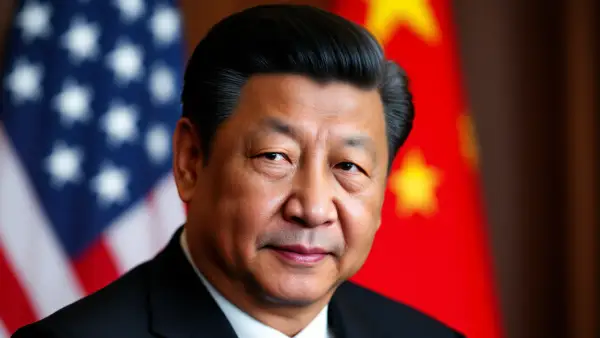
The decline in technology research collaboration between US and China is the lowest it’s been in 20 years, according to a study by the Australian Strategic Policy Institute. This shift accelerates a fundamental rerouting of global innovation networks critical to both economic growth and national security. But this isn’t just a geopolitical standoff — it’s a strategic shift reshaping the leverage of entire tech ecosystems. Innovation systems that can't self-sustain cross-border knowledge flows risk systemic stagnation.
Why Tech Decoupling Is More Than Political Posturing
The conventional narrative sees US-China technology decoupling as a cost or loss — a setback for researchers and companies previously benefiting from open collaboration. Analysts often frame it as simple geopolitics or tariff-driven disruption. They overlook that this break is a deliberate constraint repositioning designed to force more autonomous innovation paths within each country.
Instead of viewing it as a temporary fracture, operators should see this as a structural leverage failure reallocation. The US and China are creating distinct tech ecosystems optimized not by cooperation but by internalized competitive advantage and control over supply chains, standards, and intellectual property.
The Hidden Mechanism: Autonomous Innovation Loops
When collaboration falls, each side must build systems that function without relying on knowledge inflows from abroad. That means investing heavily in their own R&D infrastructure, talent pipelines, and IP protections, creating a tech ecosystem that generates innovation organically.
For example, unlike the US reliance on global chip manufacturing and software supply chains, China is rapidly scaling indigenous semiconductor capabilities and software platforms to reduce dependency. The US similarly boosts domestic manufacturing incentives and restricts knowledge exchanges, reinforcing this looping mechanism.
This shift contrasts starkly with countries like Singapore, which thrive by positioning themselves as open collaboration hubs rather than building isolated loops — showing a strategic trade-off between openness and control.
Supporting this perspective, see how Nvidia’s Q3 results hint at investor expectations for segmented but internally resilient innovation circuits.
How Companies and Nations Reposition Constraints for Compounding Advantage
The key constraint reshaped here is the flow of knowledge. Decoupling forces actors to internalize innovation systems that previously leveraged cross-border collaboration. This constraint repositioning changes execution entirely — companies and governments must build platforms that generate value without foreign input, increasing complexity but also control.
Take the alternative: trying to maintain open collaboration under rising geopolitical tension would cause constant operational friction and enforcement costs. Instead, the bifurcated approach lets each ecosystem optimize for resilience and autonomy, a powerful leverage play in uncertain times.
For operators, this means rethinking partnerships, supply chains, and R&D strategy. You’re not just outsourcing risk; you’re choosing between competing systems of leverage — one open and interdependent, the other closed and self-reinforcing.
Consider the implications covered in OpenAI’s scaling model, which depends on broad network effects versus the challenges faced by firms locked into siloed domestic ecosystems.
What’s Next: Navigating a World of Innovation Spheres
The main constraint that changed is the assumption that technology innovation occurs on a global commons. Instead, innovation is fracturing into national spheres of leverage, each designing systems that compound advantage internally.
Countries that master building these autonomous innovation loops at scale—not merely reacting to external pressures—will control critical future technologies. Observers in Europe, India, and ASEAN should watch carefully which model offers superior leverage given their geopolitical and economic position.
“Countries that control knowledge flows control the future of innovation.” This is the new baseline for strategic advantage in technology.
Related Tools & Resources
As technology ecosystems shift towards autonomous innovation, developers need robust tools to enhance their capabilities. Platforms like Blackbox AI can empower tech companies to streamline coding processes and improve their software development cycles, allowing them to thrive in these uniquely competitive environments. Learn more about Blackbox AI →
Full Transparency: Some links in this article are affiliate partnerships. If you find value in the tools we recommend and decide to try them, we may earn a commission at no extra cost to you. We only recommend tools that align with the strategic thinking we share here. Think of it as supporting independent business analysis while discovering leverage in your own operations.
Frequently Asked Questions
What is US-China tech decoupling?
US-China tech decoupling refers to the significant decline in technology research collaboration between the two countries, reaching its lowest point in 20 years. It involves both nations shifting towards autonomous innovation ecosystems instead of open cooperation.
Why has US-China technology collaboration declined?
The decline is due to deliberate constraint repositioning aimed at fostering autonomous innovation paths within each country. This strategic shift reduces reliance on cross-border knowledge flows to build competitive tech ecosystems internally.
How does tech decoupling affect global innovation networks?
Tech decoupling reroutes global innovation networks by creating distinct national innovation loops. These autonomous systems increase complexity but enhance resilience, contrasting with previously open, interdependent research collaborations.
What are autonomous innovation loops?
Autonomous innovation loops are self-sustaining tech ecosystems focusing on internal R&D infrastructure, talent development, and IP protections without foreign knowledge inflows. Both the US and China are building such loops to optimize for resilience and control.
How does China reduce dependency on global tech supply chains?
China is rapidly scaling its indigenous semiconductor manufacturing and software platforms to mitigate reliance on US-dominated global chip production and software supply chains, reinforcing its autonomous innovation loop.
What impact does tech decoupling have on companies and governments?
Companies and governments must reposition constraints by developing innovation platforms that operate independently from foreign input. This shift increases operational complexity but allows for greater strategic control and competitive advantage.
How do other countries like Singapore fit into this innovation landscape?
Unlike the bifurcated US and China ecosystems, Singapore thrives as an open collaboration hub, strategically choosing openness over closed autonomous loops to leverage network effects in global tech innovation.
What should observers in regions like Europe, India, and ASEAN consider?
Observers should monitor which innovation model—autonomous loops or open collaboration hubs—offers superior leverage given their geopolitical and economic contexts, as national spheres of leverage increasingly define future tech leadership.