
What Waymo’s Bus-Passing Reports Reveal About Autonomous Safety Limits

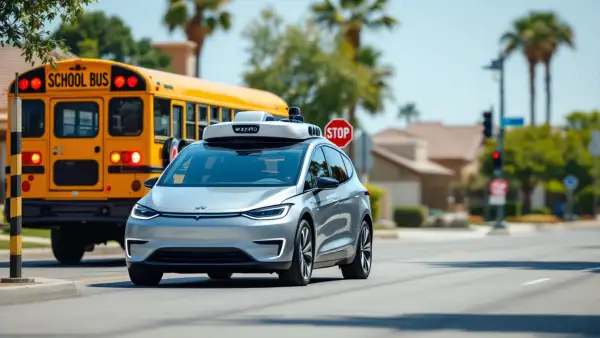
Texas recently became a focal point for scrutiny after reports surfaced that Waymo's self-driving cars illegally passed school buses 19 times. Waymo faces a US federal probe after these violations sparked safety concerns in a state with growing autonomous vehicle tests. But this is more than a compliance hiccup—it's a glimpse into the friction between complex safety rules and autonomous decision-making systems.
These incidents highlight a core constraint in self-driving technology: the challenge of encoding nuanced, high-stakes laws like school bus stop requirements into automated systems. The struggle isn't purely technical; it reveals how legal frameworks and system constraints collide in real-world applications.
For operators, this case underscores that the real leverage lies in designing autonomous systems that self-regulate without constant human intervention, especially in jurisdictions with complicated, risk-sensitive rules like Texas. Autonomous vehicles that fail this test risk not just fines, but losing public trust critical for scaling.
“Autonomous leverage depends on mastering legal complexity, not just sensors.”
Contrary to Popular Belief: This Is Not Just a Software Bug
Experts often frame incidents like these as isolated technical failures fixable by better code. That misses the structural challenge: Waymo operates in a shifting legal landscape where passing a stopped school bus is non-negotiable and explicitly outlawed, unlike in some states with laxer rules.
This is a classic example of what we explored in Why Tesla’s Safety Report Actually Changes Autonomous Leverage. The constraint is not sensor accuracy—it’s translating complex, local compliance rules into machine logic that scales across geography without manual tuning.
How Other Autonomous Players Manage Local Constraints
Waymo is not alone. Tesla and Google’s parent, Alphabet, wrestle with varied state laws impacting geofencing and operational limits. Unlike simply upgrading electronics, this requires a layered system of legal compliance automation tied to granular geo-located rules.
In contrast, companies like Uber tested autonomous vehicles primarily in California, where bus-passing rules are more straightforward, revealing a strategic positioning move to ease regulatory overhead. Texas' approach forces operators to build a more rigorous compliance engine, shifting the core constraint from sensor tech to policy-layer automation.
The Forward-Looking Leverage in Jurisdiction-Specific Design
The constraint pivot is clear: companies that embed real-time interpretative legal modules gain leverage over competitors relying solely on sensor fidelity. Regions like Texas will become proving grounds where this legal-tech fusion either breaks or scales autonomous trust.
Operators targeting expansion must prioritize building those systems that require less human intervention but integrate local laws at the design level. This changes the hiring, product, and partnership strategies around autonomous development.
Why U.S. Equities Actually Rose Despite Rate Cut Fears Fading and Why Investors Are Quietly Pulling Back From Tech Amid U.S. Labor Shifts illuminate broader trends in regulatory-sensitive industries wrestling with complexity leverage too.
“Leverage in autonomous driving comes from mastering legal rules, not just the AI stack.” That’s a shift operators must internalize before scaling in jurisdictions like Texas and beyond.
Related Tools & Resources
Understanding the complexities of legal compliance in autonomous vehicle systems is crucial, and leveraging AI tools like Blackbox AI can enhance development processes. With its capabilities in AI code generation and developer tools, it helps teams create solutions that navigate the intricate legal landscape required for innovations such as self-driving cars. Learn more about Blackbox AI →
Full Transparency: Some links in this article are affiliate partnerships. If you find value in the tools we recommend and decide to try them, we may earn a commission at no extra cost to you. We only recommend tools that align with the strategic thinking we share here. Think of it as supporting independent business analysis while discovering leverage in your own operations.
Frequently Asked Questions
How many times did Waymo's self-driving cars illegally pass school buses in Texas?
Waymo's autonomous vehicles illegally passed school buses 19 times in Texas, which triggered a federal safety probe and raised concerns about compliance with local laws.
Why is passing a stopped school bus a significant issue for autonomous vehicles in Texas?
Passing a stopped school bus is explicitly outlawed in Texas, and encoding this complex law into autonomous systems is challenging. The legal requirements are risk-sensitive and demand real-time compliance automation.
Is the bus-passing issue with Waymo simply a software bug?
No, the problem goes beyond technical bugs. It reflects the difficulty of translating complex, local legal rules into machine logic that scales, especially in states like Texas with strict regulations.
How do other autonomous vehicle companies handle varying state laws?
Companies like Tesla, Alphabet, and Uber face diverse legal landscapes. For example, Uber mainly tested in California where bus-passing laws are simpler, avoiding some regulatory complexity faced in Texas.
What does the Waymo bus-passing case reveal about the future of autonomous vehicle safety?
The case highlights the need for designing autonomous systems that integrate local laws at the core to self-regulate with minimal human intervention, emphasizing legal and policy-layer automation over just sensor technology.
What role do advanced AI tools play in developing autonomous vehicle compliance systems?
AI tools like Blackbox AI aid developers in coding and complying with intricate legal frameworks. These tools streamline creating systems that effectively navigate jurisdiction-specific rules in autonomous driving.
How could legal complexity affect the scaling of autonomous vehicles?
Failing to master legal complexity can lead to fines, loss of public trust, and hindered scaling. Operators must prioritize embedding real-time legal compliance systems to succeed in varied jurisdictions.