
Why Abu Dhabi’s Uber Robotaxis Work Without Drivers

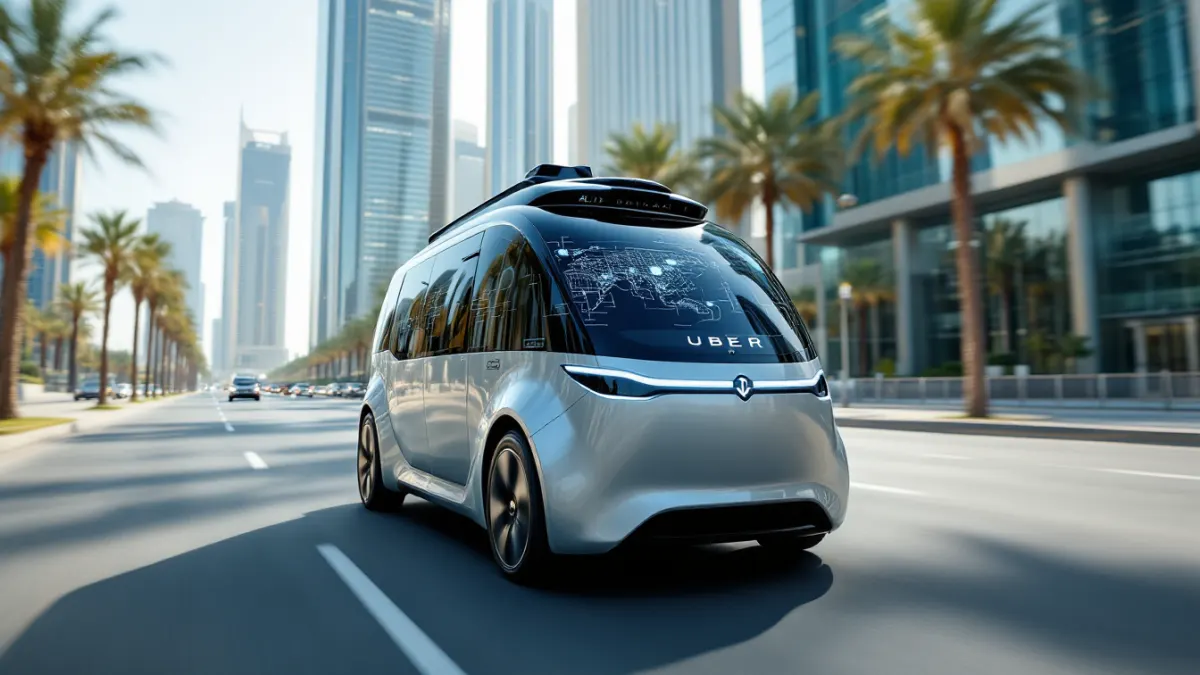
While many autonomous vehicle projects stall with safety drivers, Abu Dhabi’s commercial robotaxi service dropped humans behind the wheel in 2025. Uber and WeRide launched the fully driverless system a year after debuting with human safety operators.
This isn’t just a tech milestone—it represents a shift in urban mobility infrastructure where operational constraints are systematized and removed. Driverless robotaxis open new leverage by cutting costs and scaling passenger availability without proportional human capital.
Urban transport systems that offload human operators create dynamic cost advantages and unlock network growth.
Why ‘Safety Drivers’ Are a Hidden Bottleneck
Conventional wisdom frames robotaxi deployment as a gradual safety and regulatory hurdle, with human operators indispensable for risk control. Analysts expect human oversight to remain a permanent cost.
But in Abu Dhabi, Uber and WeRide proved human safety operators constrain scalability and cost efficiency more than actual tech limits. By removing safety drivers, they reposition the critical constraint from personnel availability to system reliability.
Unlike other trials in San Francisco or Beijing that still deploy safety drivers, Abu Dhabi’s robotaxi network leverages infrastructure and regulatory support to accelerate automation maturity. This echoes how robotics firms scale by removing human bottlenecks.
The Mechanism Behind True Driverless Leverage
Driverless operation eliminates fixed human costs and scheduling complexity, dropping per-ride expenses sharply. This allows rides to price closer to conventional taxis while expanding fleet hours and geographic coverage.
WeRide’s AI stack combines advanced perception with centralized fleet management, enabling automated remote monitoring and risk handling without on-board humans. This contrasts with earlier approaches where safety drivers absorb unpredictable edge cases.
By removing the driver, Uber and WeRide created a system that self-propagates operational reliability. This structurally lowers marginal cost per ride, similar to the OpenAI ChatGPT scaling model—scale happens by system improvements, not linear headcount increases.
What Abu Dhabi Means for Autonomous Transport Globally
Shifting the core constraint from human operators to AI and system upgrades enables exponential growth in autonomous fleets. Cities with less entrenched regulations or road infrastructure optimized for autonomy like Abu Dhabi gain an early mover advantage.
Countries aiming for fully autonomous transport should focus on regulatory frameworks that allow removing human safety operators, enabling tech to realize cost and scale leverage.
Uber and WeRide show driverless fleets unlock a new advantage: scaling urban mobility without linear increases in labor cost.
Driverless robotaxis are not just transport—they’re the foundation for networked mobility leverage.
Related Tools & Resources
The operational efficiency and process scalability highlighted in Abu Dhabi’s driverless robotaxis echo the core value of platforms like Copla. For teams looking to systematize workflows and remove human bottlenecks in their own operations, Copla offers a powerful way to document and automate procedures that support scalable, reliable outcomes. Learn more about Copla →
Full Transparency: Some links in this article are affiliate partnerships. If you find value in the tools we recommend and decide to try them, we may earn a commission at no extra cost to you. We only recommend tools that align with the strategic thinking we share here. Think of it as supporting independent business analysis while discovering leverage in your own operations.
Frequently Asked Questions
When did Abu Dhabi's robotaxi service become fully driverless?
Abu Dhabi's commercial robotaxi service dropped humans behind the wheel in 2025, achieving full driverless operation a year after launching with human safety operators.
Why are safety drivers considered a bottleneck in robotaxi deployment?
Safety drivers constrain scalability and cost efficiency by requiring human oversight, which adds fixed costs and limits fleet expansion. Removing them shifts the constraint to system reliability, enabling faster automation growth.
How does driverless operation reduce ride costs?
Driverless operation eliminates fixed human costs and scheduling complexity, sharply reducing per-ride expenses. This allows rides to be priced closer to conventional taxis while expanding fleet availability and coverage.
What technology enables WeRide's driverless robotaxis?
WeRide’s AI stack combines advanced perception and centralized fleet management, allowing automated remote monitoring and risk handling without on-board humans, unlike earlier models relying on safety drivers.
How does Abu Dhabi's approach differ from robotaxi trials in other cities?
Unlike San Francisco or Beijing trials that still use safety drivers, Abu Dhabi leverages infrastructure and regulatory support to accelerate automation maturity and full driverless service deployment.
What advantage do cities gain by allowing driverless robotaxi operation?
Cities with regulations that permit removing human safety operators gain early mover advantage by enabling exponential autonomous fleet growth and cost leverage through AI and system upgrades.
What is the significance of driverless robotaxi networks for urban mobility?
Driverless robotaxi networks create dynamic cost advantages, enabling scalable, networked urban mobility without linear increases in labor costs, thus reshaping urban transport infrastructure.
How is scalability achieved in driverless robotaxi fleets?
Scalability happens through system improvements rather than linear increases in headcount, structurally lowering marginal costs per ride and allowing fleets to grow efficiently.