
Why Amazon’s AI Push Reveals a New Leverage Constraint in Tech

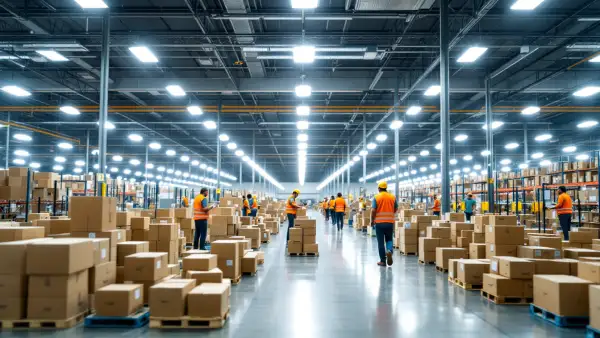
Amazon’s massive $150 billion data center buildout, driven by AI demand, contrasts sharply with rising carbon emissions and workforce cuts. Over 1,000 Amazon employees recently signed an open letter warning that this AI acceleration risks democracy, jobs, and the environment. But this isn’t just a standard tech expansion—it exposes **a pivotal constraint in balancing AI’s growth with sustainability and labor leverage**. ‘Companies chasing AI dominance must rethink leverage beyond automation,’ as this conflict shows.
Why Conventional Wisdom Overlooks AI’s Sustainability Trade-Offs
Most analyses treat AI deployment purely as efficiency and scale plays. They frame Amazon’s AI investment as a cost-cutting, labor-reducing maneuver. Yet this misses the deeper tension: **the environmental footprint of AI infrastructure unlocks a new constraint that directly impacts leverage**.
This doesn’t just threaten jobs—it challenges how companies scale operations without eroding climate goals. That trade-off applies broadly to cloud providers and hyperscalers, not just AWS, as explored in our analysis of 2024 tech layoffs.
Amazon’s AI-Driven Infrastructure Ballooning Carbon and Cutting Jobs
Amazon plans $150 billion in data center spending over 15 years, including $50 billion for AI and supercomputing contracts with the US government. This scale is unprecedented and dwarfs many competitors. Unlike peers focused on incremental cloud growth, Amazon’s approach pushes AI deeply into core infrastructure, forcing a 6% carbon emissions rise in 2024.
Simultaneously, the company announced cuts of up to 30,000 corporate jobs—its largest reduction ever—explicitly linking AI to workforce shifts. Unlike firms that adopt AI as a supplement, Amazon mandates AI tools even on “non-essential” projects, raising questions about productive leverage versus overhead.
Long-Term Leverage Hinges on Sustainable AI, Not Just Automation
The open letter from employees highlights a systemic risk: AI leverage does not only mean fewer workers or faster processes. When infrastructure growth exacerbates emissions, the leverage calculus changes. The constraint shifts from human capital to ecological and democratic systems.
This contrasts with organizations that embed sustainability as a design principle. For example, some tech companies prioritize renewable-powered data centers and measured AI rollouts to protect operational leverage across decades—a mechanism Amazon has pledged but struggled to maintain amid rapid AI expansion.
Our analysis of OpenAI’s scaling similarly shows that infrastructure leverage requires balancing growth with constraints, or else compounding costs erode gains.
AI's Leverage Future Demands Reconciling Automation with Climate and Democracy Constraints
The key constraint transforming leverage is environmental and social sustainability intersecting with automation. Amazon reveals how ignoring this constraint forces trade-offs that ripple through jobs, climate impact, and public trust.
Operators must recognize that true AI leverage is more than cutting costs or displacing labor—it involves architecting systems that scale without breaching climate or social boundaries. Governments and corporates alike will need to design transparency and renewable infrastructure commitments into AI strategies.
Other tech giants and countries with ambitious AI plans should watch this dynamic closely. The early constraint framing signals a pivotal inflection: AI leverage that neglects sustainability is leverage that will soon unravel.
Related Tools & Resources
As businesses grapple with the complexities of AI integration and its implications on sustainability, tools like Blackbox AI can provide crucial support for developers looking to create efficient AI systems. By using AI-powered coding assistance, teams can streamline their development processes and focus on creating solutions that balance growth, environmental responsibility, and operational leverage. Learn more about Blackbox AI →
Full Transparency: Some links in this article are affiliate partnerships. If you find value in the tools we recommend and decide to try them, we may earn a commission at no extra cost to you. We only recommend tools that align with the strategic thinking we share here. Think of it as supporting independent business analysis while discovering leverage in your own operations.
Frequently Asked Questions
What is Amazon's planned investment in AI-focused data centers?
Amazon plans to invest $150 billion over 15 years in data centers, including $50 billion specifically for AI and supercomputing contracts with the US government.
How does Amazon's AI expansion impact carbon emissions?
The expansion is expected to cause a 6% rise in Amazon's carbon emissions in 2024 due to the massive buildout of AI-driven infrastructure.
Why are Amazon employees concerned about the AI push?
Over 1,000 Amazon employees signed an open letter warning that the accelerated AI expansion risks democracy, jobs, and environmental sustainability, highlighting systemic risks beyond automation.
How many jobs is Amazon cutting related to AI acceleration?
Amazon announced cuts of up to 30,000 corporate jobs, its largest reduction ever, explicitly linking AI advancements to workforce shifts.
What does the article mean by a new "leverage constraint" in tech?
The new leverage constraint refers to the tension between scaling AI infrastructure and balancing sustainability, labor impact, and ecological limits, shifting leverage considerations beyond just automation efficiency.
How are other tech companies handling AI growth differently?
Some tech companies prioritize embedding sustainability in AI rollout by using renewable-powered data centers and measured growth to maintain operational leverage without escalating emissions.
What role does sustainability play in long-term AI leverage?
Sustainability is critical; ignoring ecological and democratic constraints can erode AI benefits, forcing companies to design scalable AI systems that respect climate goals and social trust.
What tools can help businesses balance AI growth and sustainability?
Tools like Blackbox AI offer AI-powered coding assistance that helps development teams create efficient AI systems balancing growth, environmental responsibility, and operational leverage.